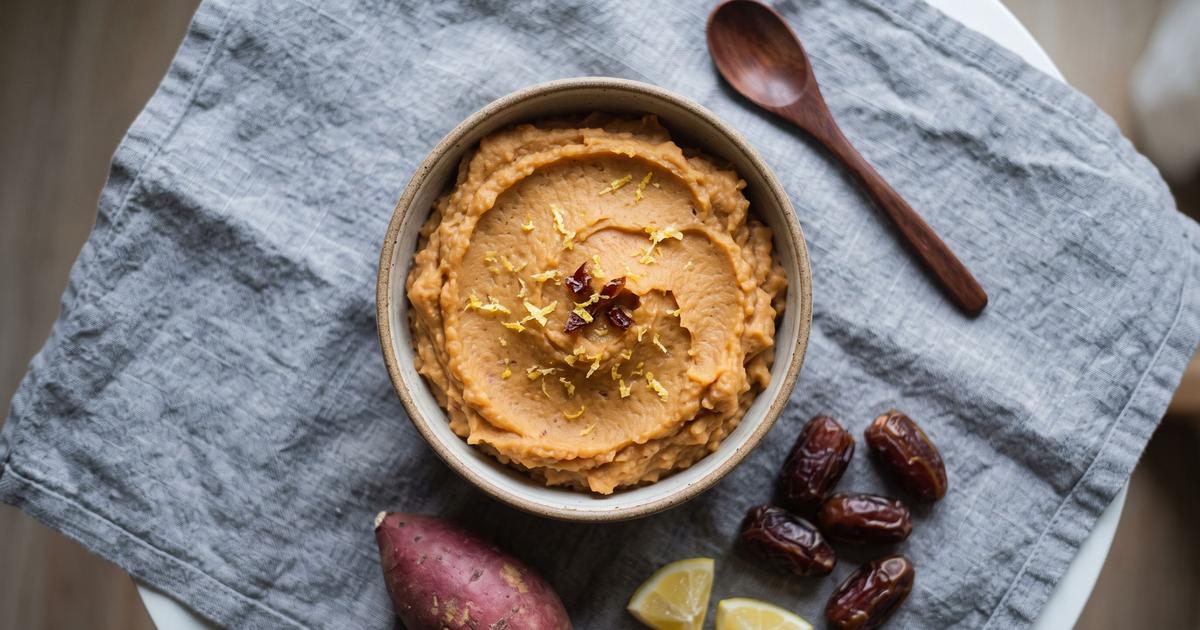
Goma Purin (Sesame Tofu Pudding)

Purin, the Japanese cousin of creme caramel, shows up in flavors that would surprise a French pastry chef, and sesame is one of the best: nutty, faintly bitter, deeply savory-sweet. The shop version is eggs, cream, and sugar. This rebuilds it from silken tofu and tahini, which between them bring the smooth set, the protein, and the whole sesame seed ground fine, while dates do the sweetening. A little cornstarch cooked to a boil firms it into something you eat with a spoon. It needs a couple of hours in the fridge, so make it ahead; it keeps for three days and only sets more cleanly.
Ingredients
- 12 oz Silken tofu
- 3 tbsp Tahini
- 5 wholes Medjool dates, pitted
- 1/2 cup Unsweetened soy milk
- 2 tbsp Cornstarch
- 1 tbsp Sesame seeds, toasted, to serve
Method
- Blend the silken tofu, tahini, pitted dates, soy milk, and cornstarch until completely smooth, stopping to scrape down the sides. Blending the dates right in rather than straining out a syrup keeps their fiber in the pudding; silken tofu gives the custard body that egg and cream would in a classic purin.
- Pour into a saucepan and cook over medium heat, whisking constantly, for 4 to 5 minutes, until it thickens and just comes to a bubble. Cornstarch has to reach a boil to set clear and to lose its raw, chalky taste, so do not pull it early; whisking without stopping keeps the tofu from catching and scrambling on the bottom.
- Pour the hot pudding into four cups or ramekins and tap them on the counter to release air bubbles. Smoothing it out now gives the set pudding its clean surface.
- Chill at least 2 hours, until firm enough to hold the mark of a spoon. The cornstarch and tofu set only as they cool, so this rest is what turns the warm sauce into a sliceable pudding.
- Top each with toasted sesame just before serving. Toasting the seeds fresh and adding them at the end keeps their crunch against the smooth pudding and doubles the sesame flavor the tahini started.
Nutrition
Estimated per serving: 190 calories, 8 g protein, 3 g fiber, 25 mg sodium. Computed from USDA FoodData Central reference values for the main ingredients. This is an approximation, not a laboratory measurement. How these are computed.
Cost per serving is estimated from US national-average retail prices for cheap staple forms, using BLS dried-bean prices and USDA produce prices. Prices vary by store and season, so treat it as a guide, not a receipt. How this is computed.