Satsumaimo Kinton, Sweet Potato Mash
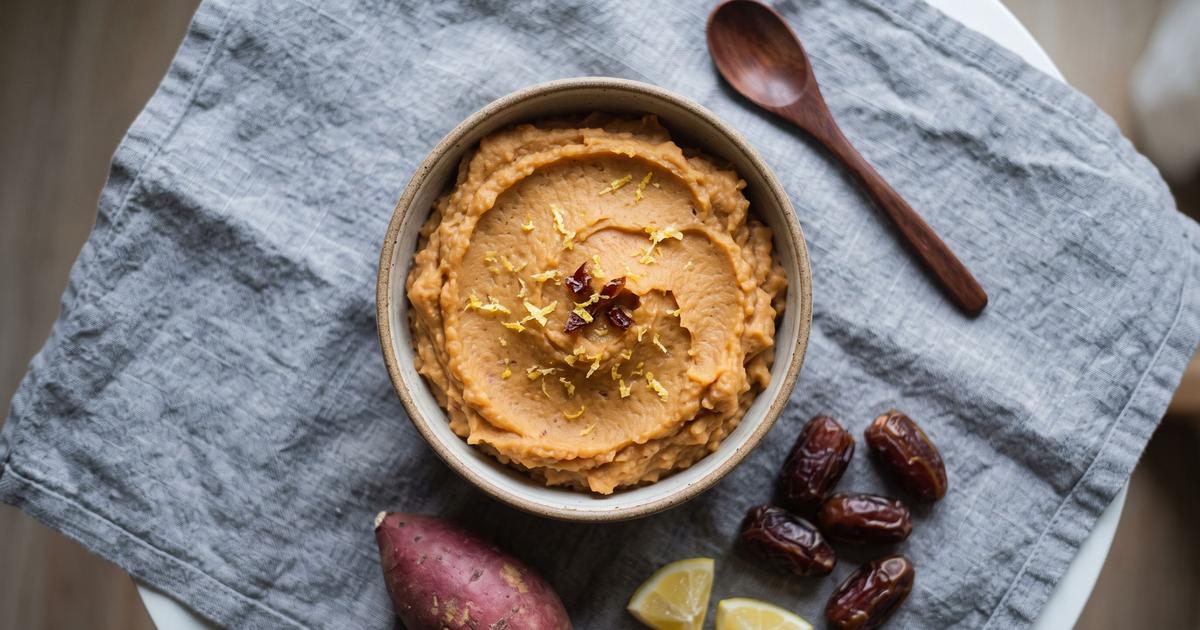
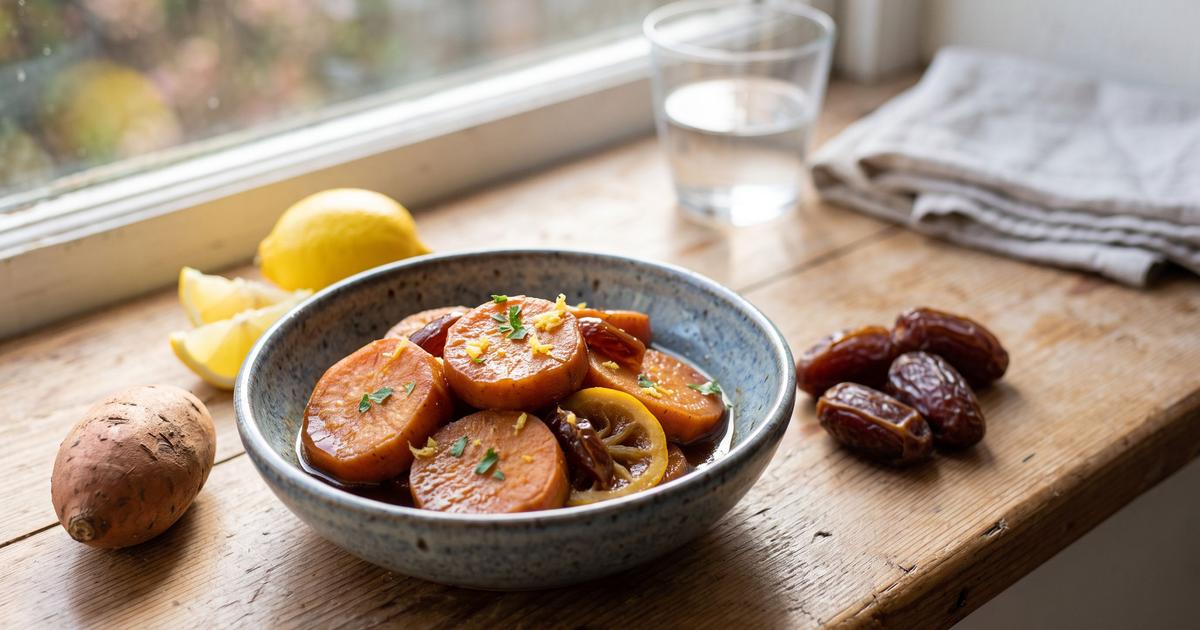
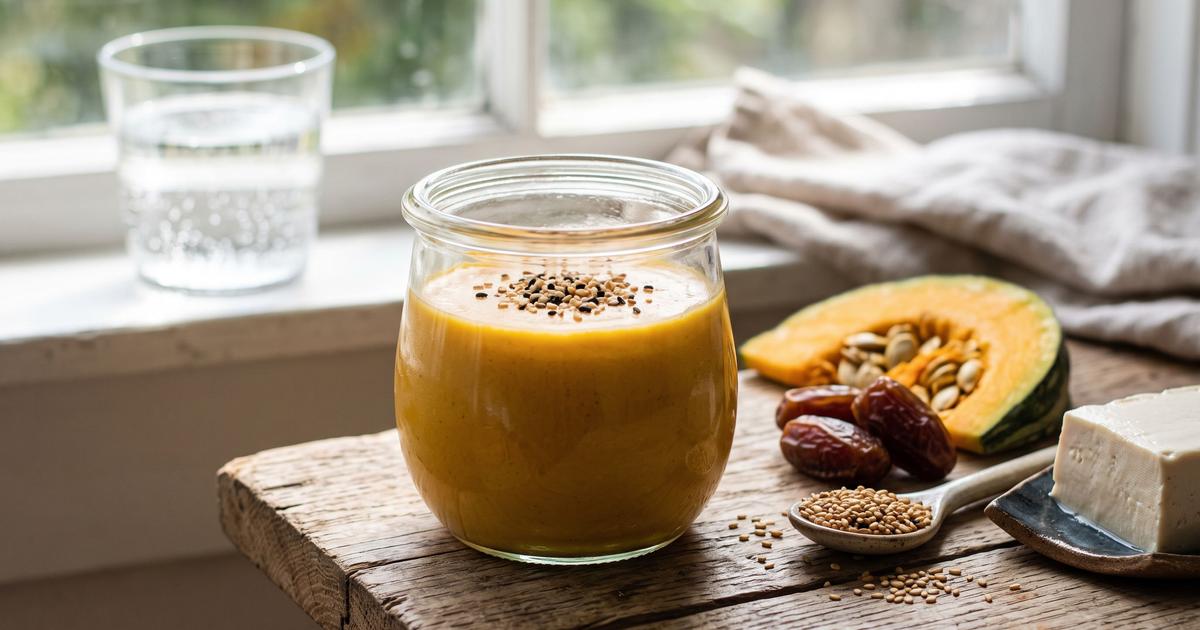
Kinton is a smooth, sweet mash that appears in the tiered New Year boxes of Japan, usually made from sweet potato tinted gold with gardenia pods and sweetened heavily with sugar and mirin. Stripped back, it is a naturally sweet vegetable that needs very little help: the satsumaimo does most of the work, blended dates carry it the rest of the way, and unsweetened soy milk gives it a whipped, buttery body with no butter. A little lemon at the end keeps it lively. Push it through a sieve while hot if you want it truly silky, then serve it in small portions, since it is rich for its size.
Ingredients
- 1 1/2 lb Sweet potatoes, peeled, cut in rounds
- 3 Medjool dates, pitted
- 1/2 cup Unsweetened soy milk
- 1 Lemon, zest and 1 tsp juice
Method
- Steam the sweet potato rounds over boiling water for about 15 minutes, until a knife slides through with no resistance. Steaming rather than boiling keeps the flesh from waterlogging, so the mash stays dense and sweet rather than thin.
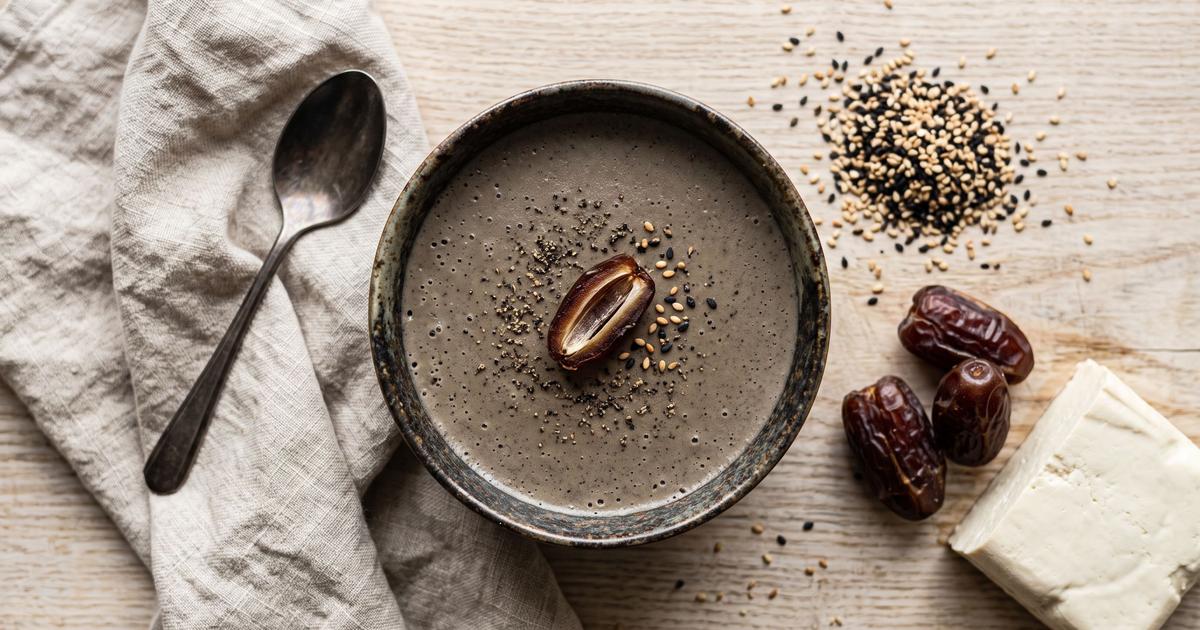
- While they steam, blend the dates with the soy milk until completely smooth. This date-milk is the sweetener and the enriching liquid at once, standing in for the sugar and butter a classic kinton leans on.
- Pass the hot sweet potato through a sieve or ricer, or mash it very well with a fork. For the smooth, glossy texture kinton is known for, work it while it is still hot, when the starch is most pliable.
- Beat in the date-soy milk a little at a time until the mash is silky and holds soft peaks. Add it gradually, since sweet potatoes vary in moisture and you may not need all of it.
- Fold in the lemon zest and a teaspoon of juice at the very end. The bright citrus cuts the richness and keeps the sweetness from feeling flat, which is the traditional role of the yuzu or gardenia in the original. Serve at room temperature or chilled, in small mounds.
Nutrition
Estimated per serving: 200 calories, 4 g protein, 5 g fiber, 30 mg sodium. Computed from USDA FoodData Central reference values for the main ingredients. This is an approximation, not a laboratory measurement. How these are computed.
Cost per serving is estimated from US national-average retail prices for cheap staple forms, using BLS dried-bean prices and USDA produce prices. Prices vary by store and season, so treat it as a guide, not a receipt. How this is computed.