Satsumaimo no Remon-ni, Lemon-Simmered Sweet Potato
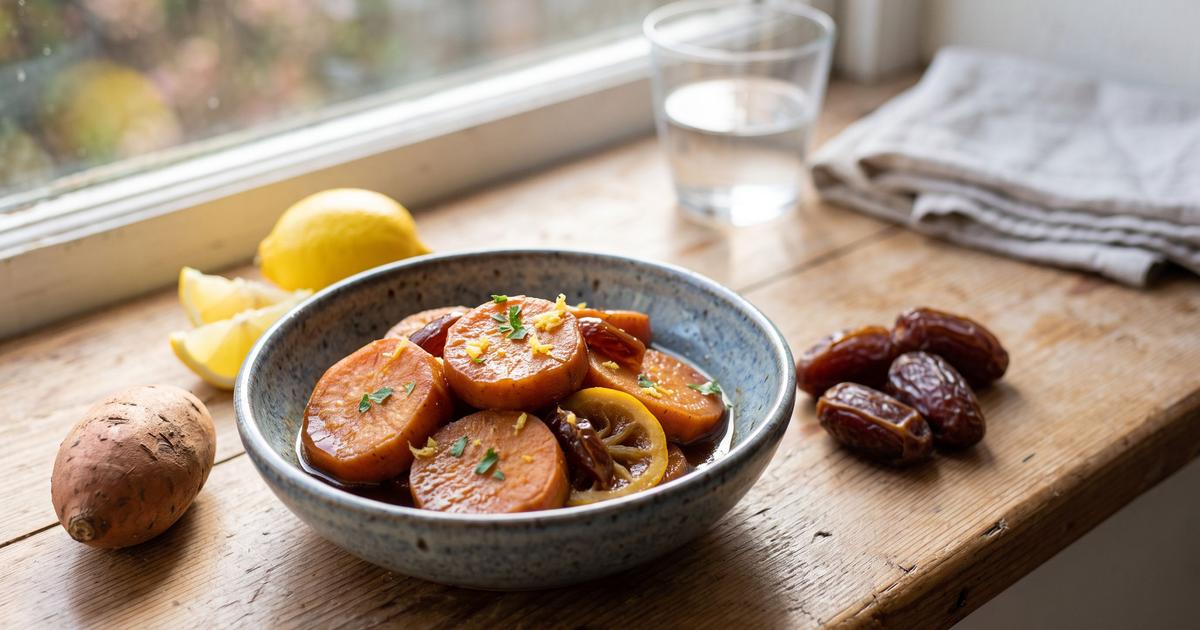
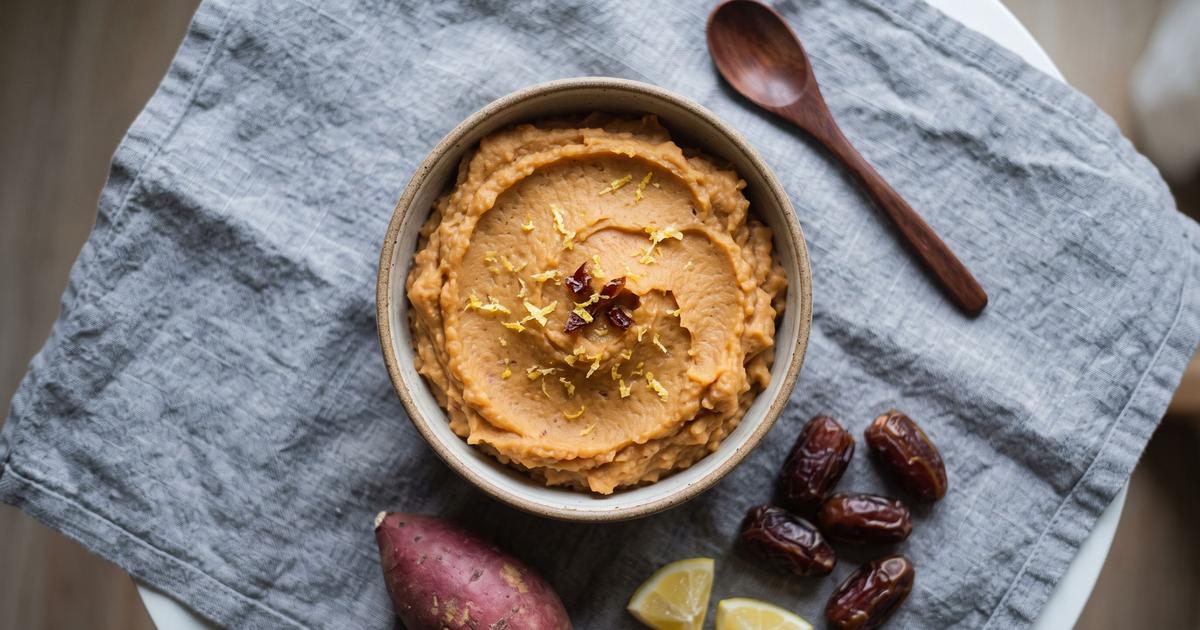
Satsumaimo no remon-ni, sweet potato simmered with lemon, is a homey Japanese dish that lands somewhere between a side and a sweet, common in bento boxes for its color and its keeping. Rounds of sweet potato are simmered slowly with lemon until just tender, then left to cool in the liquid so the sweet-tart syrup soaks in. Cooking the skin-on rounds gently and adding the lemon juice only at the end are the two things that keep them whole and bright instead of collapsing. Dates replace the sugar that usually sweetens the pot, and the lemon slices soften enough to eat. It is best made ahead and served cool.
Ingredients
- 1 1/4 lb Sweet potatoes, about 570 g, skin on, cut into 1-inch (2.5 cm) rounds
- 1 piece Lemons, half sliced into thin rounds, half juiced
- 3 pieces Medjool dates, pitted, mashed with 3 tbsp (45 ml) hot water into a paste
Method
- Soak the sweet potato rounds in cold water 5 minutes, then drain. Rinsing off the surface starch keeps the slices clean-edged and clear rather than gummy once they cook.
- Lay the rounds in a wide pot in a single layer, add the date paste, the lemon slices, and just enough water to come halfway up, then simmer gently, partly covered, about 15 minutes, turning once. A slow, shallow simmer cooks the rounds through while they still hold their shape, which is why they are not boiled hard or stirred.
- Add the lemon juice only once the potato is tender. Acid firms the cell walls and slows cooking, so juice added early would leave the rounds stubbornly hard; adding it at the end brightens without fighting the softening.
- Turn off the heat and let the rounds cool in the liquid, which thickens to a light sweet-tart syrup they soak up as they sit. Serve at room temperature or cold; it keeps 4 days and travels well, a standard bright note in a Japanese lunch box.
Nutrition
Estimated per serving: 150 calories, 2 g protein, 4 g fiber, 40 mg sodium. Computed from USDA FoodData Central reference values for the main ingredients. This is an approximation, not a laboratory measurement. How these are computed.
Cost per serving is estimated from US national-average retail prices for cheap staple forms, using BLS dried-bean prices and USDA produce prices. Prices vary by store and season, so treat it as a guide, not a receipt. How this is computed.