Kabocha Surinagashi, Puréed Squash Soup
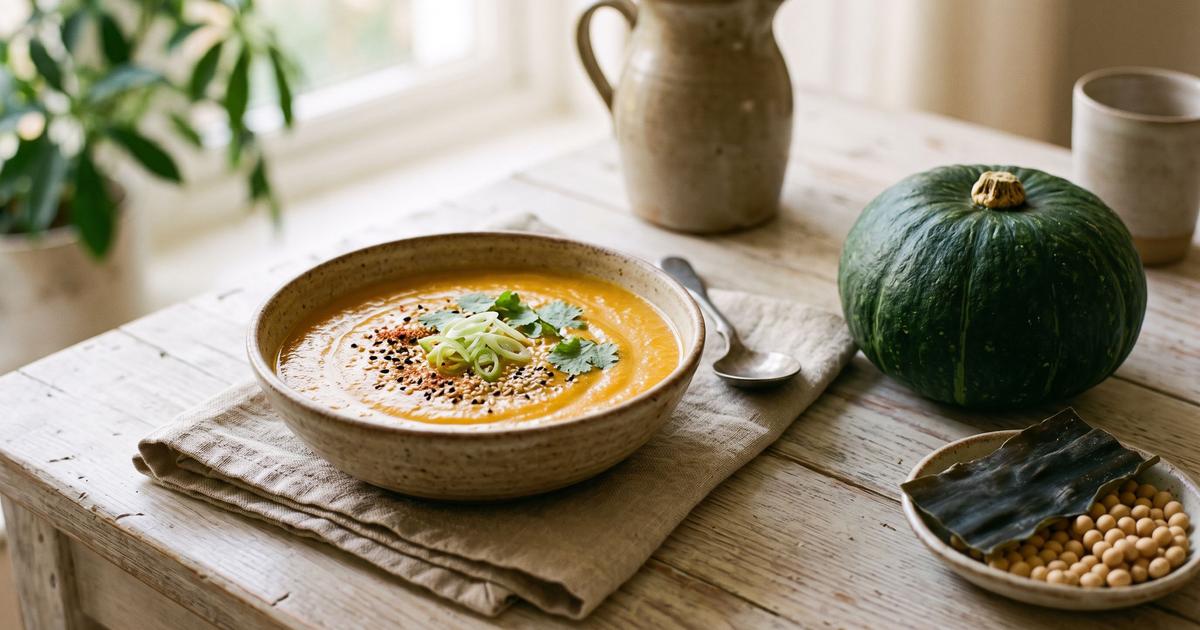
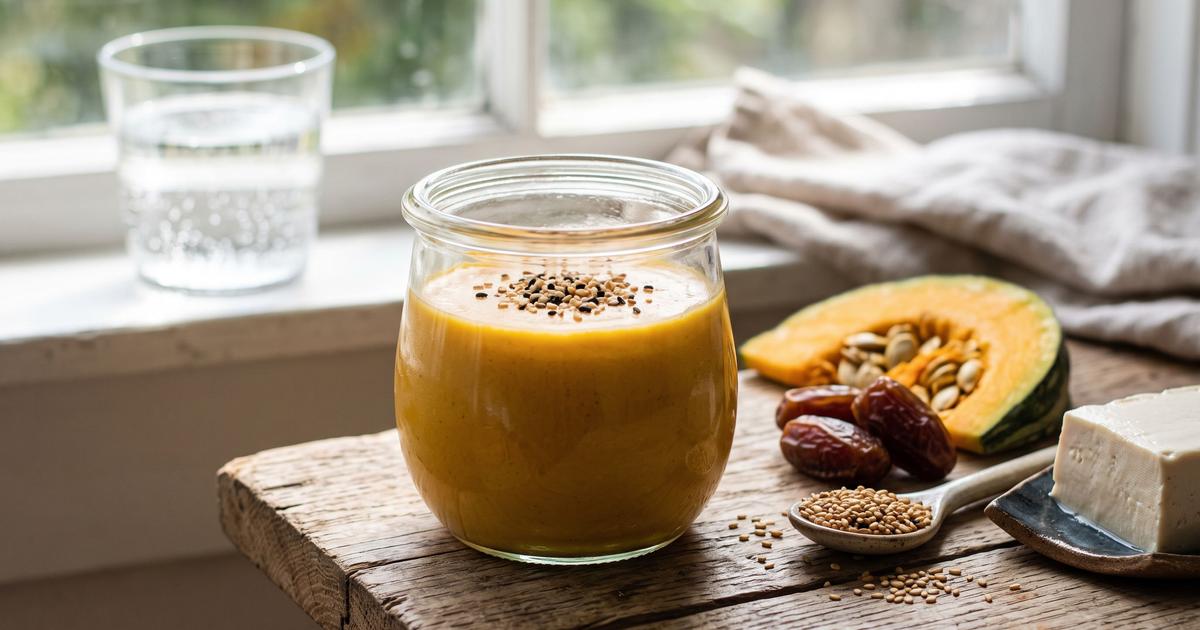
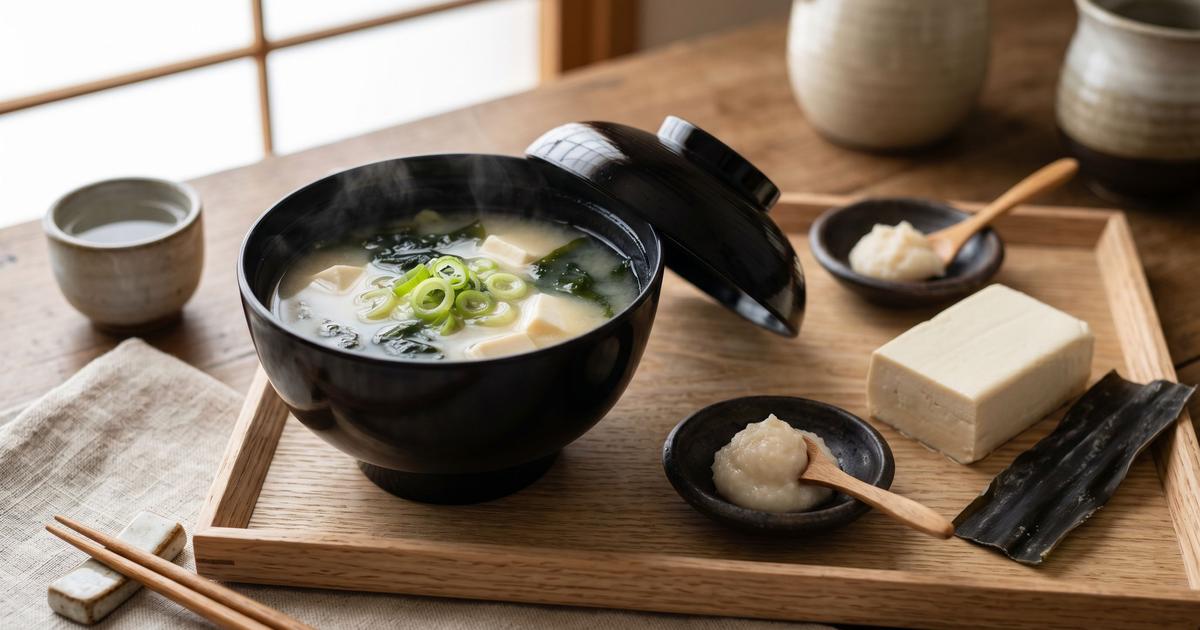
Surinagashi is a Japanese soup built by grinding a cooked vegetable into a smooth purée loosened with dashi, more delicate than a Western pureed soup and usually served in small bowls. Kabocha suits it because the squash is dry and floury, so it blends into a thick, creamy body with nothing but stock and a splash of soy milk. The dashi is drawn from kombu alone, a clean savory base that lets the sweetness of the squash come forward. White miso goes in off the heat, where it keeps its aroma, and a few toasted sesame seeds finish the bowl.
Ingredients
- 1 1/2 lb Kabocha squash, seeded and cut into chunks, skin on
- 1 piece Kombu, a 4-inch (10 cm) square
- 1 cup Unsweetened soy milk
- 1 tbsp White miso
- 1 tsp Ginger, grated
- 1 tsp Sesame seeds, toasted, to finish
Method
- Steep the kombu in 2.5 cups (600 ml) cold water for 20 minutes, heat it to a bare simmer, and remove the kombu. This quick kombu dashi is the savory backbone, and pulling the kelp before it boils keeps the stock clean.
- Simmer the kabocha in the dashi for 15 minutes, until a knife slides through with no resistance. Cooking the squash in the dashi means the flavor goes into it rather than down the drain, and the skin softens enough to blend right in.
- Blend the squash and its liquid with the soy milk until completely smooth. Kabocha is dry and floury, so it purées into a thick, creamy body with no dairy and no oil.
- Off the heat, whisk in the white miso and ginger. Miso added off the boil keeps its aroma and its living culture, where boiled miso goes flat and harsh.
- Reheat gently without letting it boil, and serve topped with the sesame. It thickens as it stands, so loosen it with a little water or dashi when you reheat.
Nutrition
Estimated per serving: 150 calories, 6 g protein, 4 g fiber, 190 mg sodium. Computed from USDA FoodData Central reference values for the main ingredients. This is an approximation, not a laboratory measurement. How these are computed.
Cost per serving is estimated from US national-average retail prices for cheap staple forms, using BLS dried-bean prices and USDA produce prices. Prices vary by store and season, so treat it as a guide, not a receipt. How this is computed.