White Bean and Rosemary Dip
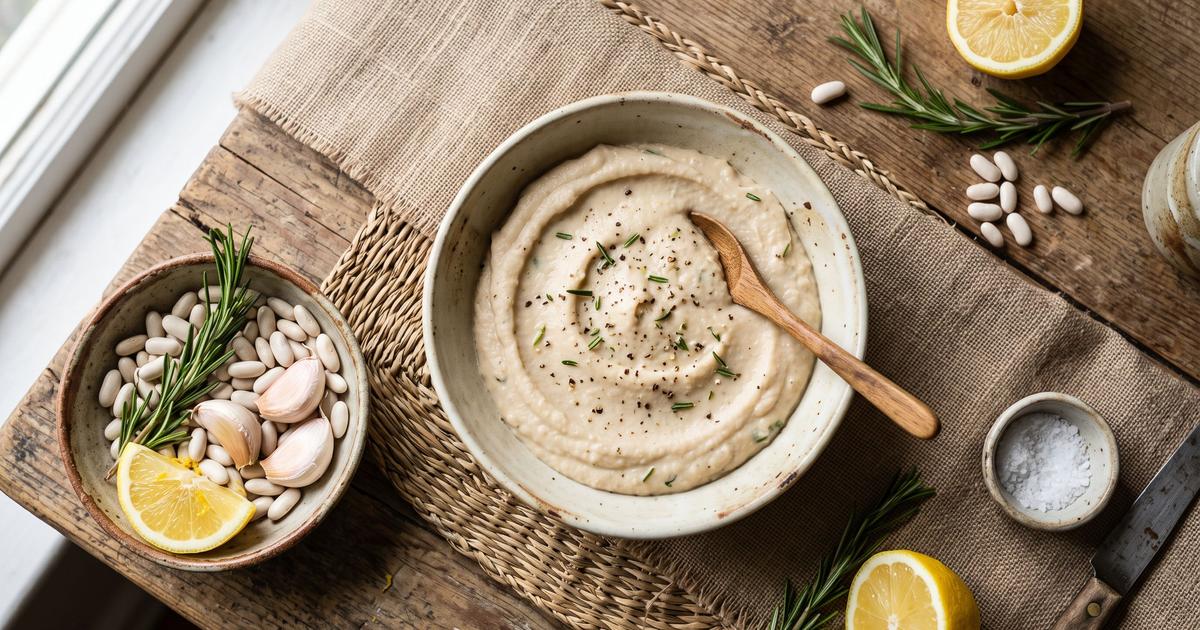
White beans blend into one of the creamiest bases there is, mild enough to carry whatever flavor you give them and rich enough to replace a cheese spread or a pat of butter on bread. The two moves that make this work without oil: soften the garlic first so it does not overpower the beans, and lean on tahini for the richness and lemon for the lift that salt would otherwise provide. Spread it on whole-grain toast, thin it with more water into a dressing, or set it out with raw vegetables. Rosemary is the Italian note here, but the same base takes to almost anything: swap in dill and lemon zest, or roasted red pepper, or a spoon of harissa.
Ingredients
- 3 cups Cannellini beans, cooked, from 1 cup dried or two 15 oz cans, drained
- 3 cloves Garlic
- 1 tbsp Rosemary, fresh, finely chopped
- 2 tbsp Lemon juice, fresh
- 2 tbsp Tahini
- 1/4 tsp Black peppercorns, ground
Method
- Warm the whole garlic cloves in a small dry pan over low heat with 2 tablespoons water, turning, until they soften and lose their raw bite, about 5 minutes. Raw garlic would dominate a mild bean dip; cooking it gently first makes it mellow and sweet.
- Chop the rosemary very fine. It is a strong, resinous herb, and a coarse chop leaves woody bits, so mince it until it is almost a powder.
- Blend the drained beans with the softened garlic, rosemary, lemon juice, tahini, and black pepper until completely smooth, adding warm water a tablespoon at a time until it turns light and spreadable, about a third of a cup.
- The tahini is doing the work oil or cream usually does: it adds richness and helps the dip turn glossy and smooth instead of pasty. Taste and add more lemon before you reach for salt; the acid is what makes it taste finished.
- Spread into a bowl and swirl the top. It keeps five days in the fridge and firms up cold, so loosen it with a little water if you want it spreadable again.
Nutrition
Estimated per serving: 140 calories, 7 g protein, 5 g fiber, 25 mg sodium. Computed from USDA FoodData Central reference values for the main ingredients. This is an approximation, not a laboratory measurement. How these are computed.
Cost per serving is estimated from US national-average retail prices for cheap staple forms, using BLS dried-bean prices and USDA produce prices. Prices vary by store and season, so treat it as a guide, not a receipt. How this is computed.