Polpette di Fagioli, Italian Baked White Bean Balls
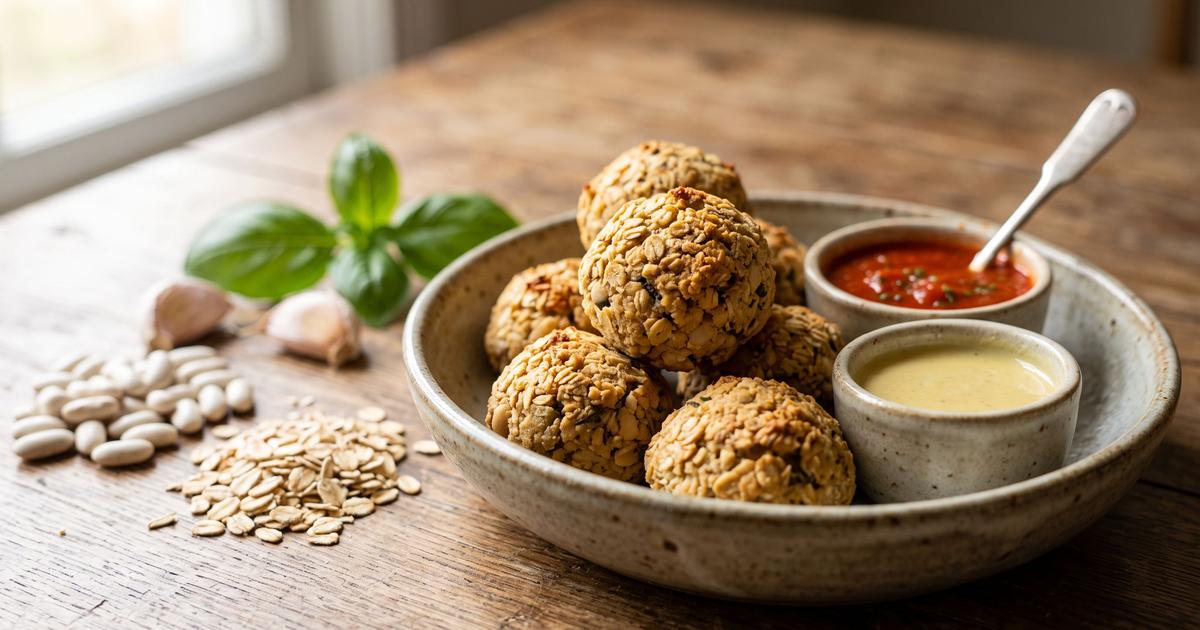
Polpette are the little bean and bread balls Italian cooks make from what is in the cupboard, browned and dropped into sauce or eaten on their own with a toothpick. This version skips the bread and the frying: mashed cannellini beans hold together with blended oats and a spoon of aquafaba, and they bake instead of fry, so they carry no oil. Tomato paste and nutritional yeast give them the savory depth that usually comes from cheese. Keep the mix a little coarse so they taste of beans, roll them tight so they hold, and serve them warm as an antipasto with lemon or a bowl of tomato sauce for dipping.
Ingredients
- 1 1/2 cups Cannellini beans, cooked, drained and rinsed
- 1/2 cup Rolled oats
- 2 cloves Garlic, minced
- 1/4 cup Flat-leaf parsley, chopped
- 2 tbsp Basil, chopped
- 1 tsp Dried oregano
- 1 tbsp Tomato paste
- 2 tbsp Nutritional yeast
- 1 Lemon, zested, plus wedges to serve
- 2 tbsp Aquafaba
- 1/2 tsp Black peppercorns, ground
Method
- Heat the oven to 400°F (205°C) and line a sheet pan with parchment. Drain and rinse the beans well, since rinsing washes off the canning liquid and the sodium that comes with it, and save 2 tablespoons of the liquid, the aquafaba, to bind.
- Blend half the oats to a coarse flour and leave the rest whole. The flour glues the balls together while the whole oats keep them from turning pasty.
- Mash the beans with a fork until mostly smooth but still a little rough, then mix in both oats, the garlic, parsley, basil, oregano, tomato paste, nutritional yeast, lemon zest, black pepper, and the aquafaba. Mashing rather than blending leaves texture, so the polpette taste of beans and not of paste.
- Roll into balls about the size of a walnut, pressing each one firm so it holds, and space them on the pan. Wet hands stop the mix from sticking, and the gaps let the heat reach all sides.
- Bake 22 to 25 minutes, turning once halfway, until the outsides are dry and golden. With no oil they set by drying rather than frying, so give them the full time and do not crowd the pan. Serve warm with a squeeze of lemon or a spoon of tomato sauce.
Nutrition
Estimated per serving: 165 calories, 10 g protein, 7 g fiber, 90 mg sodium. Computed from USDA FoodData Central reference values for the main ingredients. This is an approximation, not a laboratory measurement. How these are computed.
Cost per serving is estimated from US national-average retail prices for cheap staple forms, using BLS dried-bean prices and USDA produce prices. Prices vary by store and season, so treat it as a guide, not a receipt. How this is computed.