Revithokeftedes, Greek Baked Chickpea Fritters

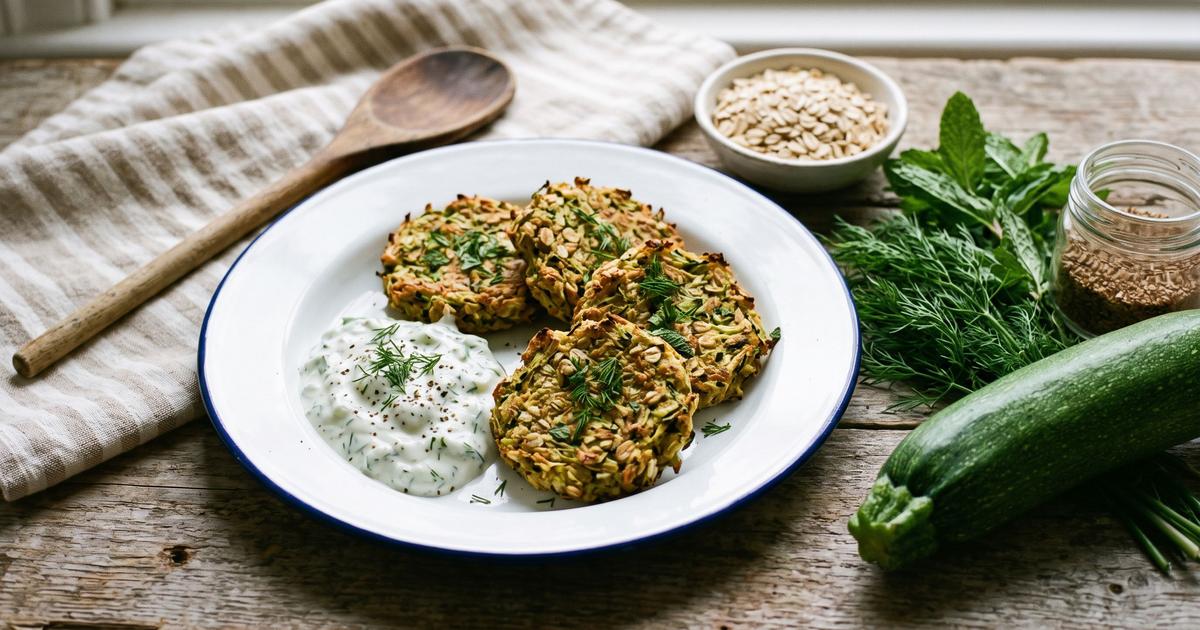
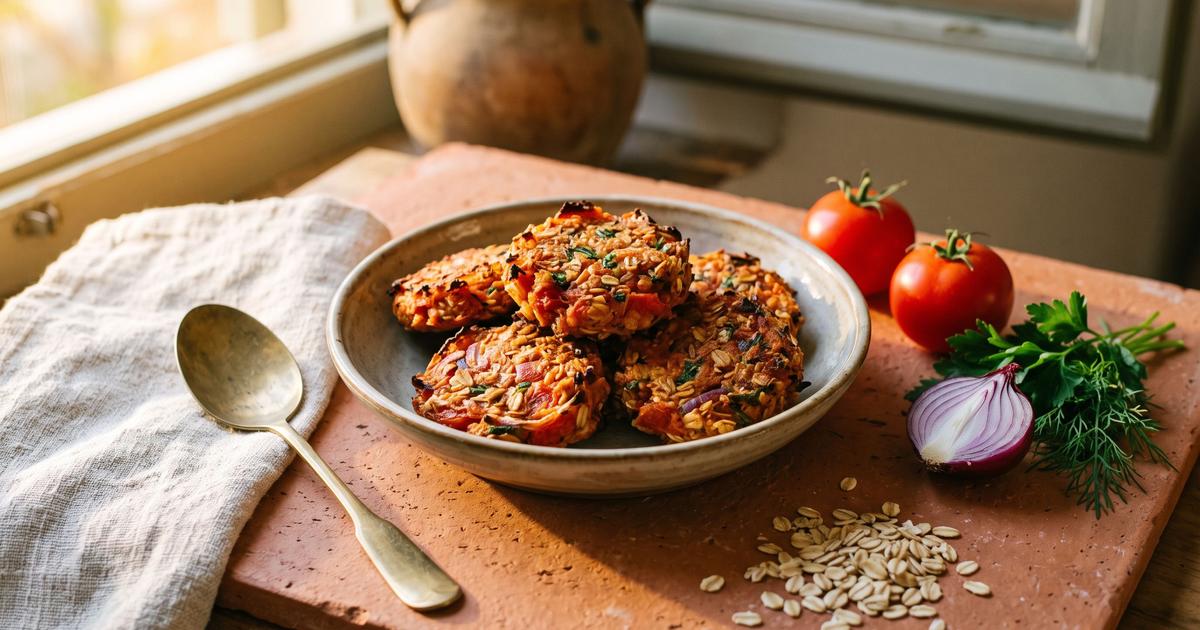
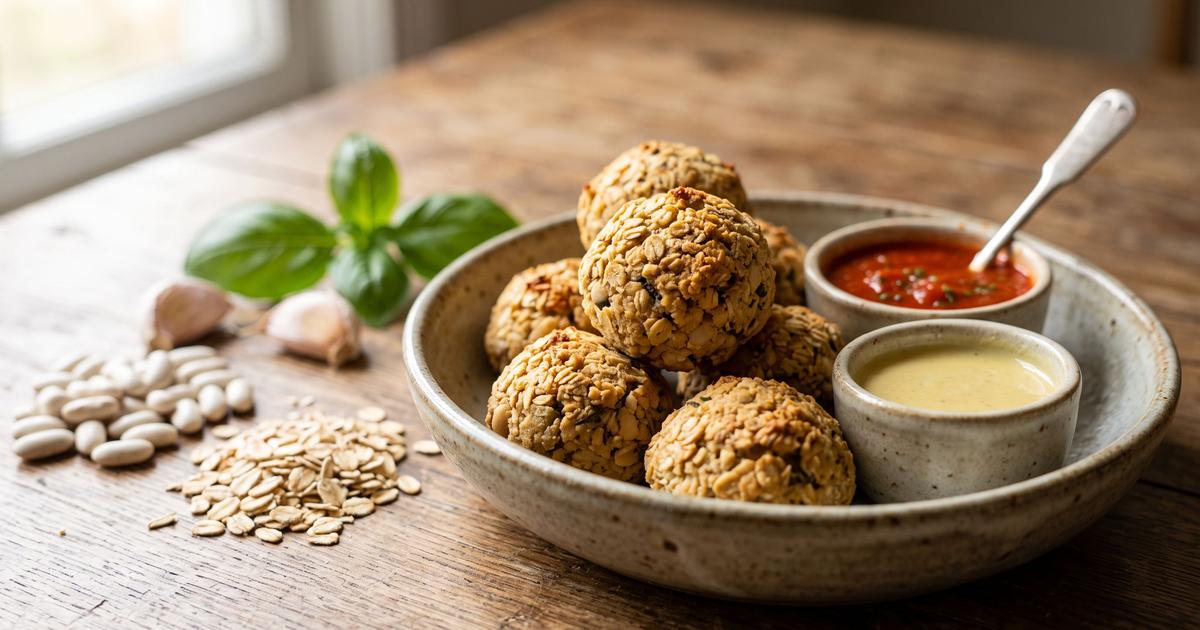
Revithokeftedes are the chickpea fritters of the Cyclades, best known from the island of Sifnos, where they are a Sunday staple. They are cousins to falafel but softer and herb-forward, leaning on mint and parsley rather than cumin and coriander. Frying is the old way, but a hot oven and no oil give a crisp shell and a tender center while keeping the sodium near zero, since you control the chickpeas from the pot up. The ground oats are the quiet trick: they bind the mash the way an egg would, so the patties hold without falling apart. Serve them warm with lemon as a meze, or fold cold ones into a grain bowl the next day.
Ingredients
- 1 1/2 cups Chickpeas, cooked, drained
- 1/2 small Yellow onions, grated
- 1 clove Garlic, grated
- 3 tbsp Flat-leaf parsley, chopped
- 2 tbsp Mint, chopped
- 3 tbsp Rolled oats, ground to a flour
- 1 Lemon, zest and 1 tbsp juice
- 1 tsp Dried oregano
- 1/4 tsp Black peppercorns, ground
Method
- Squeeze the grated onion in your hands over the sink to wring out its water. Wet onion leaves the mixture too loose to hold together without egg or flour, so this is the step that lets the fritters set.
- Mash the chickpeas with a fork, or pulse them in a processor until coarse, leaving some texture. A full puree bakes into paste, while a rough mash gives the fritters their bite.
- Mix in the wrung-out onion, garlic, parsley, mint, oregano, lemon zest and juice, and the ground oats. The oats swell and bind the way breadcrumbs would, pulling everything together as it bakes.
- Let the mixture rest 10 minutes, then shape it into twelve small patties. Resting gives the oats time to absorb moisture so the patties firm up and are easier to form.
- Bake at 425F (220C) on a parchment-lined tray for 15 minutes, flip, and bake 10 minutes more until golden and crisp at the edges. Frying is traditional, but the dry oven heat crisps the crust without oil and keeps the herbs green. Serve warm with lemon.
Nutrition
Estimated per serving: 190 calories, 9 g protein, 8 g fiber, 30 mg sodium. Computed from USDA FoodData Central reference values for the main ingredients. This is an approximation, not a laboratory measurement. How these are computed.
Cost per serving is estimated from US national-average retail prices for cheap staple forms, using BLS dried-bean prices and USDA produce prices. Prices vary by store and season, so treat it as a guide, not a receipt. How this is computed.