Santorini Fava, Split Pea Puree
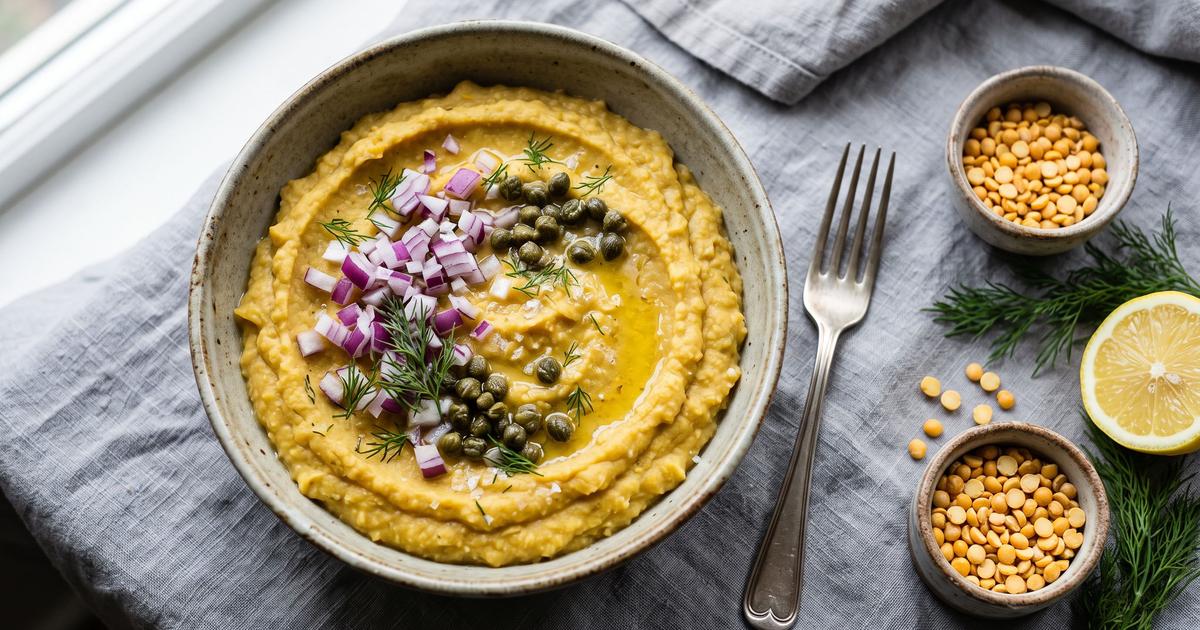
On Santorini the word fava means yellow split peas, not the broad bean, a naming quirk that has confused visitors for a century. The peas are grown in the island's volcanic soil and cooked down to a puree that firms up like polenta as it cools. Traditionally a pool of olive oil sits on top; here the richness comes from the peas themselves, which turn silky when blended hot with their own liquid. Lemon and a few rinsed capers carry the flavor, and the raw onion on top gives the bite that makes it a meze rather than a soup.
Ingredients
- 1 1/2 cups Yellow split peas, rinsed
- 1 Yellow onion, quartered
- 2 cloves Garlic
- 1 Bay leave
- 3 tbsp Lemon juice, fresh
- 1/2 Red onions, finely diced
- 1 tbsp Capers, rinsed hard
- 1/2 tsp Dried oregano
- 1/4 tsp Black peppercorns, freshly ground
Method
- Put the split peas, quartered onion, garlic, and bay leaf in a pot with 5 cups (1.2 L) water. Bring to a boil, skim off any foam, then drop to a low simmer. Skimming early keeps the puree clean and sweet.
- Simmer partly covered, stirring now and then so the peas do not catch, until they collapse into a loose mush, 35 to 45 minutes. Add a splash of water if it dries out before they are soft.
- Fish out the bay leaf. Blend the peas and their liquid with the lemon juice and black pepper until completely smooth. It will look thin. It sets firm as it cools, so stop while it still pours.
- Spread it warm into a shallow bowl. As it cools it turns spreadable, which is how it is served across the Cyclades, at room temperature rather than hot.
- Top with the raw red onion, the rinsed capers, and a pinch of oregano. The capers are the only real salt here, so rinse them hard and use them as accents. Finish with more lemon at the table, which does the job salt would.
Nutrition
Estimated per serving: 170 calories, 11 g protein, 9 g fiber, 95 mg sodium. Computed from USDA FoodData Central reference values for the main ingredients. This is an approximation, not a laboratory measurement. How these are computed.
Cost per serving is estimated from US national-average retail prices for cheap staple forms, using BLS dried-bean prices and USDA produce prices. Prices vary by store and season, so treat it as a guide, not a receipt. How this is computed.