Tzatziki, Greek Cucumber Yogurt Dip
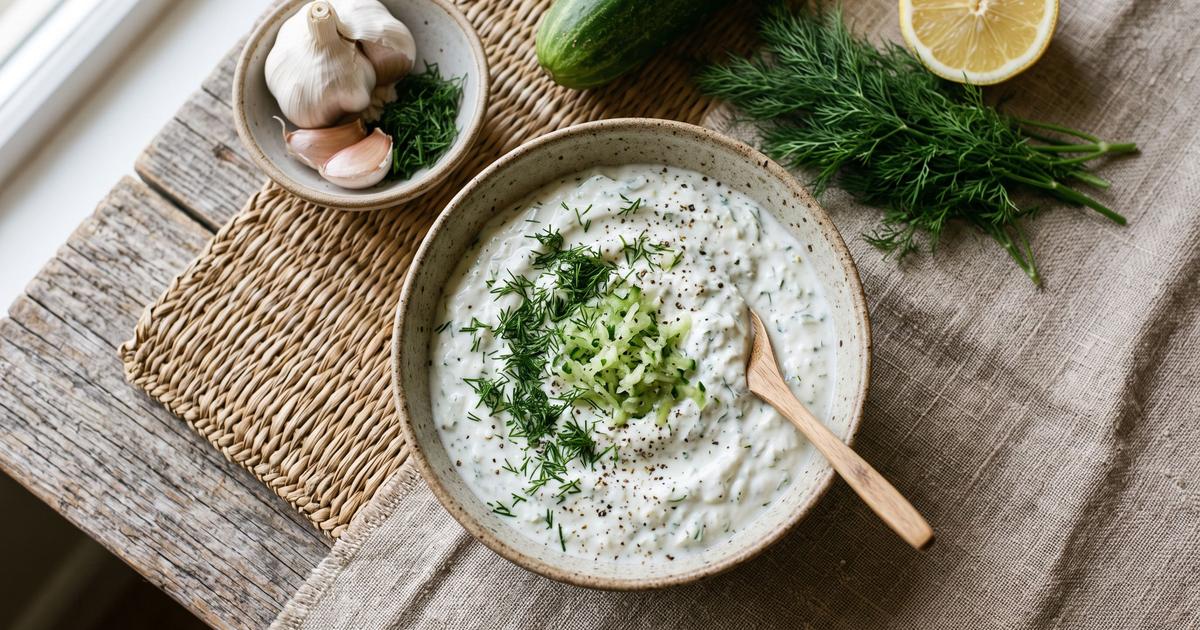
Tzatziki is the cool garlic-and-cucumber yogurt that Greek cooks serve with almost everything, and it loses nothing by leaving out the customary drizzle of oil. The richness is already there in the yogurt; a soy-based one gives the most body and protein and stays tangy where dairy would go flat. The one rule that matters is wringing the grated cucumber bone dry, because the water it holds is what turns a thick dip thin. Grate the garlic to a paste so it spreads evenly, use plenty of dill, and give it an hour in the fridge for the garlic to settle. Serve it with raw vegetables or beside a warm grain plate.
Ingredients
- 2 cups Plain plant yogurt, thick, soy-based
- 1 Cucumber, grated and squeezed dry
- 2 cloves Garlic, grated to a paste
- 3 tbsp Dill, chopped
- 1 tbsp Lemon juice
- 1/4 tsp Black peppercorns, ground
Method
- Grate the cucumber on the coarse holes of a box grater, skin and all, then pile it in a clean towel and wring it hard over the sink. Cucumber is mostly water, and wringing it dry is the single step that decides whether tzatziki is thick or a puddle. Do not salt it to draw the water, just squeeze.
- Grate the garlic to a paste on the fine holes or a microplane. Grated garlic melts into the yogurt evenly, where chopped garlic leaves hot bites.
- Fold the squeezed cucumber, garlic, dill, and lemon juice into the yogurt and grind in the black pepper. Choose a thick soy yogurt for the body and the protein; a thin one will need straining first through a cloth.
- Rest it in the fridge at least 30 minutes before serving. The garlic mellows and the flavors marry as it sits, so an hour is better and overnight better still. Serve it cold as a dip for raw vegetables or a spoon alongside anything warm.
Nutrition
Estimated per serving: 60 calories, 4 g protein, 1 g fiber, 25 mg sodium. Computed from USDA FoodData Central reference values for the main ingredients. This is an approximation, not a laboratory measurement. How these are computed.
Cost per serving is estimated from US national-average retail prices for cheap staple forms, using BLS dried-bean prices and USDA produce prices. Prices vary by store and season, so treat it as a guide, not a receipt. How this is computed.