Pesto alla Genovese, Without the Oil
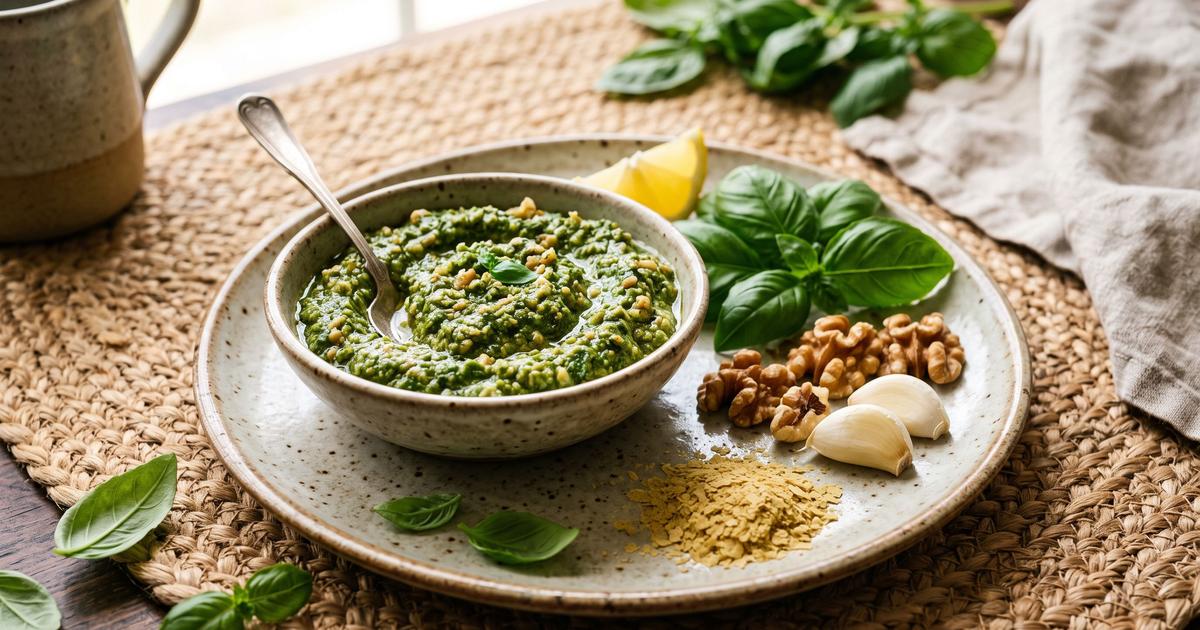
Pesto is Genoa in a jar, and the classic is little more than basil, pine nuts, garlic, hard cheese, and a river of olive oil pounded together. Take the oil and the cheese away and you might expect it to fall apart, but the sauce survives on the strength of its other parts: toasted nuts for fat and body, nutritional yeast for the savory depth the cheese carried, and a little water to bring it all together. Walnuts stand in for pine nuts here, cheaper and better for you, and the quick blanch of the basil is the trick that keeps the green from turning to mud. Toss it through whole grain pasta with a spoonful of the starchy cooking water, spread it on toast, or stir it into a bowl of white beans. A little goes a long way, which is how a rich sauce stays an accent.
Ingredients
- 2 cups Basil, leaves, packed
- 1/2 cup Walnuts, toasted
- 1 clove Garlic
- 3 tbsp Nutritional yeast
- 1 tbsp Lemon juice
- 1/4 tsp Black peppercorns, freshly ground
Method
- Toast the walnuts in a dry skillet over medium heat, shaking the pan often, until they smell nutty and darken a shade, about 4 minutes. Let them cool. Toasting is doing real work here, deepening the fat and richness that would otherwise come from the pour of olive oil this sauce is built on. Pine nuts are traditional; walnuts are cheaper, higher in omega-3s, and taste just as good crushed into basil.
- Blanch the basil if you want the color to last: dunk the leaves in boiling water for 5 seconds, then straight into cold water, and squeeze them dry. This sets the green so the pesto stays vivid for days instead of darkening within the hour. Skip it if you plan to eat the pesto the same day.
- Put the basil, walnuts, garlic, nutritional yeast, lemon juice, and black pepper in a food processor. Pulse to a coarse paste, then add cold water a tablespoon at a time, 3 to 4 tablespoons in all, until it moves into a thick, spoonable sauce. The water and the walnuts' own fat carry the herb and coat the pasta, which is the job the oil used to do.
- Taste and adjust with more lemon. The nutritional yeast supplies the savory, cheesy note that Parmigiano would, so the sauce should taste bright and full without any salt. Traditionalists pound pesto in a mortar for a silkier texture; a processor is faster and loses little.
- Scrape it into a jar and press plastic wrap to the surface, or float a thin layer of cold water on top, to keep air off it. Stir before using. It keeps 4 days in the refrigerator and freezes well in an ice cube tray for single portions.
Nutrition
Estimated per serving: 100 calories, 3 g protein, 2 g fiber, 15 mg sodium. Computed from USDA FoodData Central reference values for the main ingredients. This is an approximation, not a laboratory measurement. How these are computed.
Cost per serving is estimated from US national-average retail prices for cheap staple forms, using BLS dried-bean prices and USDA produce prices. Prices vary by store and season, so treat it as a guide, not a receipt. How this is computed.