Whipped Black-Eyed Pea Dip with Ginger and Chile

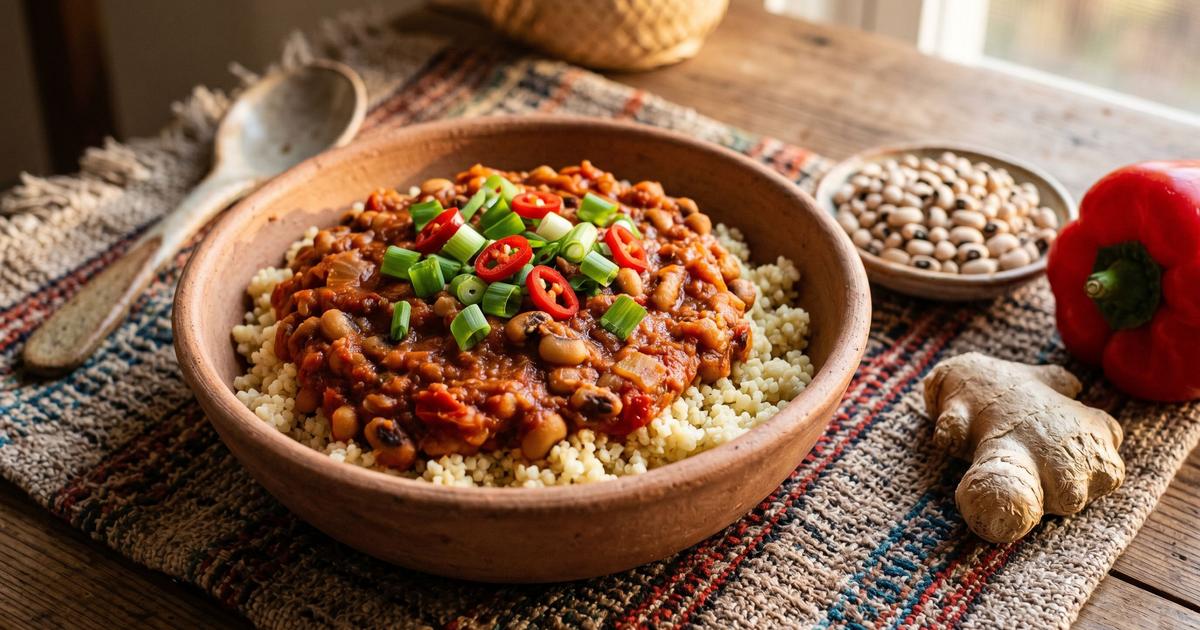
Across West Africa the black-eyed pea is the everyday bean, soaked and skinned and ground into the batter that becomes akara, the fried morning fritter sold on every corner. This dip borrows that batter's aromatics, the onion and ginger and fierce Scotch bonnet heat, but stops before the frying pan and whips the beans smooth instead. Habanero stands in for the Scotch bonnet, which is its close cousin in flavor as well as fire, so use only as much as you want to feel. Lemon does the work salt would, and the beans bring enough protein that a bowl of this with raw vegetables is closer to a meal than a nibble.
Ingredients
- 1 1/2 cups Black-eyed peas, cooked, liquid reserved
- 1/4 whole Red onions, grated
- 2 cloves Garlic
- 1 tbsp Ginger, grated
- 1/2 whole Habanero, seeded
- 1 tsp Cumin seed, toasted and ground
- 3 tbsp Lemon juice
- 3 tbsp Cilantro, chopped
Method
- Toast the cumin seed in a dry pan for about a minute until fragrant, then grind. Blooming the seed first pulls out an oil-borne aroma that raw ground cumin never gives up, and it costs you nothing but sixty seconds.
- Rinse the grated onion under cold water and squeeze it dry. West African bean batters use raw onion for bite, but rinsing tames the sulfur so it lifts the dip instead of dominating it.
- Blend the black-eyed peas, onion, garlic, ginger, habanero, cumin, and lemon juice, adding reserved bean liquid a spoonful at a time until it whips up pale and fluffy. The peas are stiff on their own, so the splash of cooking liquid is what turns a paste into a light, spoonable dip.
- Taste and adjust the heat and lemon. Black-eyed peas are mild and a little sweet, so they can take more chile and more acid than you expect before either one reads as too much.
- Fold in the cilantro and rest 15 minutes before serving. The pause lets the raw garlic and ginger settle into the beans, and it holds in the fridge for three days scooped with vegetables or flatbread.
Nutrition
Estimated per serving: 95 calories, 6 g protein, 5 g fiber, 20 mg sodium. Computed from USDA FoodData Central reference values for the main ingredients. This is an approximation, not a laboratory measurement. How these are computed.
Cost per serving is estimated from US national-average retail prices for cheap staple forms, using BLS dried-bean prices and USDA produce prices. Prices vary by store and season, so treat it as a guide, not a receipt. How this is computed.