Smoky Black Bean Dip
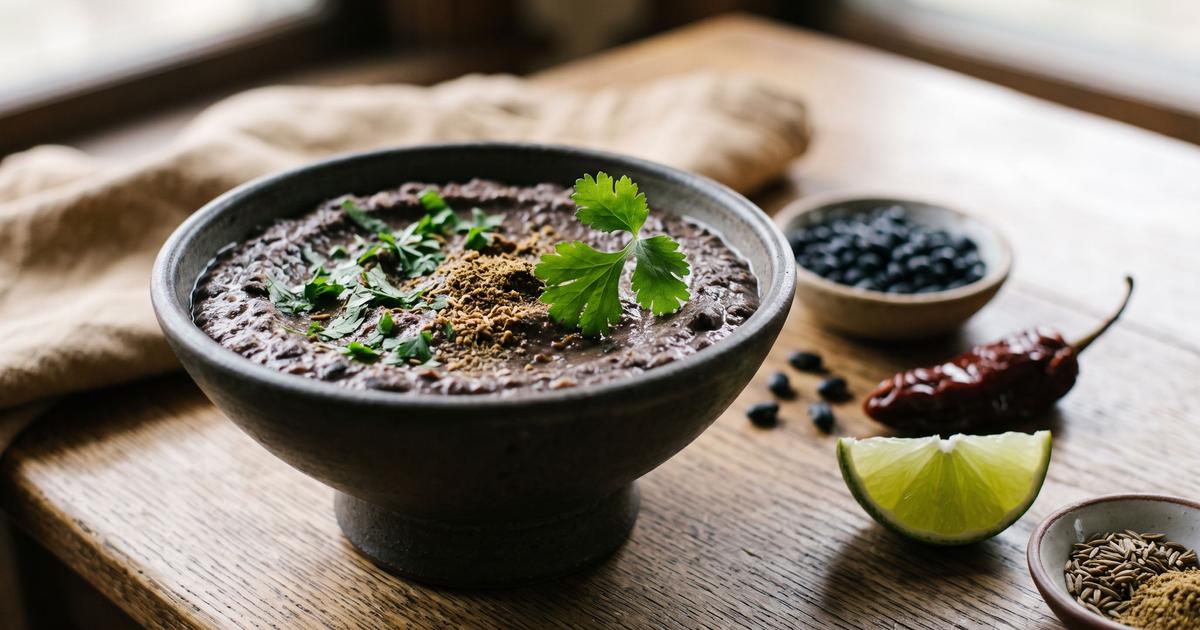
Black beans are cheap, filling, and blend into a dip as easily as chickpeas, with a deeper, earthier flavor. The smokiness that usually comes from lard or bacon in a refried-style dip comes here from a single chipotle, a smoke-dried jalapeno that brings heat and campfire flavor in one ingredient. Toasting and grinding your own cumin, and blending the beans with their own cooking liquid rather than water, are the two moves that make it taste like more than mashed beans. Scoop it with raw vegetables or whole-grain chips, spread it into a wrap, or thin it with lime and water into a sauce for a grain bowl.
Ingredients
- 3 cups Black beans, cooked, from 1 cup dried or two 15 oz cans, drained, liquid reserved
- 2 cloves Garlic
- 1 tsp Cumin seed, toasted and ground
- 1 whole Chipotle, dried, soaked and seeded, or 1 tsp chipotle powder
- 2 tbsp Lime juice, fresh
- 3 tbsp Cilantro, chopped, plus more to finish
Method
- Toast the cumin seeds in a dry pan over medium heat until they darken and smell nutty, about a minute, then grind them. Toasting whole cumin and grinding it fresh is a small step with an outsized payoff: it is the warm backbone of the dip.
- Soften the whole garlic cloves in the same dry pan with a splash of water for a couple of minutes to take off the raw edge.
- Blend the drained beans with the garlic, cumin, chipotle, lime juice, and cilantro until smooth, loosening with the reserved bean cooking liquid a few tablespoons at a time until it is soft and scoopable. Using the bean liquid instead of water keeps the flavor deep.
- The chipotle is doing double duty: smoke and heat, standing in for the smokiness that bacon or a fatty base would bring to a bean dip. Start with less and blend up if you want more fire.
- Warm the dip gently in a pan or serve at room temperature, topped with more cilantro. It thickens as it sits, so stir in a splash of water or lime to loosen it.
Nutrition
Estimated per serving: 130 calories, 7 g protein, 7 g fiber, 20 mg sodium. Computed from USDA FoodData Central reference values for the main ingredients. This is an approximation, not a laboratory measurement. How these are computed.
Cost per serving is estimated from US national-average retail prices for cheap staple forms, using BLS dried-bean prices and USDA produce prices. Prices vary by store and season, so treat it as a guide, not a receipt. How this is computed.