Pico de Gallo, Fresh Salsa Cruda
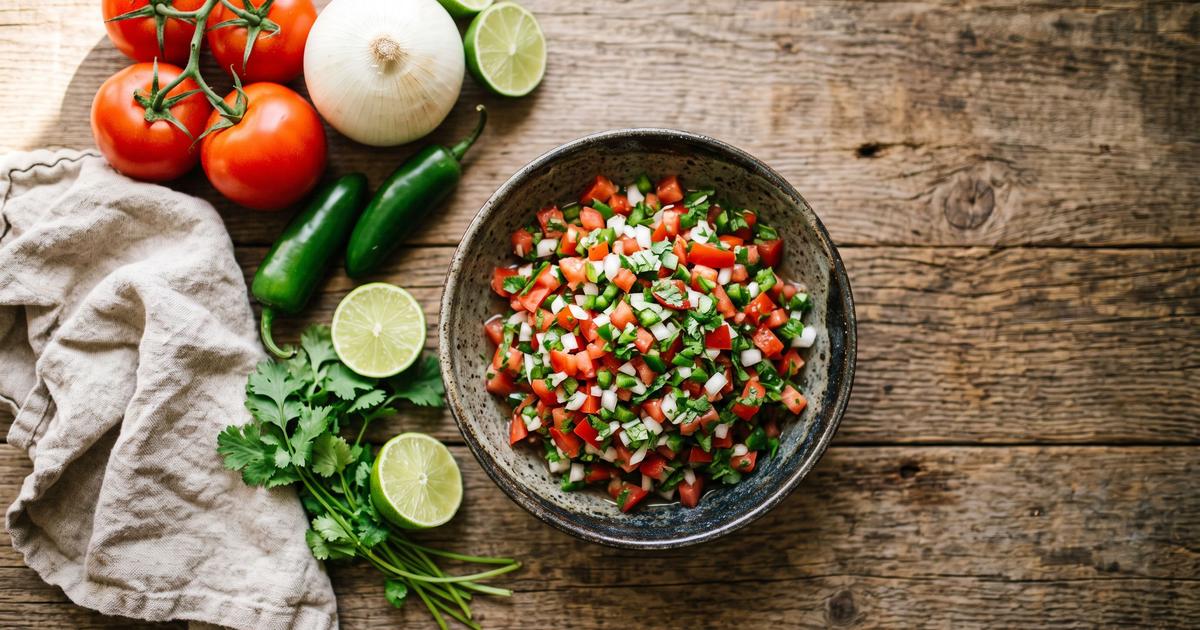
Pico de gallo, also called salsa cruda or salsa fresca, is the raw counterpart to the cooked and blended table salsas. Nothing goes near heat, which is the whole appeal: it tastes of the ingredients themselves, bright and loud. The name means rooster's beak, and the usual explanation is that it was once eaten pinched between finger and thumb. The five things in it are tomato, onion, chile, cilantro, and lime, and the ratios are yours to move. The two moves that keep it from turning watery and dull are seeding the tomatoes and rinsing the onion. Spoon it over beans, grain bowls, and roasted vegetables, or eat it with jicama and cucumber as a snack.
Ingredients
- 1 1/4 lb Fresh tomatoes, Roma, seeded and finely diced
- 1/2 cup Red onions, finely diced
- 1 Jalapeño, seeded and minced
- 1/2 cup Cilantro, chopped
- 2 tbsp Lime juice
- 1/2 tsp Cumin seed, toasted and ground
Method
- Seed the tomatoes before you dice them. The seeds and the jelly around them carry most of the water, and leaving them in gives you a salsa that pools instead of clinging. Cut the flesh into small, even dice so every spoonful has some of each thing in it.
- Rinse the diced red onion in cold water for a minute and shake it dry. This washes off the sulfur compounds that make raw onion harsh, so it stays sharp and sweet without taking over the bowl.
- Toast the cumin seed in a dry pan for 30 seconds until it smells nutty, then grind it. Blooming it this way is the difference between cumin that tastes like dust and cumin that tastes like a spice.
- Combine the tomato, onion, jalapeno, and cilantro. Add the lime juice and ground cumin and fold gently, so the tomatoes do not break down.
- Let it sit 10 minutes before serving. The salt shaker stays away because the lime, the raw onion, and the chile do the seasoning. Drain off any liquid that collects if you want it drier for tacos.
Nutrition
Estimated per serving: 20 calories, 1 g protein, 1 g fiber, 5 mg sodium. Computed from USDA FoodData Central reference values for the main ingredients. This is an approximation, not a laboratory measurement. How these are computed.
Cost per serving is estimated from US national-average retail prices for cheap staple forms, using BLS dried-bean prices and USDA produce prices. Prices vary by store and season, so treat it as a guide, not a receipt. How this is computed.