Guacamole, Mexican Avocado Mash
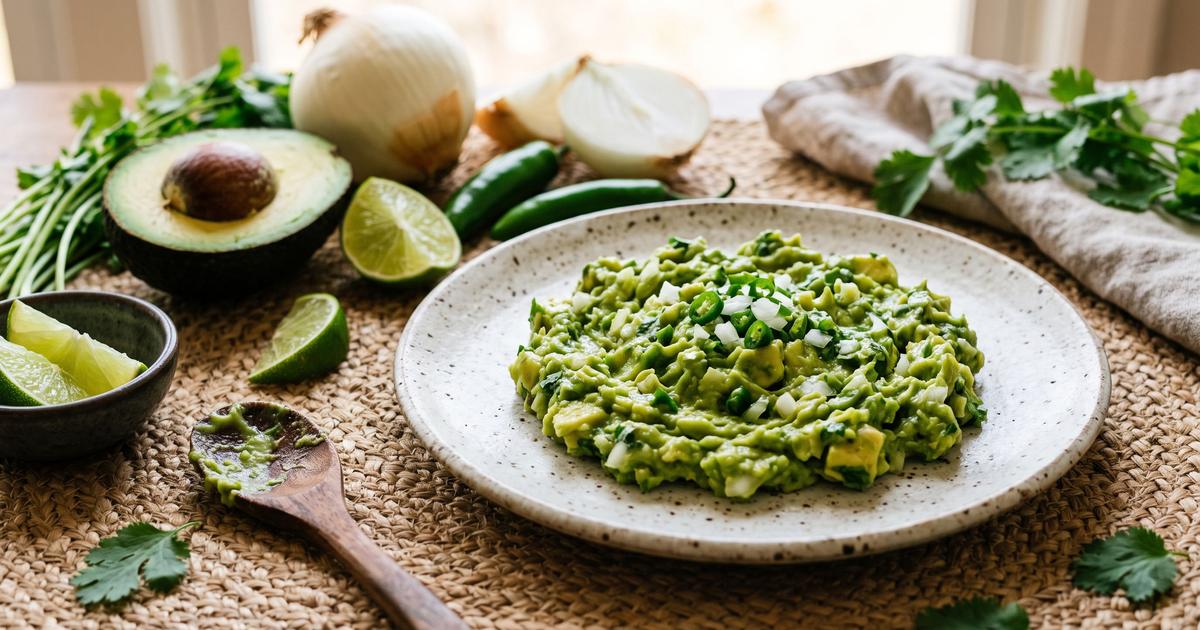
Guacamole is proof that ripe fruit needs almost nothing done to it. The avocado is a whole-food fat, so a quarter of one goes further than you would guess, and the job of everything else in the bowl is to keep it from tasting flat. Lime does the seasoning that salt usually does, the raw onion and serrano bring sharpness and heat, and the cilantro keeps it green and fresh. Skip the sour cream, the mayonnaise, and the pile of salt that restaurant versions hide inside. Buy avocados hard and let them ripen on the counter for a few days until they give slightly to a squeeze. Seed the tomato so the mash clings instead of turning watery, and mash by hand so you keep some texture.
Ingredients
- 2 Avocados, ripe, pitted
- 1 1/2 tbsp Lime juice
- 1/4 cup Red onions, finely diced
- 1 Serrano, seeded and minced
- 1/3 cup Cilantro, chopped
- 1/2 cup Fresh tomatoes, seeded and diced small
- 1 clove Garlic, grated to a paste
Method
- Rinse the diced red onion in cold water for a minute and shake it dry. This strips the harsh sulfur compounds off raw onion so it stays sharp and sweet instead of taking over the bowl.
- Scoop the avocado into a bowl and add the lime juice first, before you mash. The acid coats the flesh and slows the browning, and it also seasons from the inside instead of sitting on top.
- Mash with a fork or a molcajete, but stop while it is still lumpy. Guacamole is a mash, not a puree. The pieces of avocado are the texture, and a smooth blend loses the whole point.
- Fold in the onion, serrano, cilantro, tomato, and grated garlic. Add the chile a little at a time and taste as you go, since serranos vary and the heat is doing the work salt would.
- Press plastic wrap flat onto the surface if it has to wait, so no air reaches the avocado. Serve within a couple of hours with jicama, cucumber, or spooned over beans and grain bowls.
Nutrition
Estimated per serving: 100 calories, 1 g protein, 4 g fiber, 6 mg sodium. Computed from USDA FoodData Central reference values for the main ingredients. This is an approximation, not a laboratory measurement. How these are computed.
Cost per serving is estimated from US national-average retail prices for cheap staple forms, using BLS dried-bean prices and USDA produce prices. Prices vary by store and season, so treat it as a guide, not a receipt. How this is computed.