Salsa Verde, Roasted Tomatillo
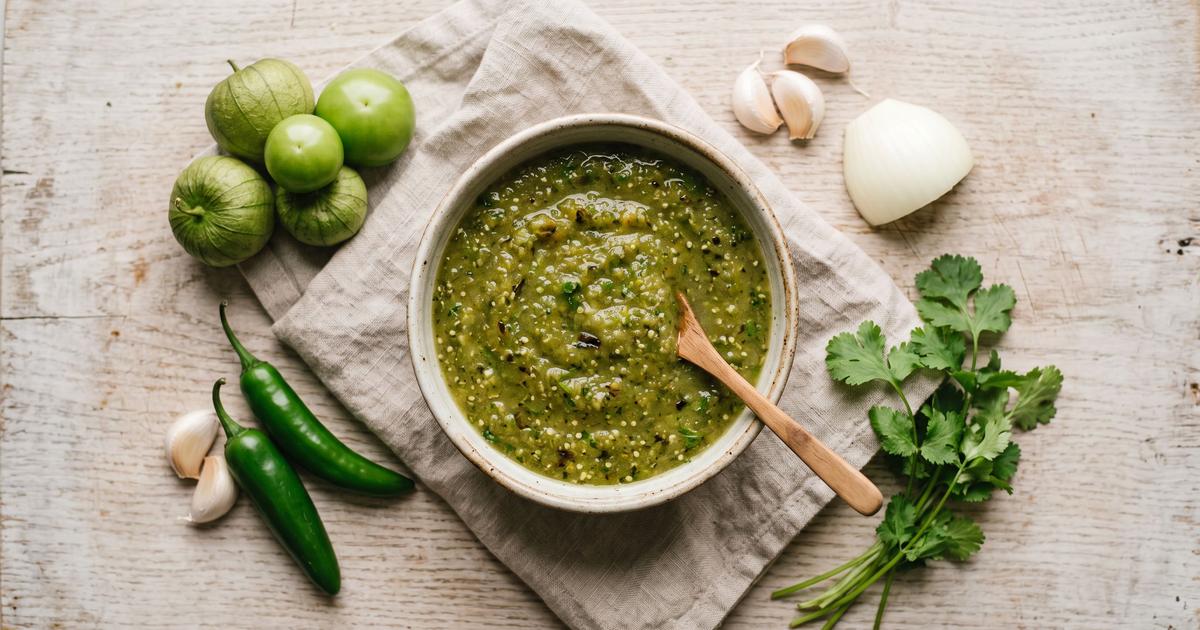
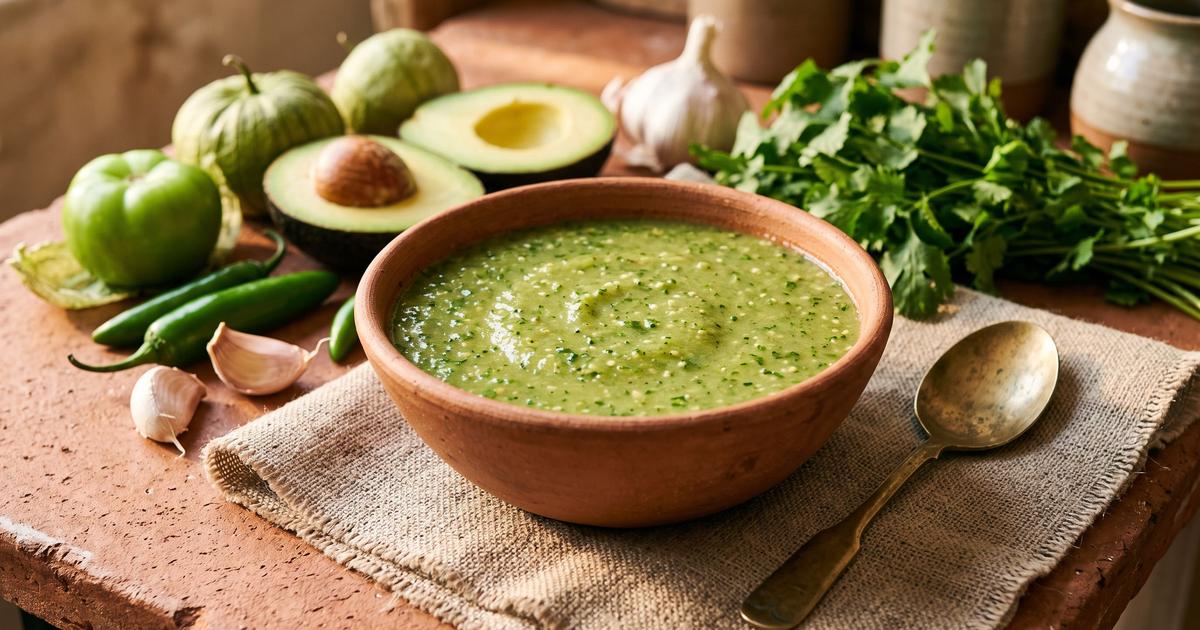
Salsa verde is the green counterpart to a red table salsa, built on the tomatillo rather than the tomato. The tomatillo is a tart little fruit in a papery husk, and roasting it is the move that separates a good salsa from a flat one: the blistered skins add smoke and the heat rounds off the raw acidity. Raw garlic, onion, and a fistful of cilantro go in cold, straight into the blender, so they keep their bite against the mellowed tomatillos. Spoon it over beans, grain bowls, or roasted vegetables, or use it as a dip. It keeps for a week in the fridge and the flavor deepens on day two, which makes it worth doubling.
Ingredients
- 1 lb Tomatillo, about 10, husked
- 2 Serranos, stems removed
- 2 cloves Garlic, raw
- 1/4 Yellow onions, cut in chunks
- 3/4 cup Cilantro, leaves and stems
- 1 tbsp Lime juice
Method
- Peel the papery husks off the tomatillos and rinse them under warm water to wash off the sticky film underneath, which is bitter if it stays on.
- Set the tomatillos and serranos on a foil-lined tray and broil close to the element, turning once, until they are blistered and blackened in spots and the tomatillos have gone soft and khaki, about 8 minutes. Roasting concentrates their flavor and tames the sharp raw-green taste of a fresh tomatillo.
- Scrape everything, including the juices on the foil, into a blender. Add the raw garlic, onion, cilantro, and lime juice.
- Pulse to a coarse sauce, not a smooth puree. A little texture is what tells you it was made from whole tomatillos and not poured from a jar. Loosen with a tablespoon or two of water if it is too thick.
- Taste. The char, the acid of the tomatillo, and the lime carry it, so it needs no salt. Let it sit 10 minutes before serving to let the raw garlic and onion mellow into the sauce.
Nutrition
Estimated per serving: 25 calories, 1 g protein, 1 g fiber, 10 mg sodium. Computed from USDA FoodData Central reference values for the main ingredients. This is an approximation, not a laboratory measurement. How these are computed.
Cost per serving is estimated from US national-average retail prices for cheap staple forms, using BLS dried-bean prices and USDA produce prices. Prices vary by store and season, so treat it as a guide, not a receipt. How this is computed.