Sikil Pak, Yucatecan Pepita Dip
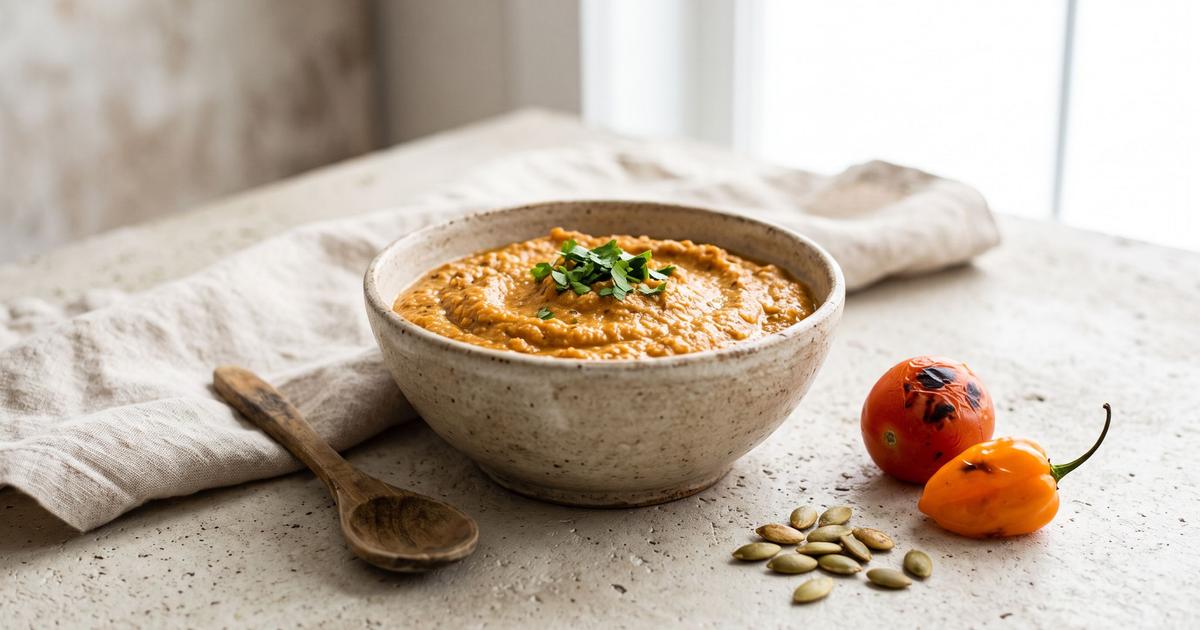
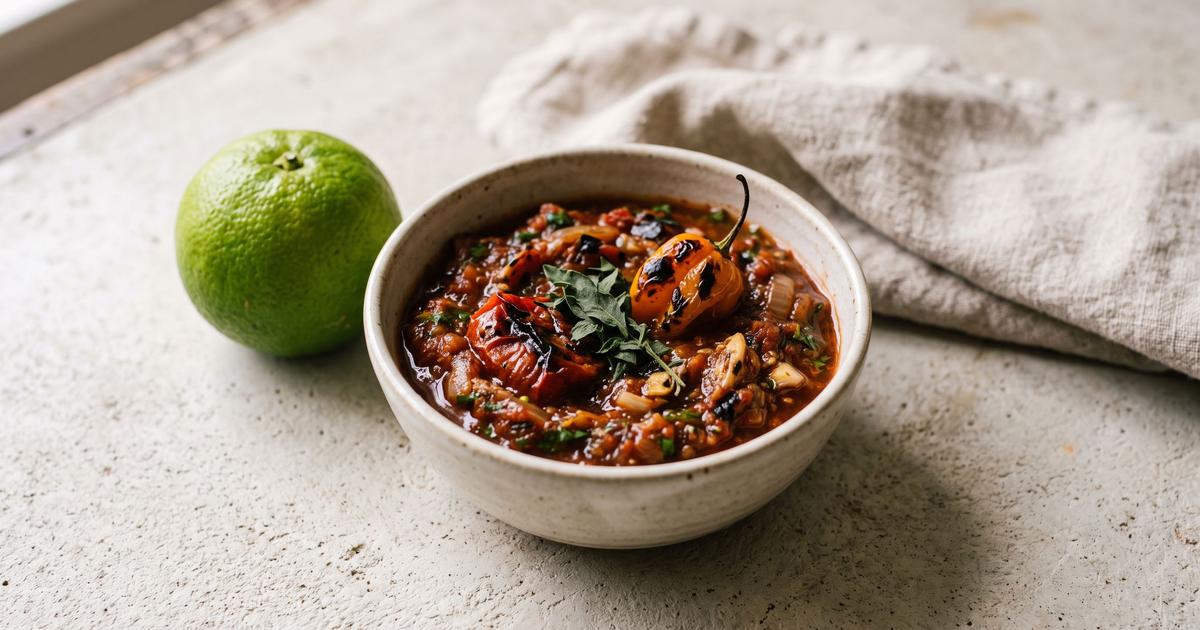
Sikil pak is a dip from the Yucatán with deep Mayan roots, built on ground squash seeds long before the Spanish brought pork and oil to the peninsula. That makes it one of the rare traditional dishes that is whole-food and plant-based as written. Toasted pumpkin seeds are ground to a meal and thinned with charred tomato and the juice of a sour orange, which here is approximated with sweet orange and a little lime. Habanero is the regional chile, so a small amount goes in for heat and its apricot perfume. The seeds do all the work a fat would do in another dip, which is why it holds together, tastes rich, and still needs no salt.
Ingredients
- 1 cup Pumpkin seeds, raw, hulled
- 2 Fresh tomatoes, charred whole
- 1/2 Habanero, charred and seeded
- 3 tbsp Oranges, juice, from about 1 orange
- 1 tbsp Lime juice
- 3 tbsp Cilantro, chopped
- 2 Scallions, thinly sliced
Method
- Toast the pumpkin seeds in a dry pan over medium heat, shaking often, until they puff, pop, and smell nutty, about 4 minutes. Pull them off the heat at the first pops. Pushed too far they turn bitter, and the bitterness does not cook out.
- Char the whole tomatoes and the habanero directly over a flame or in a dry pan until the skins blister and blacken. This gives the dip its smoky backbone in place of any cooking fat.
- Let the seeds cool, then grind them in a blender or spice grinder to a coarse meal. Reserve a spoonful to scatter on top later.
- Add the charred tomato, habanero, orange juice, and lime juice to the ground seeds and blend to a thick paste, loosening with water a tablespoon at a time until it is spoonable. The seeds are the body of the dip, standing in for the oil or dairy a creamy dip usually relies on.
- Fold in the cilantro and scallion by hand. Scatter the reserved ground seeds over the top. Serve with jicama, cucumber, radish, or whole-grain chips.
Nutrition
Estimated per serving: 110 calories, 5 g protein, 2 g fiber, 15 mg sodium. Computed from USDA FoodData Central reference values for the main ingredients. This is an approximation, not a laboratory measurement. How these are computed.
Cost per serving is estimated from US national-average retail prices for cheap staple forms, using BLS dried-bean prices and USDA produce prices. Prices vary by store and season, so treat it as a guide, not a receipt. How this is computed.