Ata, Nigerian Pepper Sauce
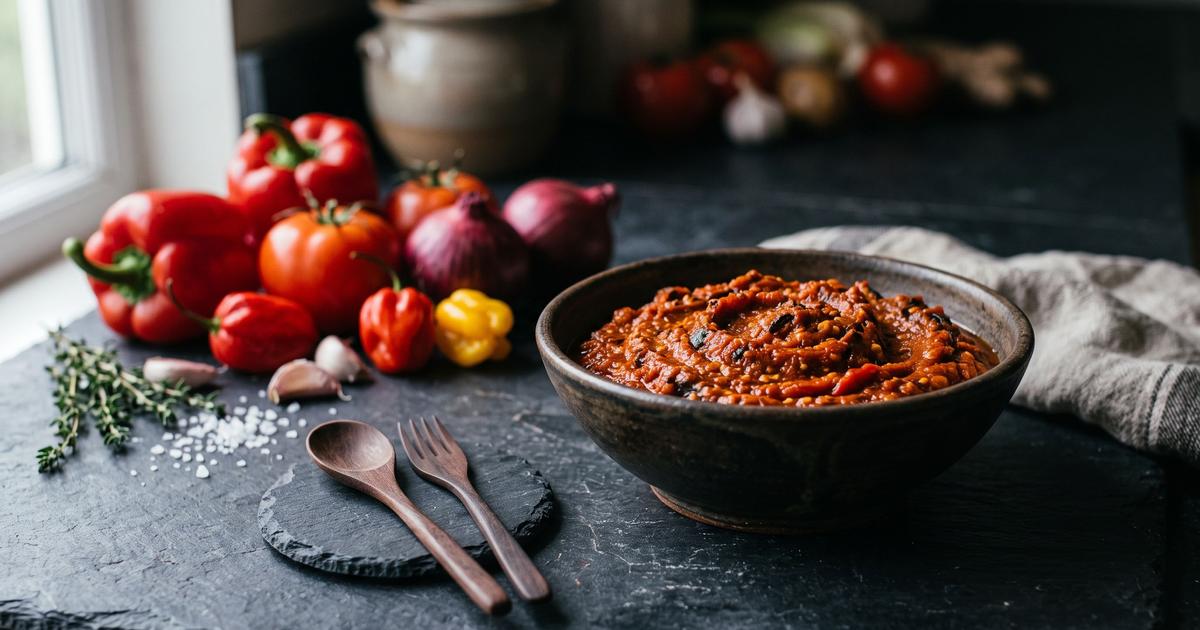
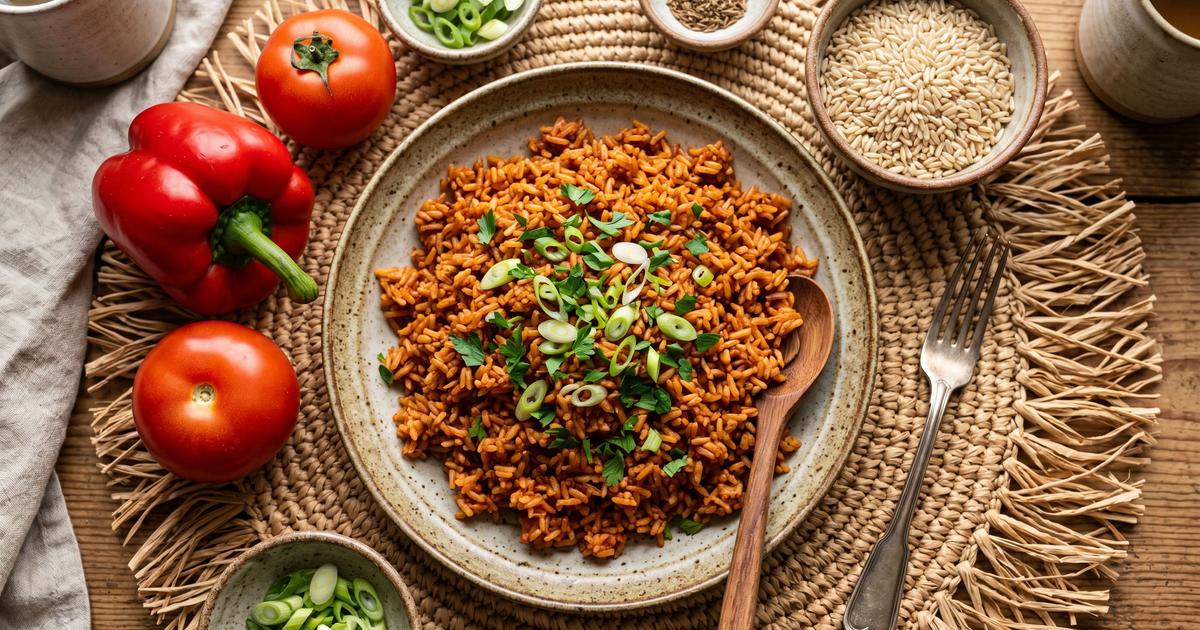
Ata is the red pepper base under a huge share of Nigerian cooking, the blended peppers, tomato, onion, and Scotch bonnet that get fried down into the foundation of stews and jollof. The classic ata din din is cooked in a generous slick of palm or vegetable oil until it darkens, but almost all of that flavor is really the char and the long reduction, not the fat. Roasting the peppers under the broiler brings the smoke, and simmering the puree down slowly until it turns jammy does the rest. Scotch bonnet is the right chile; a habanero is its close cousin and easier to find. Make a batch and keep it on hand, since it is the head start on a dozen other dishes.
Ingredients
- 2 wholes Bell peppers, red, stemmed and seeded
- 3 wholes Fresh tomatoes, cored
- 1 whole Red onions, peeled and quartered
- 1 whole Habanero, Scotch bonnet if you can get it
- 3 cloves Garlic
- 1 tbsp Ginger, grated
- 2 tbsp Tomato paste
- 1/2 tsp Dried thyme
- 1 whole Bay leaves
Method
- Broil the bell peppers, tomatoes, onion, and habanero on a lined tray until the skins blister and blacken in spots, about 12 minutes, turning once. Roasting instead of frying is what gives ata its smoky depth here, since the char stands in for the browning that palm oil usually provides.
- Blend the roasted vegetables with the garlic and ginger to a coarse puree, seeds and skins and all. Leaving it a little rough keeps the sauce closer to the hand-ground original than a smooth restaurant puree.
- Toast the tomato paste in a dry pot over medium heat until it darkens to a deep brick red, about 2 minutes. This concentrates it and burns off the raw, tinny edge so the finished sauce tastes cooked, not canned.
- Pour in the pepper puree, add the thyme and bay leaf, and simmer uncovered, stirring often, for 20 to 25 minutes. The sauce is done when it turns thick and glossy and a spoon dragged across the bottom leaves a trail that holds. This slow reduction is the oil-free version of frying the base down: the water cooks off and the sugars in the pepper and onion caramelize.
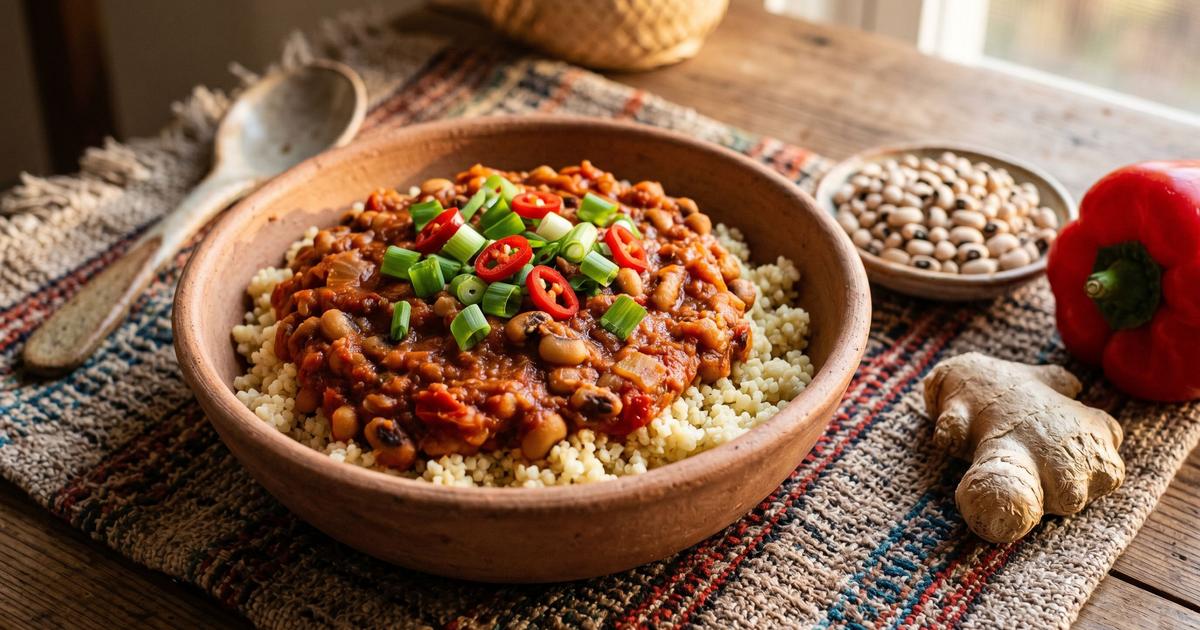
- Fish out the bay leaf and taste. The roast, the habanero, and the reduced tomato carry it, so it needs no salt; add a little water if you want it looser. Use it as the base for a bean or vegetable stew, spooned over brown rice, or as a hot condiment. It keeps a week in the fridge and freezes in portions.
Nutrition
Estimated per serving: 35 calories, 1 g protein, 2 g fiber, 15 mg sodium. Computed from USDA FoodData Central reference values for the main ingredients. This is an approximation, not a laboratory measurement. How these are computed.
Cost per serving is estimated from US national-average retail prices for cheap staple forms, using BLS dried-bean prices and USDA produce prices. Prices vary by store and season, so treat it as a guide, not a receipt. How this is computed.