Ven Pongal
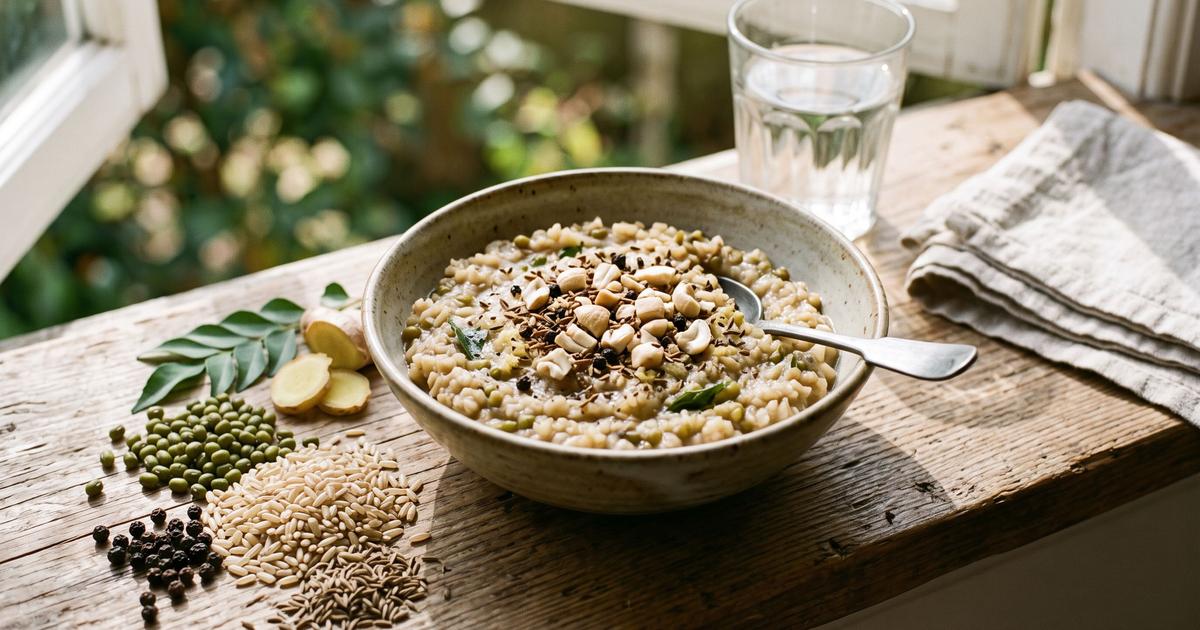
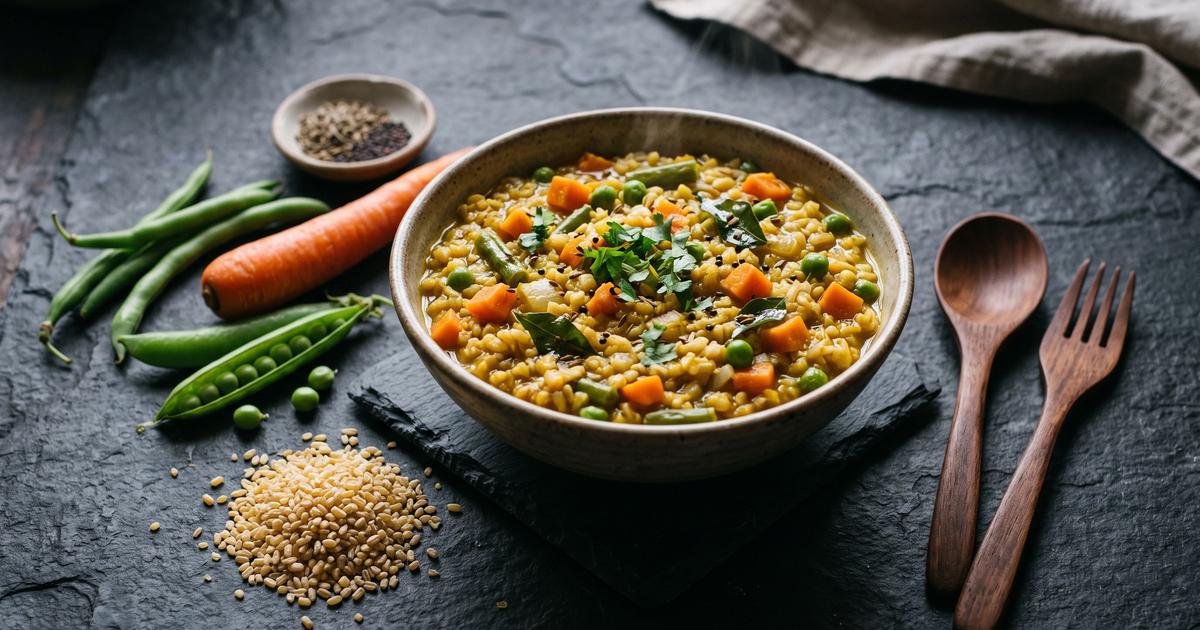
Ven pongal is the comfort breakfast of Tamil Nadu, a rice and mung porridge usually enriched with ghee and salted to taste. Brown short-grain rice keeps the kernel intact and still cooks down soft, and the flavor comes from where it always did: black pepper cracked coarse, whole cumin, ginger, and cashews toasted until golden. Dry-roasting the mung beans first is a small step that changes the whole pot. Without ghee or salt, the pepper and curry leaf carry it.
Ingredients
- 1 cup short grain brown rice
- 1/2 cup Mung beans
- 1 1/2 tsp Black peppercorns, coarsely crushed
- 1 tsp Cumin seed
- 3 tbsp Raw cashews
- 1 tbsp Ginger, grated
- 15 Curry leaves
- 1/2 tsp Asafoetida
- 1 tsp no-salt vegetable bouillon
Method
- Toast the mung beans in a dry pot over medium heat until they smell nutty and a few turn golden, about 3 minutes. This dry roast is traditional and deepens the whole pot.
- Add the rice, rinse both together, then return to the pot with 4.5 cups (1065 ml) water and the no-salt bouillon. Bring to a boil, cover, and simmer over low heat for about 35 minutes, until the rice and beans are so soft they slump into a loose porridge. Stir near the end and add hot water if it tightens.
- While it cooks, make the tempering. In a dry pan over medium heat, toast the cumin seeds, crushed pepper, and cashews until the cashews are golden and the pepper smells sharp, about 2 minutes.
- Add the curry leaves and asafoetida with 2 tablespoons (30 ml) water and swirl for a few seconds, until the leaves crackle and the water cooks off.
- Scrape the tempering into the pongal and stir it through. Coarsely crushed pepper is the point of ven pongal, so let it lead. Loosen with a little hot water to a spoonable, creamy texture and serve at once, before it sets.
Nutrition
Estimated per serving: 250 calories, 11 g protein, 7 g fiber, 35 mg sodium. Computed from USDA FoodData Central reference values for the main ingredients. This is an approximation, not a laboratory measurement. How these are computed.
Cost per serving is estimated from US national-average retail prices for cheap staple forms, using BLS dried-bean prices and USDA produce prices. Prices vary by store and season, so treat it as a guide, not a receipt. How this is computed.