Pesarattu
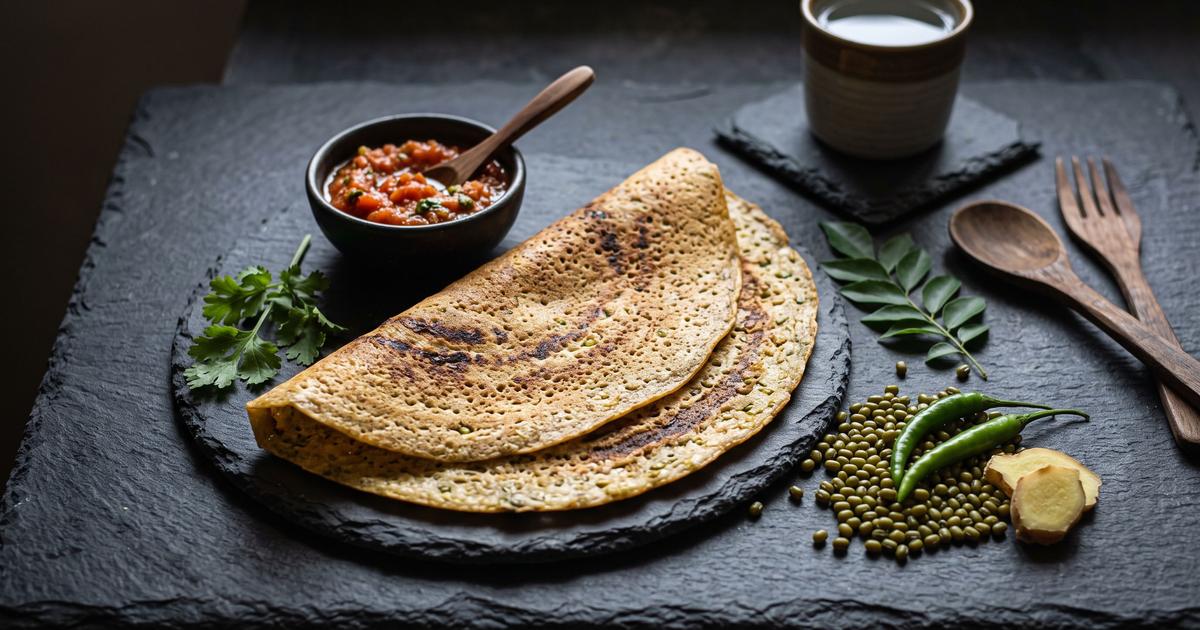
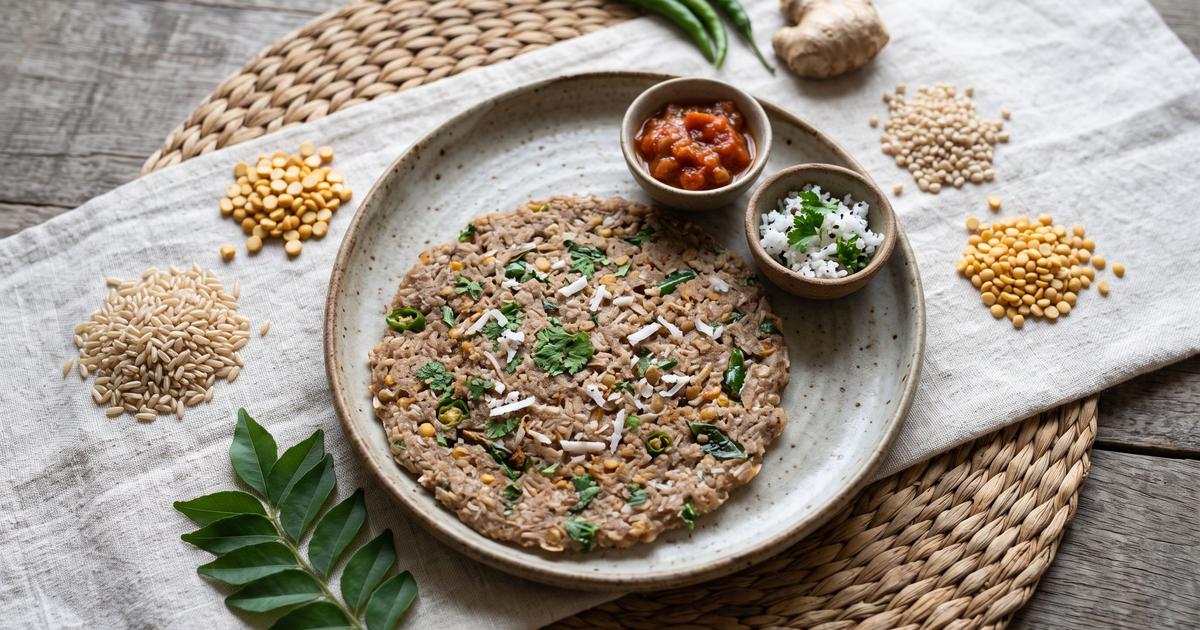
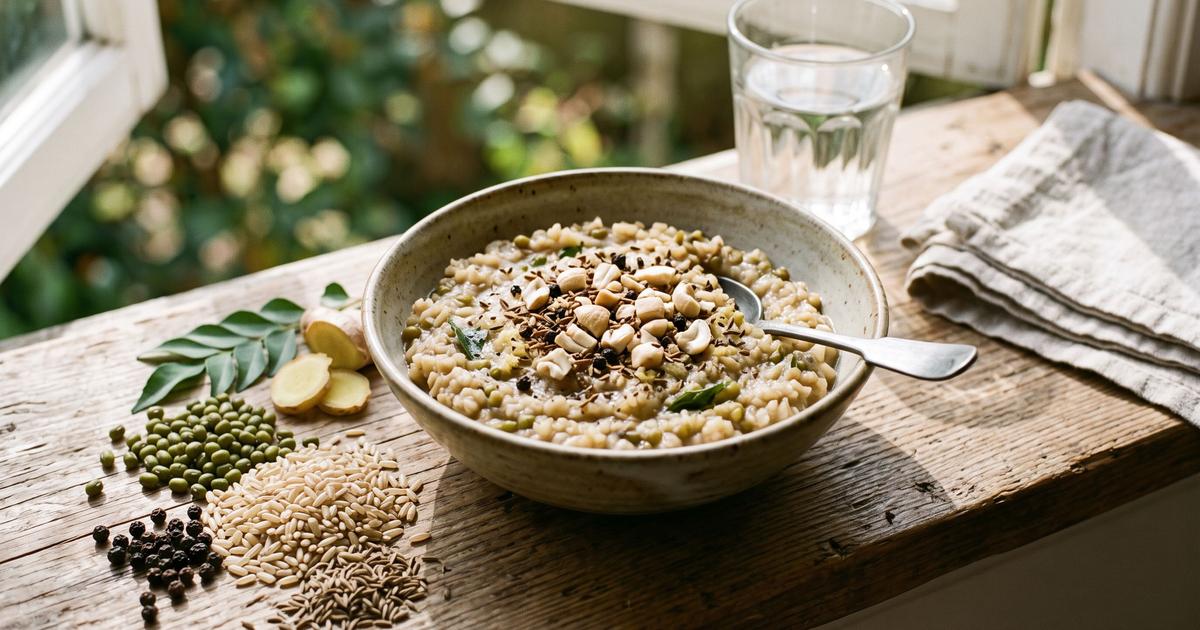
Pesarattu is the breakfast crepe of Andhra Pradesh, ground from whole green mung beans rather than the skinned, fermented rice-and-dal batter of a dosa. Because the beans keep their green skins, it cooks up higher in fiber and protein, and because the batter needs no fermenting, you can soak in the morning and eat by lunch. Ginger and green chile go into the grind, cumin and asafoetida into the batter, and raw onion presses into the surface as it cooks. A hot, dry pan is all it takes to cook it without oil.
Ingredients
- 1 cup Mung beans, whole, soaked 4 hours
- 2 tbsp long grain brown rice, soaked with the mung
- 1 tbsp Ginger, chopped
- 2 wholes Indian green chile
- 1 tsp Cumin seed
- 1/4 tsp Asafoetida
- 1 whole Red onions, finely diced
- 1/2 cup Cilantro, chopped
Method
- Drain the soaked mung and rice and grind with the ginger, green chile, and about 0.5 cup (120 ml) fresh water into a batter the thickness of heavy cream. Whole green mung, skin on, is what makes pesarattu green and gives it more fiber than a skinned-dal crepe, so grind it just short of smooth and leave a little texture.
- Stir the cumin seed and asafoetida into the batter. Unlike dosa, pesarattu is not fermented, so it can be ground and cooked the same morning, and the hing stands in for the depth that fermentation would build.
- Heat a flat nonstick or well-seasoned cast iron pan over medium until a drop of water skitters and vanishes on contact. A properly hot surface is the whole trick to releasing the crepe without any oil.
- Pour a ladle of batter into the center and spread it outward in a spiral with the back of the ladle into a thin round. Scatter some diced onion and cilantro over the top and press lightly so they set into the surface.
- Cook until the underside is browned and the edges lift on their own, about 3 minutes, then flip and cook 1 to 2 minutes more. Resist flipping early: the crepe frees itself from the pan only once it has crisped, and forcing it tears it.
- Serve each one hot off the pan, onion side up, rather than stacking them. Pesarattu is eaten crisp, and a stack steams itself soft.
Nutrition
Estimated per serving: 250 calories, 15 g protein, 9 g fiber, 25 mg sodium. Computed from USDA FoodData Central reference values for the main ingredients. This is an approximation, not a laboratory measurement. How these are computed.
Cost per serving is estimated from US national-average retail prices for cheap staple forms, using BLS dried-bean prices and USDA produce prices. Prices vary by store and season, so treat it as a guide, not a receipt. How this is computed.