Oats Upma
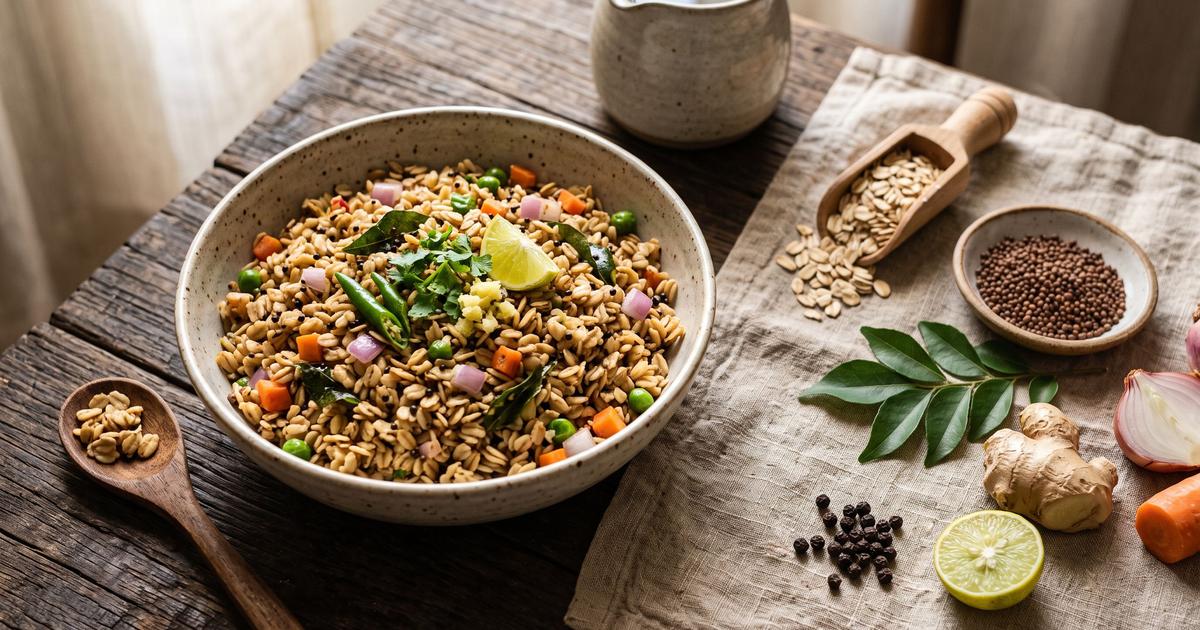
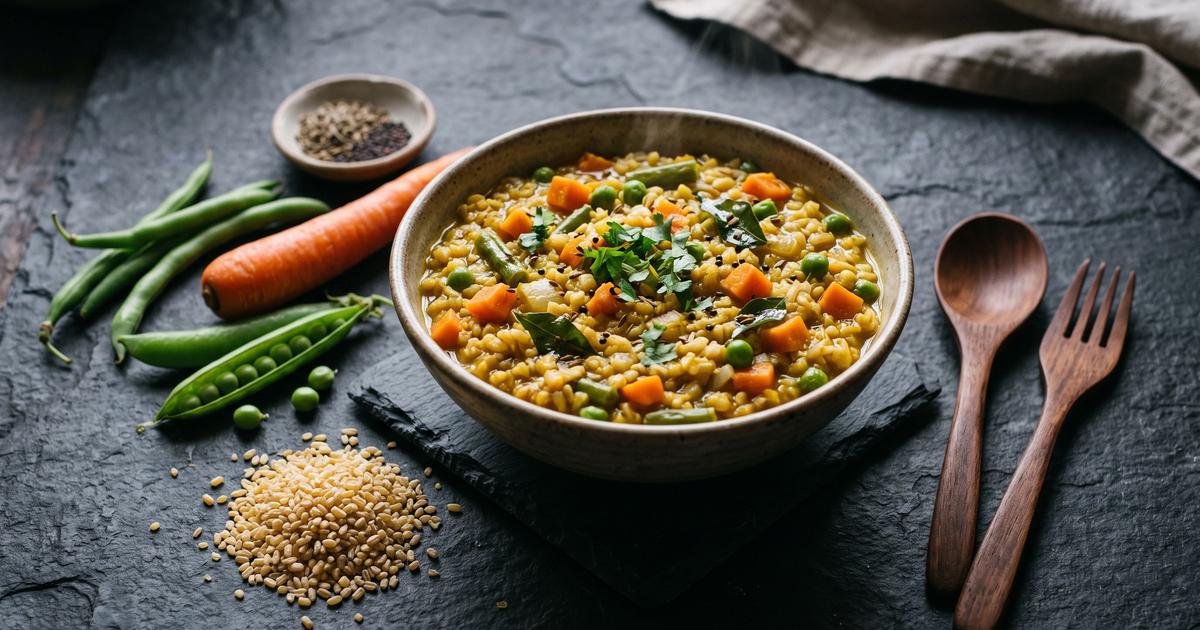
Upma is a South Indian breakfast built for speed, traditionally made from roasted semolina. Rolled oats stand in for the refined grain and bring the whole kernel with them, along with more fiber and a firmer bite. The method is unchanged: pop the mustard seeds, sweat the aromatics, then steam the grain in just enough water. Roasting the oats first is the one step you cannot skip, and lime at the end is what makes it taste seasoned without salt.
Ingredients
- 1 1/2 cups Rolled oats
- 1 tsp Brown mustard seed
- 1/2 tsp Cumin seed
- 2 tbsp Raw cashews, chopped
- 1 Yellow onion, finely chopped
- 1 Indian green chile, minced
- 1 tbsp Ginger, grated
- 12 Curry leaves
- 1 Carrot, finely diced
- 1/2 cup Frozen peas
- 1/4 tsp Turmeric
- 1 pinch Asafoetida
- 1 tbsp Lime juice
- 3 tbsp Cilantro, chopped
Method
- Toast the oats in a dry pan over medium heat, stirring, until they smell nutty and turn a shade darker, about 4 minutes. This dry roast is what keeps them from collapsing into paste later, the failure mode of every gluey upma. Tip them out and set aside.
- In the same pan, toast the mustard seeds until they pop, then add the cumin seeds and chopped cashews and toast until the cashews are golden, about 1 minute.
- Add the onion with 3 tablespoons (45 ml) water and sweat until soft and translucent, about 6 minutes, adding a splash more water whenever the pan dries out.
- Stir in the green chile, ginger, curry leaves, turmeric, and asafoetida, then the carrot and peas. Cook 2 minutes.
- Pour in 1.75 cups (415 ml) water and bring to a simmer. Stir in the toasted oats. Cook, stirring, for 3 to 4 minutes, until the water is absorbed and the oats are tender but still separate.
- Turn off the heat and let it sit, covered, for 2 minutes to firm up. Fold in the lime juice and cilantro. The lime keeps it from tasting flat, which is the job salt usually does here. Serve hot.
Nutrition
Estimated per serving: 210 calories, 8 g protein, 6 g fiber, 40 mg sodium. Computed from USDA FoodData Central reference values for the main ingredients. This is an approximation, not a laboratory measurement. How these are computed.
Cost per serving is estimated from US national-average retail prices for cheap staple forms, using BLS dried-bean prices and USDA produce prices. Prices vary by store and season, so treat it as a guide, not a receipt. How this is computed.