Patta Gobhi Matar
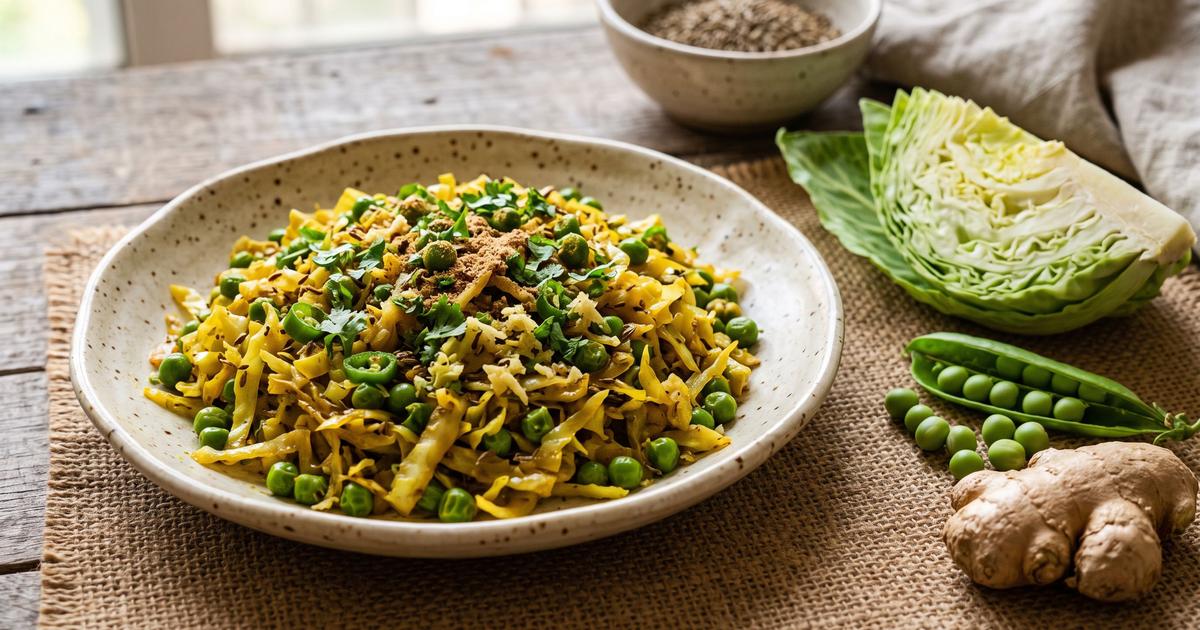
Patta gobhi matar is the plainest kind of North Indian home cooking, a dry cabbage and pea sabzi that costs almost nothing and comes together in one pan. The technique is the opposite of a slow braise: the cabbage is cooked open and hot so it browns and turns sweet instead of steaming into a soggy heap. A dry tarka of mustard and cumin seed starts it, turmeric and ginger color it, and a finish of amchur and garam masala off the heat gives the tartness and warmth that stand in for salt. Serve it with dal and a whole-grain flatbread or rice.
Ingredients
- 6 cups green cabbage, shredded
- 1 cup Frozen peas
- 1 tsp Cumin seed
- 1/2 tsp Brown mustard seed
- 1 tbsp Ginger, grated
- 1 whole Indian green chile, slit
- 1/2 tsp Turmeric
- 1/2 tsp Amchur
- 1/4 tsp Garam masala
- 3 tbsp Cilantro, chopped
Method
- Heat a wide pan over medium and pop the mustard seeds and cumin in the dry pan until the mustard jumps and the cumin darkens, about 45 seconds. Starting with whole seeds in a dry, hot pan is the tarka that flavors the whole dish without any oil.
- Add the grated ginger and slit green chile with a tablespoon of water and stir for 30 seconds, then add the turmeric. Turmeric needs a moment of heat to lose its raw, chalky edge before the vegetables go in.
- Add the shredded cabbage and toss to coat. Cook uncovered over medium-high, stirring often, so the cabbage gives up its water and starts to brown at the edges, about 8 minutes. Cabbage cooked covered steams and weeps; cooked open and hot, it caramelizes and turns sweet, which is where the flavor is.
- Stir in the peas and cook 3 minutes more, just until they are hot and bright green. Frozen peas are already cooked, so they only need warming through.
- Turn off the heat and stir in the amchur, garam masala, and cilantro. Amchur adds the tartness that keeps a dry cabbage sabzi from tasting flat, and garam masala goes in at the end so its aromatics do not cook off.
Nutrition
Estimated per serving: 110 calories, 5 g protein, 6 g fiber, 35 mg sodium. Computed from USDA FoodData Central reference values for the main ingredients. This is an approximation, not a laboratory measurement. How these are computed.
Cost per serving is estimated from US national-average retail prices for cheap staple forms, using BLS dried-bean prices and USDA produce prices. Prices vary by store and season, so treat it as a guide, not a receipt. How this is computed.