Jeera Aloo
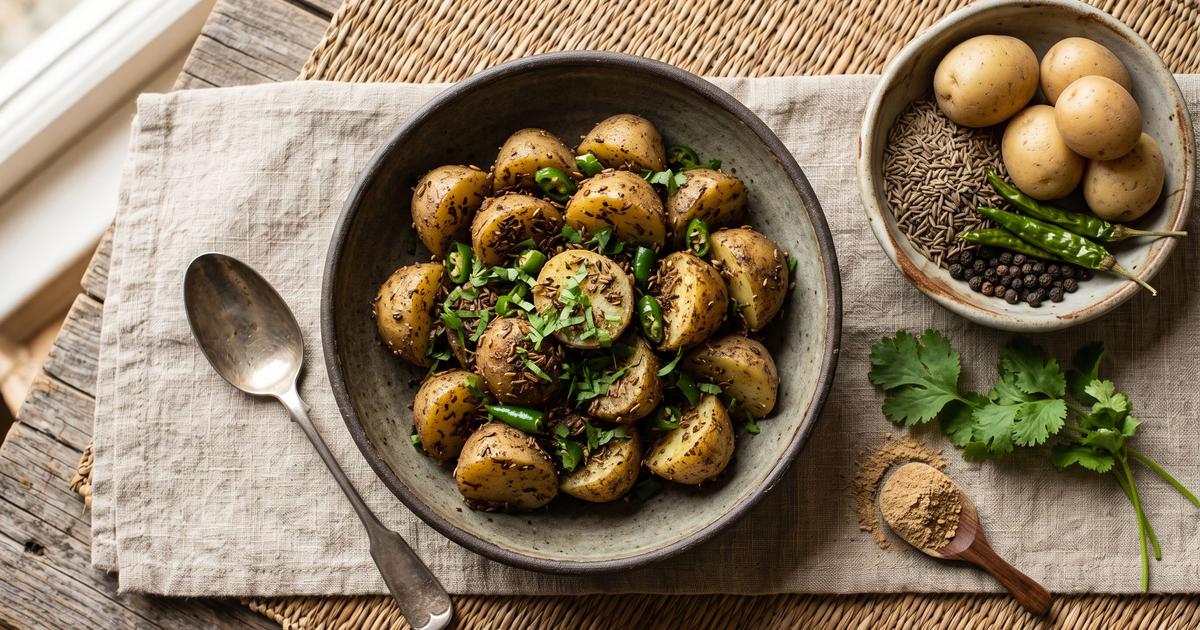
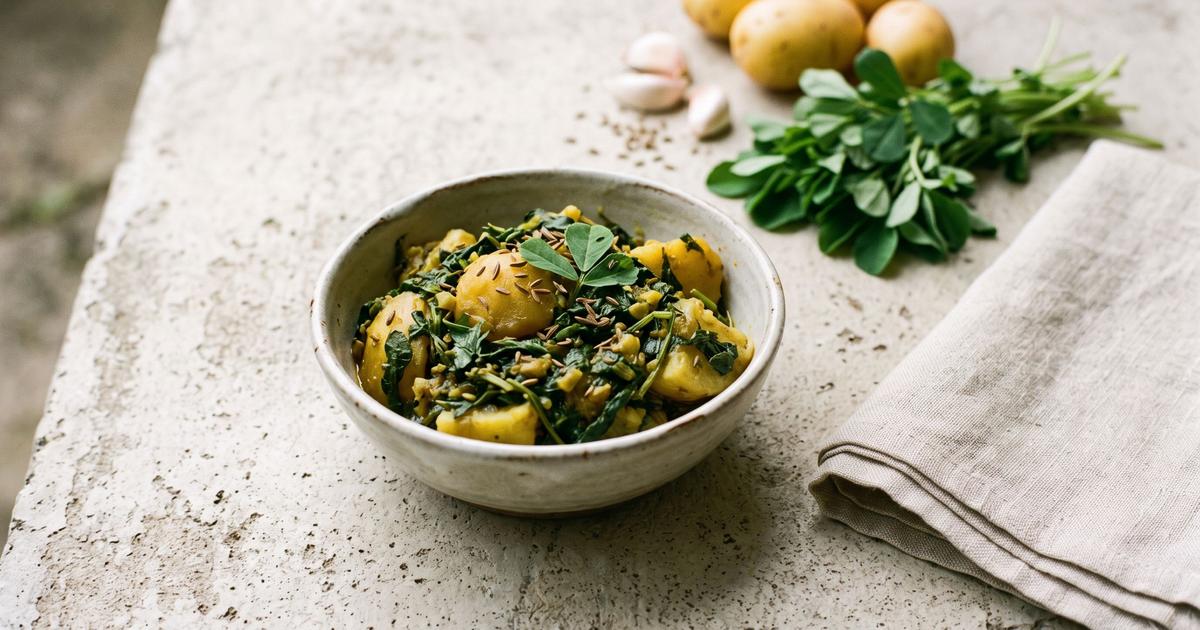
Jeera aloo is the fallback side of North Indian kitchens, potatoes tossed in a cumin tarka and usually salted to taste. The flavor was never really in the salt: it is in cumin toasted almost to burning, in asafoetida standing in for onion and garlic, and in the sour-sweet dust of amchur. Boiling the potatoes first and then crisping them in a dry nonstick pan gives the browned edges you would otherwise chase with oil. Green chile and black pepper do the rest.
Ingredients
- 1 1/2 lb Potatoes, peeled, cut into 3/4-inch cubes
- 1 1/2 tsp Cumin seed
- 1/2 tsp Turmeric
- 1/4 tsp Asafoetida
- 2 wholes Indian green chile, slit lengthwise
- 1 tsp Amchur
- 1/2 tsp Black peppercorns, coarsely ground
- 1/4 cup Cilantro, chopped
Method
- Boil the potato cubes in water until a knife slides in with slight resistance, about 10 minutes. Drain well and let them steam-dry in the colander for a minute, since a dry surface is what browns later without oil.
- Toast the cumin seeds in a dry nonstick pan over medium heat until they darken a shade and smell nutty, about 90 seconds. This dark toast is the whole flavor of the dish, so take it right to the edge of smoking.
- Add the turmeric, asafoetida, and slit chiles with 2 tablespoons (30 ml) water and let it bubble for 20 seconds, until the raw edge cooks off the turmeric.
- Add the potatoes and press them into a single layer. Leave them undisturbed for 3 to 4 minutes at a time so they catch and crisp against the dry pan, turning only two or three times over about 8 minutes.
- Cut the heat and toss through the amchur, ground pepper, and cilantro. Amchur is dried green mango, so it brings the sourness a squeeze of lemon would, but as a powder it clings to the potato instead of steaming it soft. Taste and add a little more amchur rather than salt.
Nutrition
Estimated per serving: 165 calories, 4 g protein, 5 g fiber, 25 mg sodium. Computed from USDA FoodData Central reference values for the main ingredients. This is an approximation, not a laboratory measurement. How these are computed.
Cost per serving is estimated from US national-average retail prices for cheap staple forms, using BLS dried-bean prices and USDA produce prices. Prices vary by store and season, so treat it as a guide, not a receipt. How this is computed.