Khatta Meetha Kaddu, North Indian Sweet and Sour Pumpkin
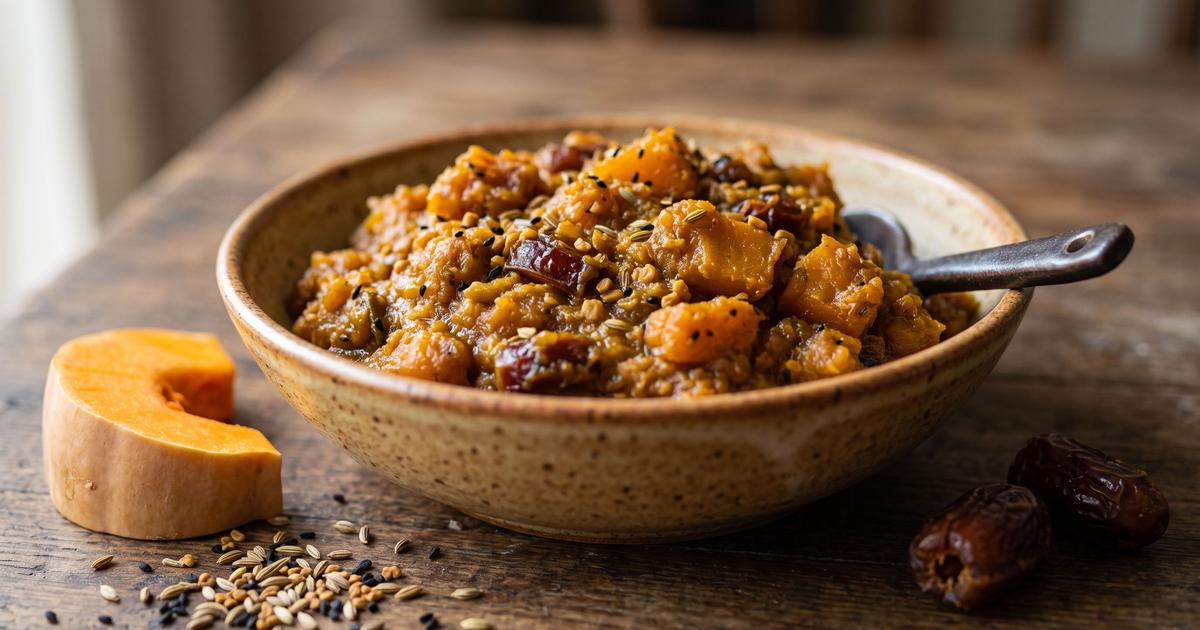
Khatta meetha kaddu is the sweet-and-sour pumpkin every North Indian halwai and home cook keeps in rotation, usually made with the dense orange pumpkin sold in wedges. Butternut squash stands in cleanly: it collapses to the same softness and takes the same three-way balance of sweet, sour, and heat. The trick is to let the squash steam soft under a lid rather than fry, and to build the sweetness from dates and the sourness from amchur, so nothing but the vegetable and its seasoning is in the pan. Serve it as a quiet counterpoint to a sharper dal.
Ingredients
- 1 1/2 lb Butternut squash, peeled, cut in 1-inch dice
- 1 tsp Panch phoron
- 1 tbsp Ginger, grated
- 1 whole Indian green chile, slit
- 1/2 tsp Turmeric
- 1/4 tsp Cayenne
- 1 tsp Amchur
- 2 wholes Medjool dates, pitted
- 2 tbsp Cilantro, chopped
Method
- Warm a wide dry pan over medium heat and add the panch phoron. Wait for the mustard seeds to pop and the fenugreek to darken by a shade, about 45 seconds. Blooming the five whole seeds dry is the flavor base of the dish and cannot be rushed with liquid in the pan.
- Add the ginger and slit green chile with 3 tablespoons (45 ml) water and cook 1 minute, until the raw smell lifts.
- Add the diced squash, turmeric, and cayenne and toss to coat. Pour in 0.5 cup (120 ml) water, cover, and steam 15 to 18 minutes, stirring once, until the squash is soft enough to crush against the side of the pan. Steaming under a lid cooks it through without the oil a fry would need.
- Mash the pitted dates with 2 tablespoons (30 ml) of the hot cooking liquid into a rough paste, then fold it in with the amchur. The dates carry the meetha, the dried mango powder the khatta, so the dish needs no sugar and no salt.
- Cook uncovered another 2 minutes to dry out any loose liquid and let the squash catch on the pan. Finish with cilantro and serve hot with rice or flatbread.
Nutrition
Estimated per serving: 120 calories, 3 g protein, 4 g fiber, 25 mg sodium. Computed from USDA FoodData Central reference values for the main ingredients. This is an approximation, not a laboratory measurement. How these are computed.
Cost per serving is estimated from US national-average retail prices for cheap staple forms, using BLS dried-bean prices and USDA produce prices. Prices vary by store and season, so treat it as a guide, not a receipt. How this is computed.