Vegetable Dalia, Savory Cracked Wheat
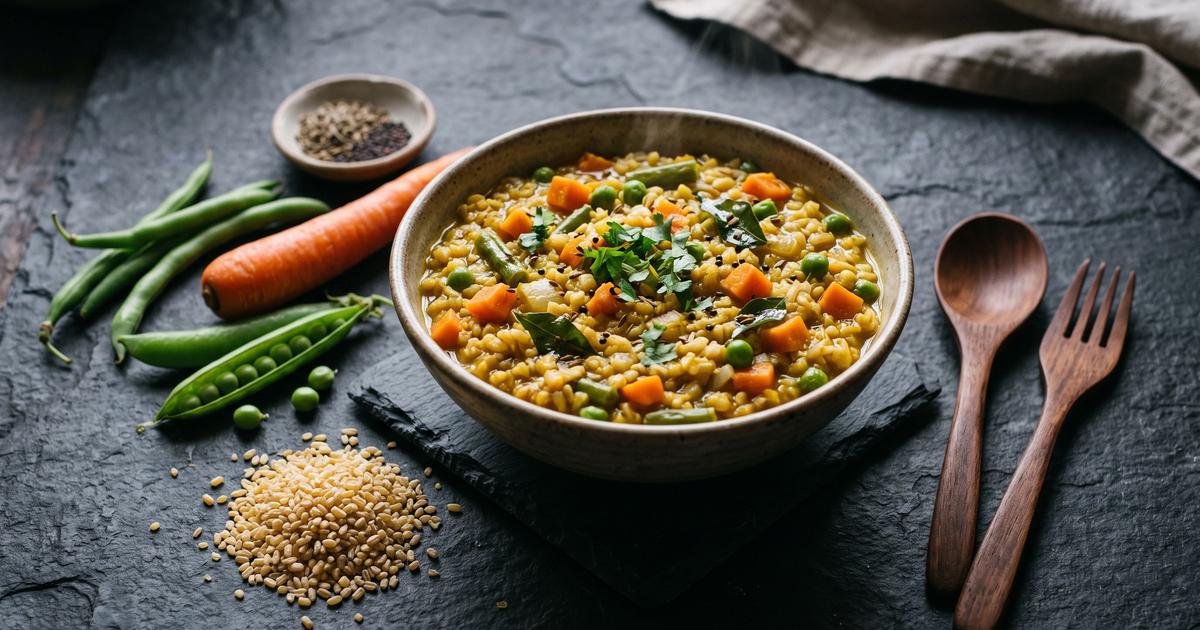
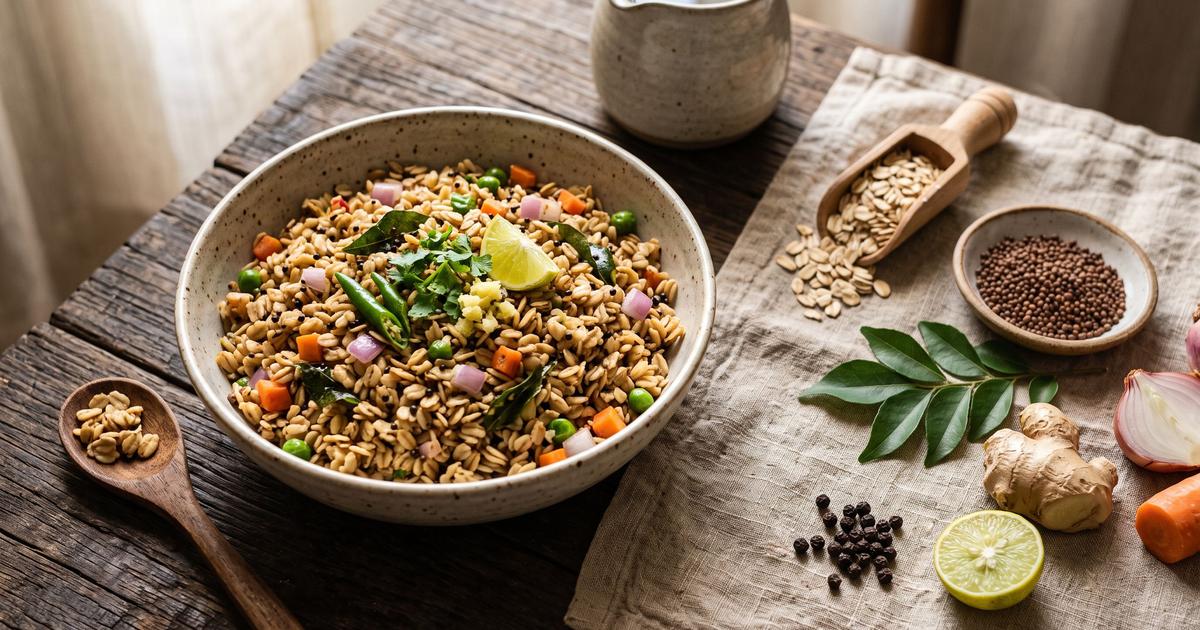
Dalia is broken wheat, and this savory version is a weekday breakfast across northern India, closer to a soft pilaf than a porridge. Bulgur stands in perfectly, since it is the same cracked wheat already parboiled, so the whole thing cooks in one pot in half an hour. The vegetables are flexible: use whatever is in the drawer. What matters is the tempering of popped mustard and cumin at the start and the squeeze of lemon at the end, the two moves that carry the flavor without salt or oil.
Ingredients
- 1 cup Bulgur
- 1 Carrot, diced small
- 1/2 cup Frozen peas
- 3/4 cup Green beans, cut small
- 1 Yellow onion, diced
- 1 tbsp Ginger, grated
- 1 Indian green chile, minced
- 1 tsp Brown mustard seed
- 1 tsp Cumin seed
- 1/2 tsp Turmeric
- 12 Curry leaves
- 1 tbsp Lemon juice
- 3 tbsp Cilantro, chopped
Method
- In a dry pot over medium heat, toast the mustard and cumin seeds until the mustard pops, about 1 minute. Add the curry leaves and let them crackle. This tempering is the flavor base, so build it before anything wet goes in.
- Add the onion, ginger, and green chile with 3 tablespoons (45 ml) water and sweat 4 minutes until the onion softens.
- Stir in the carrot, beans, peas, and turmeric and cook 2 minutes so the vegetables take on the spice.
- Add the bulgur and stir for 1 minute to toast it lightly. Bulgur is precooked cracked wheat, so a quick toast keeps the grains separate instead of gluey once the water hits.
- Pour in 2.25 cups (530 ml) water, bring to a boil, then cover and drop to low. Cook 12 minutes until the water is absorbed and the wheat is tender. Turn off the heat and let it steam, covered, 5 minutes more so the grains finish gently.
- Fluff with a fork, then fold in the lemon juice and cilantro. The acid and the fresh herb lift the whole pot and mean no salt is needed. Serve warm.
Nutrition
Estimated per serving: 200 calories, 7 g protein, 8 g fiber, 40 mg sodium. Computed from USDA FoodData Central reference values for the main ingredients. This is an approximation, not a laboratory measurement. How these are computed.
Cost per serving is estimated from US national-average retail prices for cheap staple forms, using BLS dried-bean prices and USDA produce prices. Prices vary by store and season, so treat it as a guide, not a receipt. How this is computed.