Red Lentil Dal Tarka
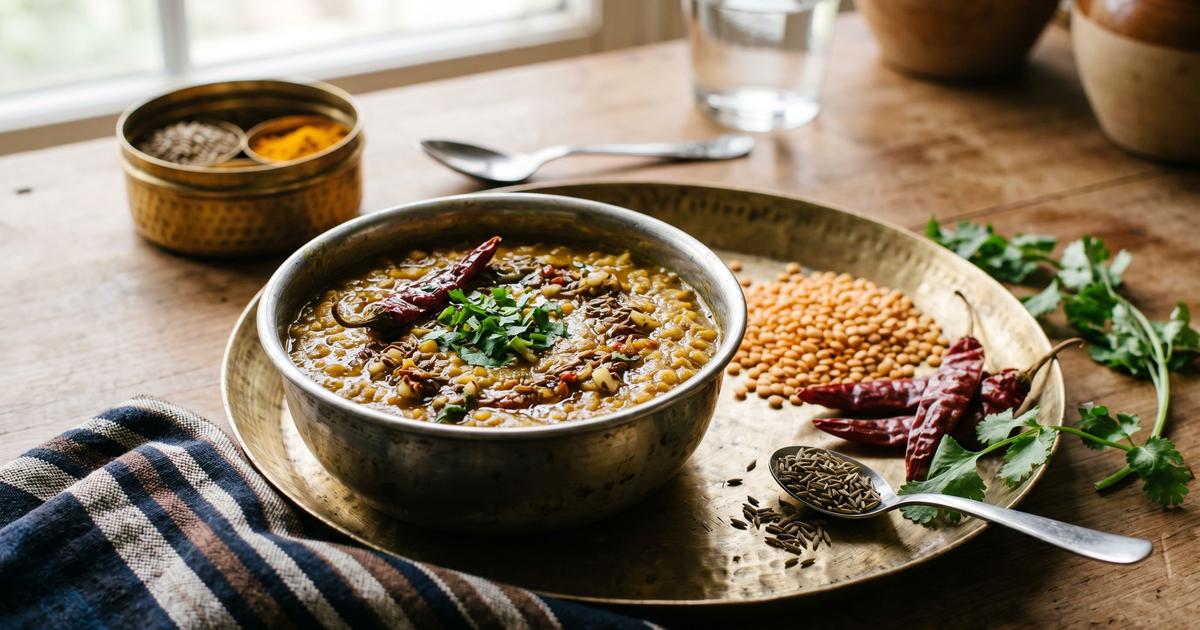
Masoor dal is the fastest lentil in the kitchen: no soaking, thirty minutes to soft. The step that makes it a dish rather than a pot of mush is the tarka, the sizzle of spice added at the end. Cooks usually bloom it in ghee or oil. Toasted dry and loosened with a spoon of water, the cumin and garlic still give up their flavor, and the lemon at the end does what a heavy hand of salt would.
Ingredients
- 1 cup Red lentils, rinsed until the water runs clear
- 1/2 tsp Turmeric
- 1 tbsp Ginger, grated
- 1 Fresh tomatoe, chopped
- 1 1/2 tsp Cumin seed
- 4 cloves Garlic, thinly sliced
- 2 Kashmiri chiles, whole, dried
- 1 Indian green chile, slit lengthwise
- 3 tbsp Cilantro, chopped
- 1 tbsp Lemon juice
Method
- Put the rinsed lentils in a pot with the turmeric, grated ginger, chopped tomato, and 3 cups (720 ml) water. Bring to a boil, then lower to a simmer.
- Cook uncovered for 20 to 25 minutes, stirring now and then, until the lentils collapse into a loose porridge. Add a splash more water if it tightens up. Whisk it smooth.
- Make the tempering last, while the dal is hot. Toast the cumin seeds and whole dried chiles in a small dry pan over medium heat until the cumin darkens a shade and smells nutty, about 1 minute.
- Push the seeds to one side, add the sliced garlic and a tablespoon of water, and let the garlic soften and turn pale gold without browning, about 1 minute. The water keeps it from scorching where oil would normally go.
- Scrape the whole tempering into the dal and stir once, so the streaks of cumin and garlic stay visible.
- Stir in the slit green chile and the lemon juice off the heat. Taste: it should read bright and warm. Add more lemon before you reach for salt.
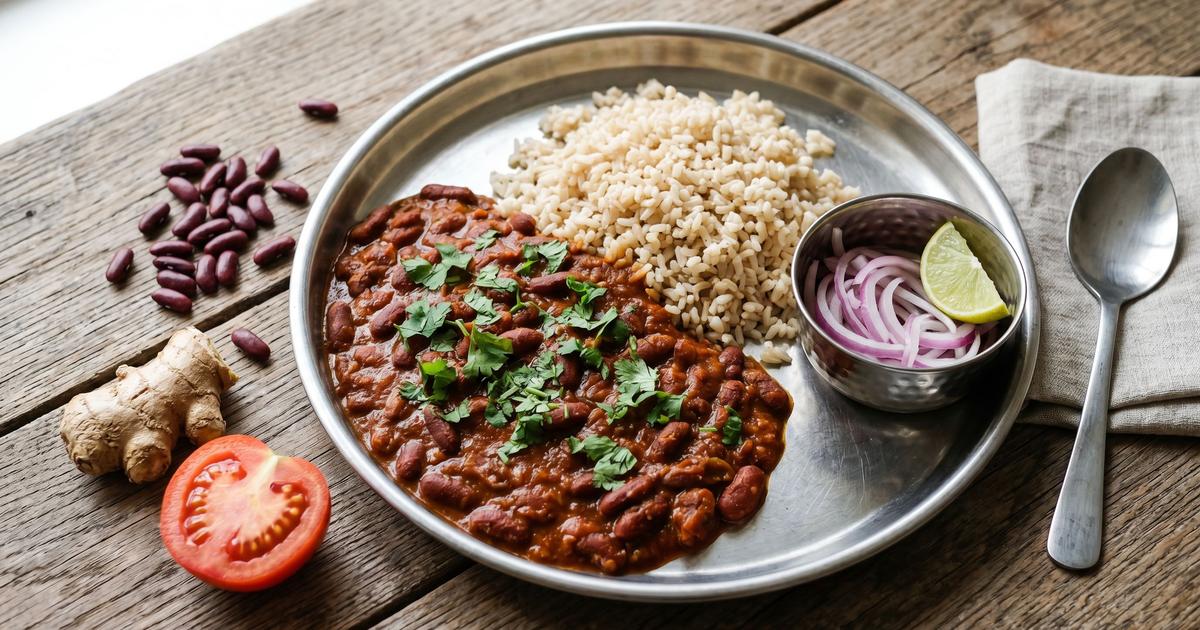
- Scatter with cilantro and serve over brown rice or with whole-grain flatbread.
Nutrition
Estimated per serving: 230 calories, 14 g protein, 9 g fiber, 10 mg sodium. Computed from USDA FoodData Central reference values for the main ingredients. This is an approximation, not a laboratory measurement. How these are computed.
Cost per serving is estimated from US national-average retail prices for cheap staple forms, using BLS dried-bean prices and USDA produce prices. Prices vary by store and season, so treat it as a guide, not a receipt. How this is computed.