Chana Saag
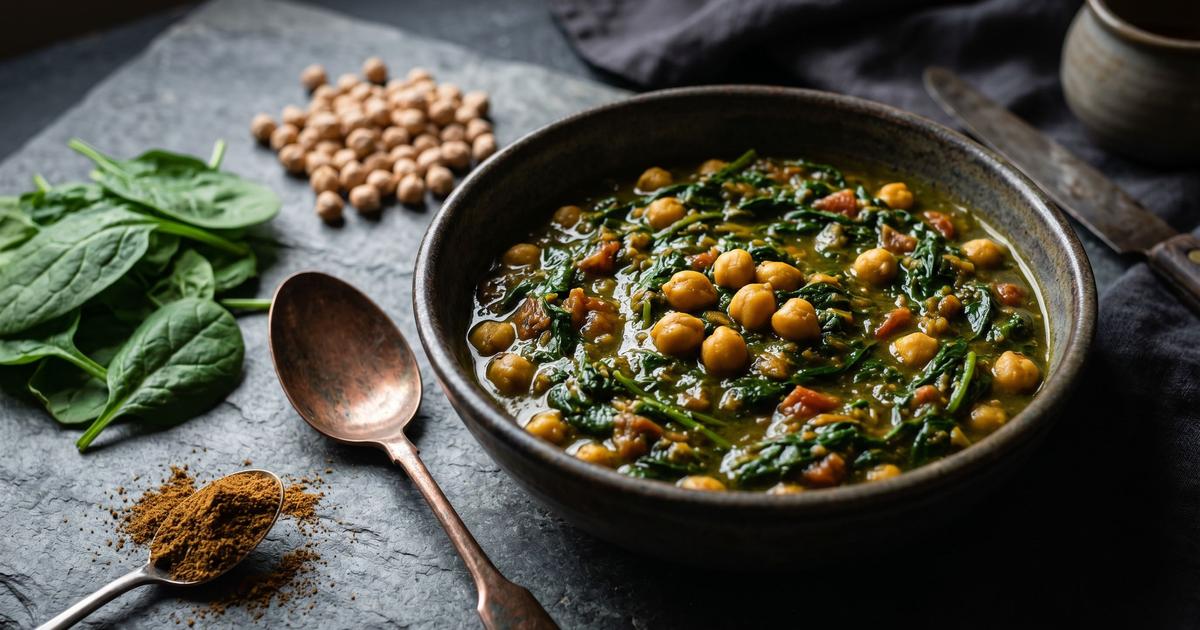
Saag just means greens, and it turns almost any bean or vegetable into a full meal. Chickpeas make it sturdy. The dried fenugreek leaf, kasoori methi, is the one ingredient worth hunting down: crushed in at the end, it gives the dish the faintly bitter, savory note that makes restaurant saag taste the way it does.
Ingredients
- 1 1/2 cups Chickpeas, cooked, or two 15 oz cans, drained
- 1 lb Spinach, chopped
- 1 Yellow onion, finely chopped
- 2 Fresh tomatoes, chopped
- 1 tbsp Ginger, grated
- 4 cloves Garlic, minced
- 1 Indian green chile, minced
- 1 tsp Cumin seed
- 1 tsp Coriander seed, ground
- 1/2 tsp Turmeric
- 1 tsp Garam masala
- 1 tsp Kasoori methi, crushed
- 1 tbsp Lemon juice
For no added salt, leave out the pinch and lean on the lemon juice and crushed kasoori methi at the finish. Note that spinach is naturally high in sodium, so even the salt-free version is not a low-sodium dish.
Method
- Sweat the onion in a wide pan over medium heat with 3 tablespoons water until soft and translucent, about 8 minutes, adding more water if it sticks.
- Add the ginger, garlic, and green chile. Cook 2 minutes.
- Toast the cumin seeds in a clear spot of the pan for 30 seconds, then stir in the ground coriander and turmeric.
- Add the tomatoes and cook until they break down and thicken, about 6 minutes.
- Add the chopped spinach in handfuls, stirring each in as it wilts. Once it has all collapsed, cook 5 minutes more so the water cooks off and the greens turn silky.
- Stir in the chickpeas and a splash of water to loosen. Simmer 8 to 10 minutes, mashing a few chickpeas to thicken the base.
- Crush the kasoori methi between your palms and stir it in with the garam masala and a small pinch of salt. Finish with lemon juice and serve with brown rice or whole-grain flatbread.
Nutrition
Estimated per serving: 290 calories, 14 g protein, 12 g fiber, 250 mg sodiumabout 215 mg sodium (salt-free version). Computed from USDA FoodData Central reference values for the main ingredients. This is an approximation, not a laboratory measurement. How these are computed.
Cost per serving is estimated from US national-average retail prices for cheap staple forms, using BLS dried-bean prices and USDA produce prices. Prices vary by store and season, so treat it as a guide, not a receipt. How this is computed.