Uji
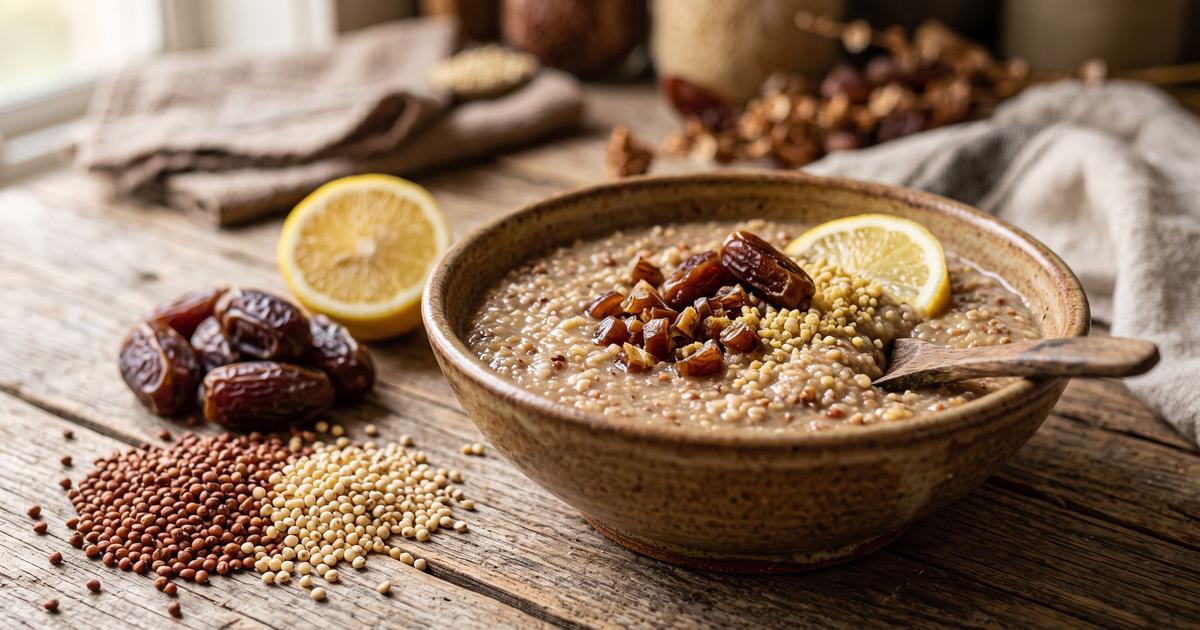
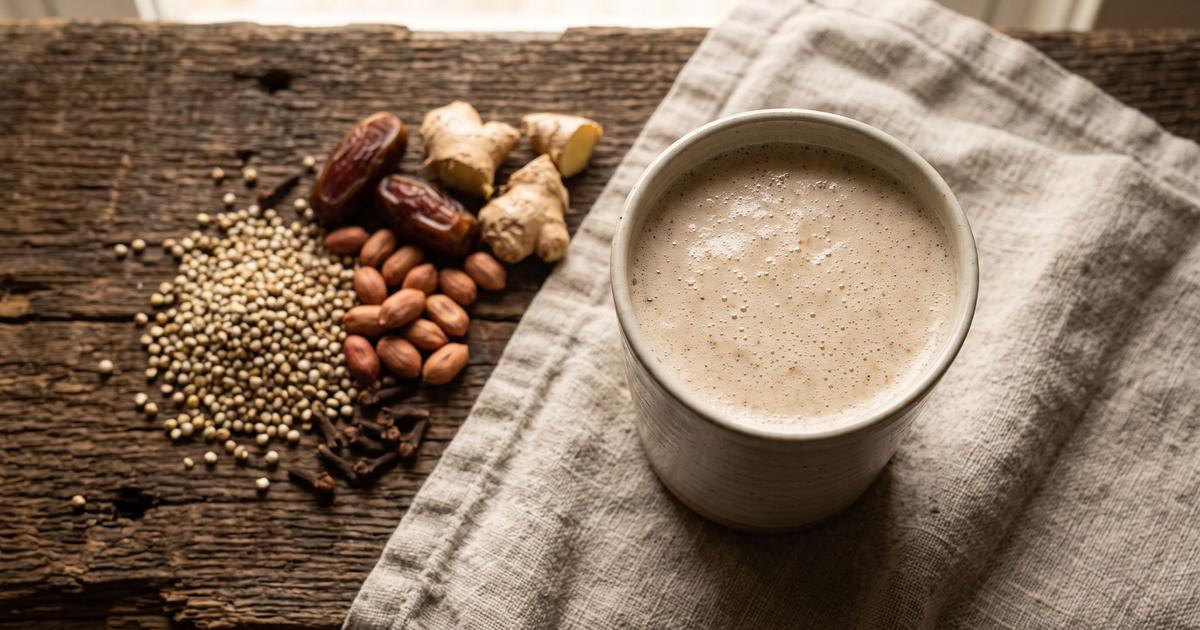
Uji is the everyday porridge of Kenya, Tanzania, and Uganda, poured into a cup and drunk rather than spooned, most often at breakfast or given to children and new mothers. It is usually made from millet, sorghum, or maize flour and traditionally left to ferment for a day so it turns pleasantly sour. Grinding your own whole grains keeps the bran that commercial porridge flours strip out, dates carry the sweetness with their fiber intact, and a squeeze of lemon stands in for the overnight ferment. Keep it thin, since uji is meant to be sipped.
Ingredients
- 3/4 cup Millet
- 1/4 cup Sorghum
- 3 Medjool dates, pitted
- 1/2 Lemons, juiced
Method
- Grind the millet and sorghum to a fine flour in a blender or spice grinder, working in batches. Freshly milled whole grain keeps all its bran and germ, which is what a store bag of refined porridge flour throws away. You can also start from ready whole-grain millet flour.
- Whisk the flour into 1 cup (240 ml) cold water until smooth with no lumps. Starting in cold water is the trick that keeps the flour from seizing into clumps the moment it hits heat.
- Bring 3 cups (720 ml) water to a gentle simmer in a saucepan. Whisk in the cold slurry in a steady stream, then cook, whisking often, until it thickens to a pourable porridge, 8 to 10 minutes.
- Blend the pitted dates with a ladle of the hot porridge until smooth, then stir the date paste back into the pot. This is the only sweetener, and blending it keeps the sugar carrying its own fiber.
- Take the pot off the heat and stir in the lemon juice. Traditional uji is soured by fermenting the flour and water overnight, and the lemon gives that same bright tang in a few seconds. Pour into cups or mugs and drink warm.
Nutrition
Estimated per serving: 160 calories, 4 g protein, 4 g fiber, 15 mg sodium. Computed from USDA FoodData Central reference values for the main ingredients. This is an approximation, not a laboratory measurement. How these are computed.
Cost per serving is estimated from US national-average retail prices for cheap staple forms, using BLS dried-bean prices and USDA produce prices. Prices vary by store and season, so treat it as a guide, not a receipt. How this is computed.