Kunun Gyada, Hausa Millet and Groundnut Drink

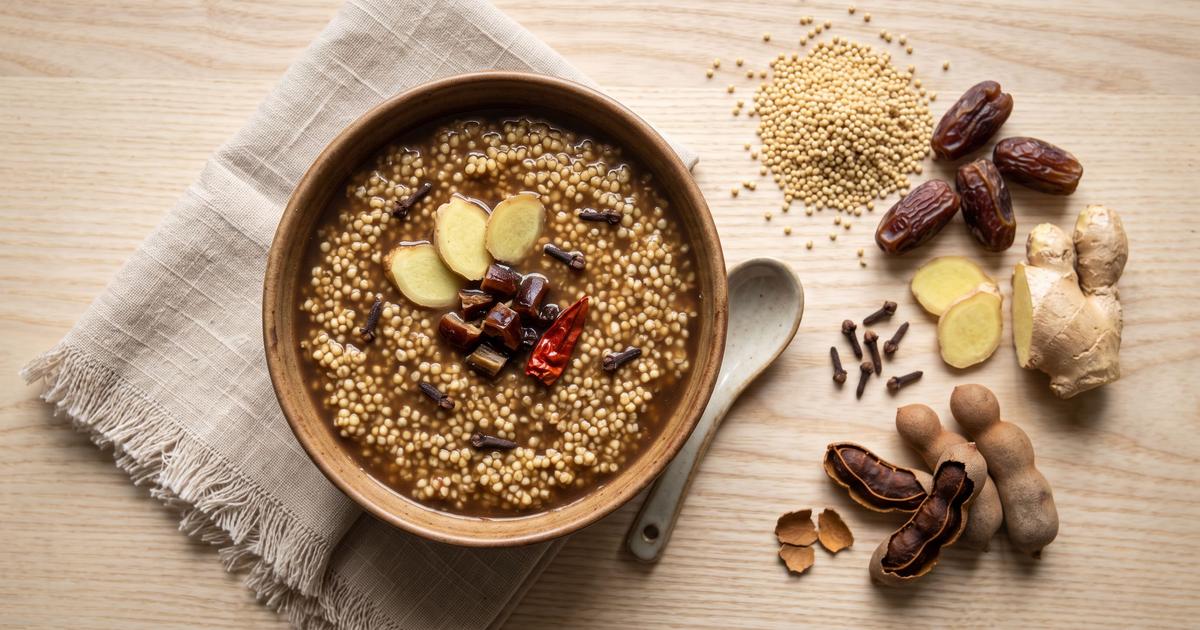
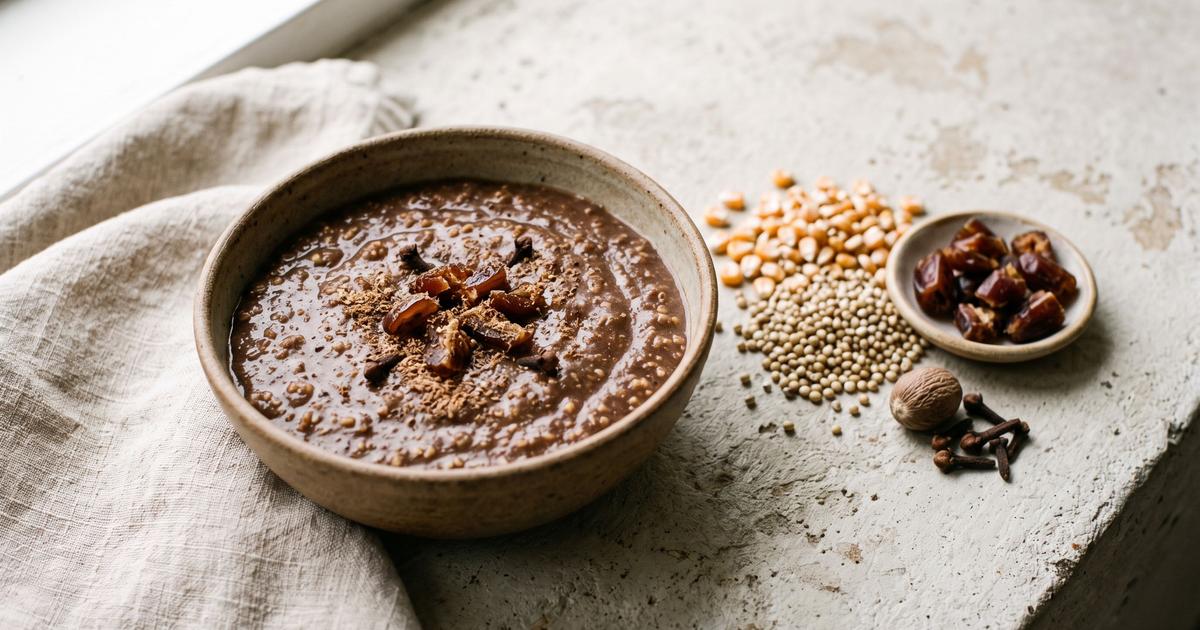
Kunun gyada is a groundnut drink from the Hausa north of Nigeria and Niger, a cousin of the thicker millet porridges eaten across the Sahel but poured and drunk rather than spooned. Millet is cooked soft and blended smooth with roasted peanuts, warm spice, and enough water to make it drinkable, then sweetened. The groundnuts are the point: they turn a thin grain drink into something with real staying power and a dose of the cheapest protein in the market. Ginger and clove give it warmth, and dates handle the sweetness so no sugar is needed. Some versions are lightly soured by an overnight rest; this one is made fresh and drunk the same day, warm or cold.
Ingredients
- 1/2 cup Millet, rinsed
- 3 tbsp unsweetened peanut butter
- 1 tbsp Ginger, grated
- 2 wholes Cloves
- 3 wholes Medjool dates, pitted
Method
- Simmer the millet in 2 cups (475 ml) water until very soft and beginning to break down, about 20 minutes. Cooking it fully is what lets it blend into a smooth drink rather than a gritty one, so take it past the fluffy stage to almost porridge.
- Grind the cloves fine, or steep them whole in the hot millet and fish them out later. Two go a long way; cloves turn bitter and numbing in quantity, so count them rather than guess.
- Blend the cooked millet with the peanut butter, ginger, dates, ground cloves, and 2 cups (475 ml) fresh water until completely smooth. The groundnuts add the richness and the cheap plant protein that make this a real breakfast and not just a sweet drink, while the dates do all the sweetening in place of the sugar the roadside version usually carries.
- Pass it through a sieve if you want it silky, pressing the solids to get everything through. Traditional kunun is strained fine and drunk from a cup; leave it unstrained for a thicker, more filling pour.
- Serve warm on a cold morning or chilled over ice in the heat, loosening with more water to the thickness you like. It thickens as it sits, so stir and thin leftovers, which keep two days in the fridge.
Nutrition
Estimated per serving: 150 calories, 5 g protein, 3 g fiber, 20 mg sodium. Computed from USDA FoodData Central reference values for the main ingredients. This is an approximation, not a laboratory measurement. How these are computed.
Cost per serving is estimated from US national-average retail prices for cheap staple forms, using BLS dried-bean prices and USDA produce prices. Prices vary by store and season, so treat it as a guide, not a receipt. How this is computed.