Tom Brown, Ghanaian Roasted Grain Porridge
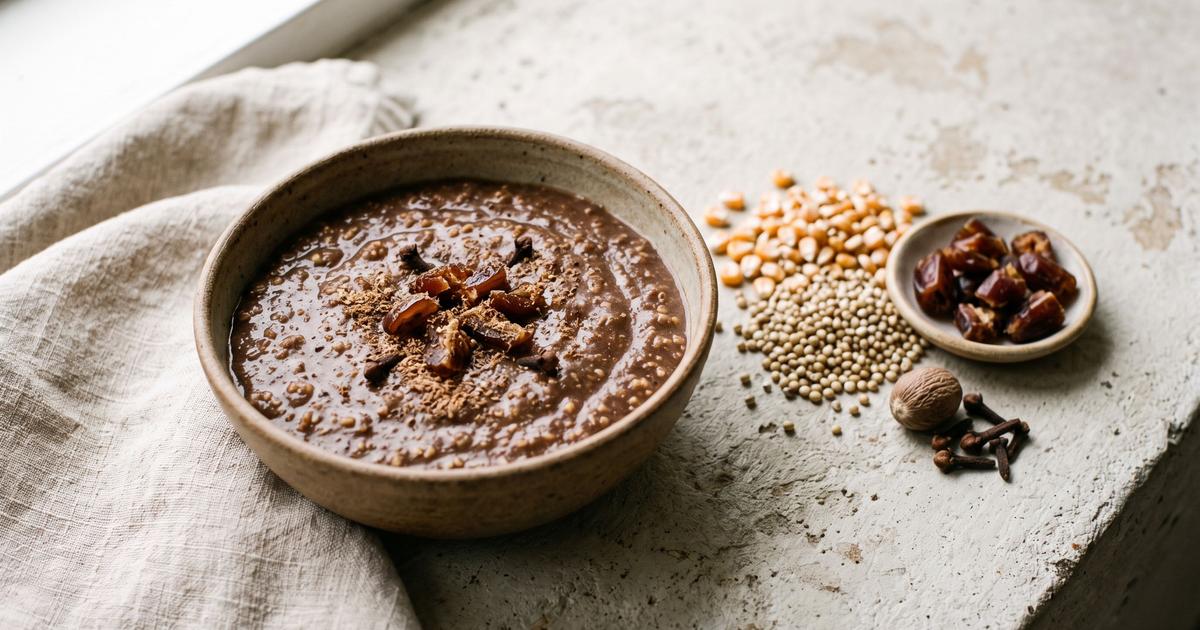
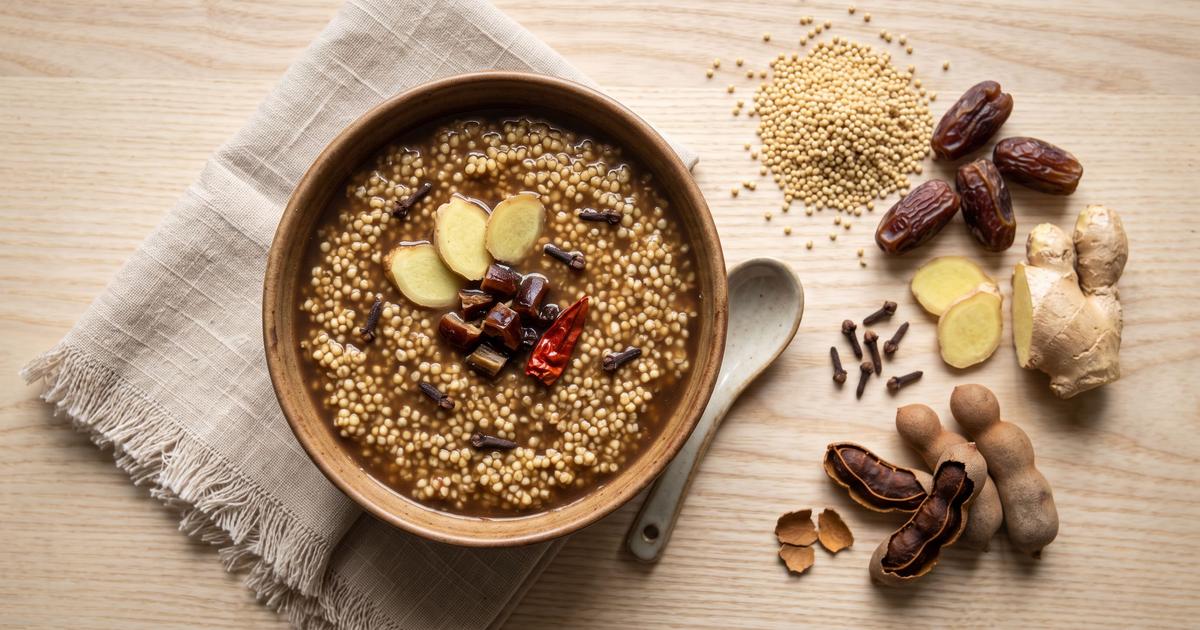
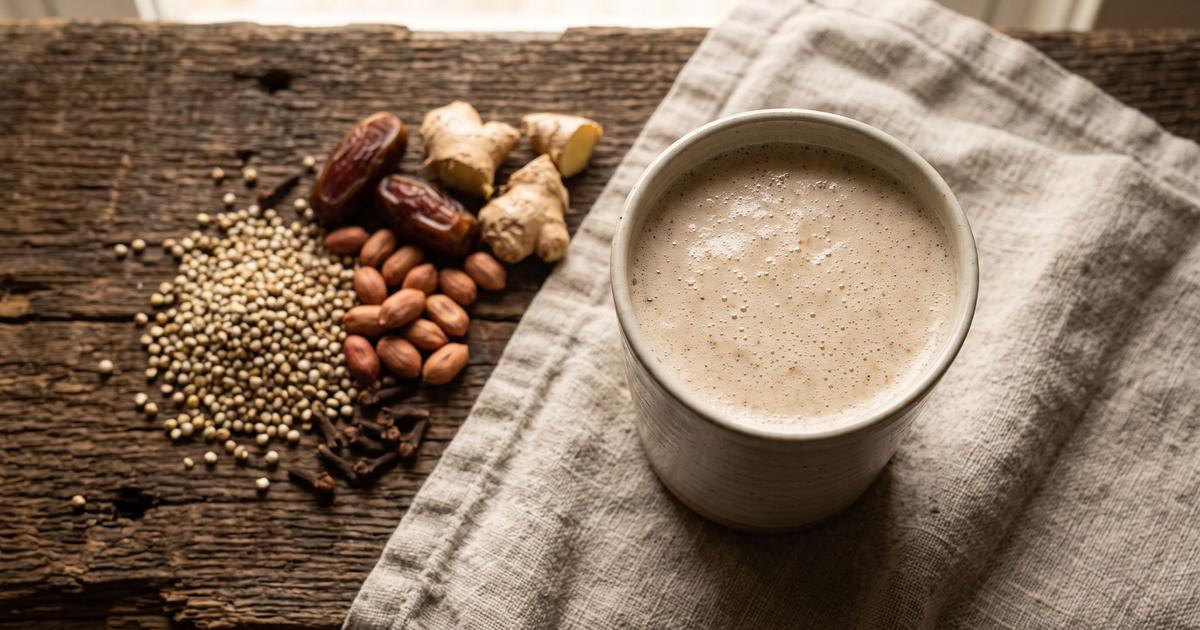
Tom Brown is the roasted-grain porridge Ghanaian families spoon up for breakfast, named for the deep brown color the maize takes on in the pan. The whole character of the bowl is built in the first step, dry-toasting the grain until it is dark and fragrant, so do not rush it or stop while it is still pale. Grinding the toasted grain lets it cook fast and smooth, and a paste of dates does the sweetening that spoonfuls of sugar usually would. A little nutmeg and clove at the end make it taste like a spiced morning.
Ingredients
- 1/2 cup Polenta / coarse cornmeal
- 1/4 cup Millet
- 2 tbsp Peanuts
- 1 cup Unsweetened soy milk
- 3 Medjool dates, pitted
- 1/4 tsp Nutmeg, freshly grated
- 1 Clove, ground
Method
- Toast the cornmeal and millet together in a dry pan over medium heat, stirring, until they turn a deep tan and smell like toast, about 8 minutes. This roasting is the soul of Tom Brown: it is where the nutty, coffee-like flavor comes from, and raw grain will never taste the same.
- Add the peanuts for the last 2 minutes to toast them too, then tip everything into a blender or spice grinder and grind to a coarse flour. Grinding after toasting lets the grains cook into a smooth porridge in minutes instead of an hour.
- Blend the dates with the soy milk and one cup (240 ml) of water until smooth. This is the only sweetener, and blending it in means the caramel notes of the date run through every spoonful instead of sitting on top.
- Whisk the ground grain into the date liquid in a saucepan, then bring to a gentle simmer, whisking constantly. Constant whisking is what keeps roasted cornmeal from seizing into lumps.
- Cook 5 to 7 minutes until it thickens to a loose porridge, stir in the nutmeg and clove, and serve hot. It thickens more as it cools, so loosen leftovers with a splash of water when you reheat.
Nutrition
Estimated per serving: 260 calories, 11 g protein, 6 g fiber, 55 mg sodium. Computed from USDA FoodData Central reference values for the main ingredients. This is an approximation, not a laboratory measurement. How these are computed.
Cost per serving is estimated from US national-average retail prices for cheap staple forms, using BLS dried-bean prices and USDA produce prices. Prices vary by store and season, so treat it as a guide, not a receipt. How this is computed.