Apple Cinnamon Overnight Baked Oatmeal
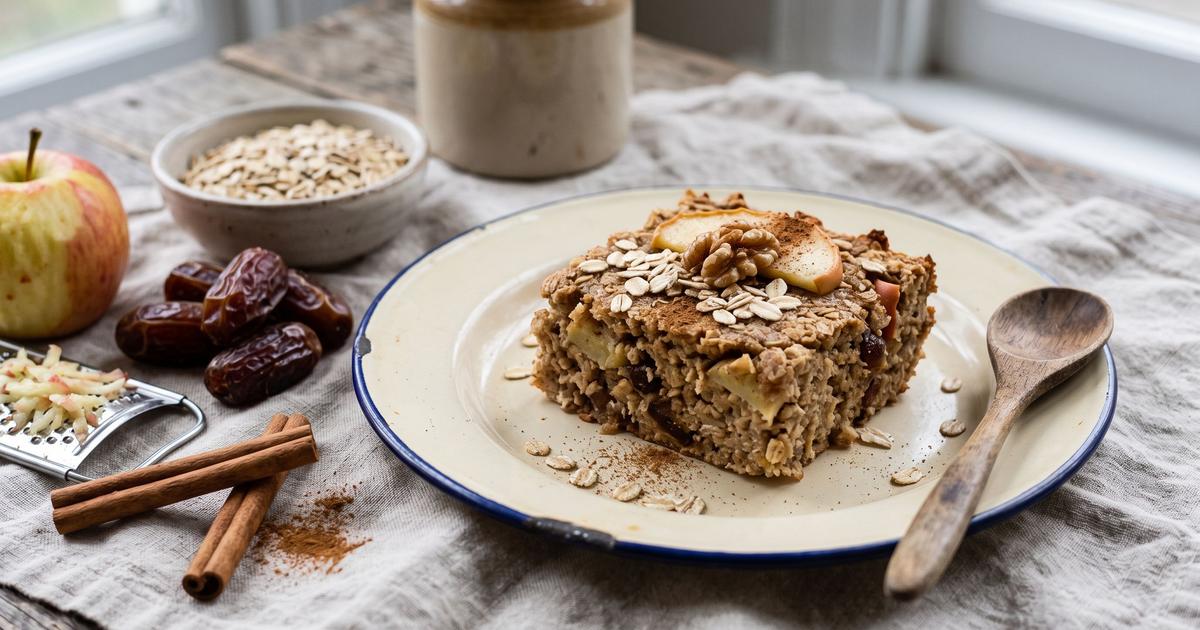
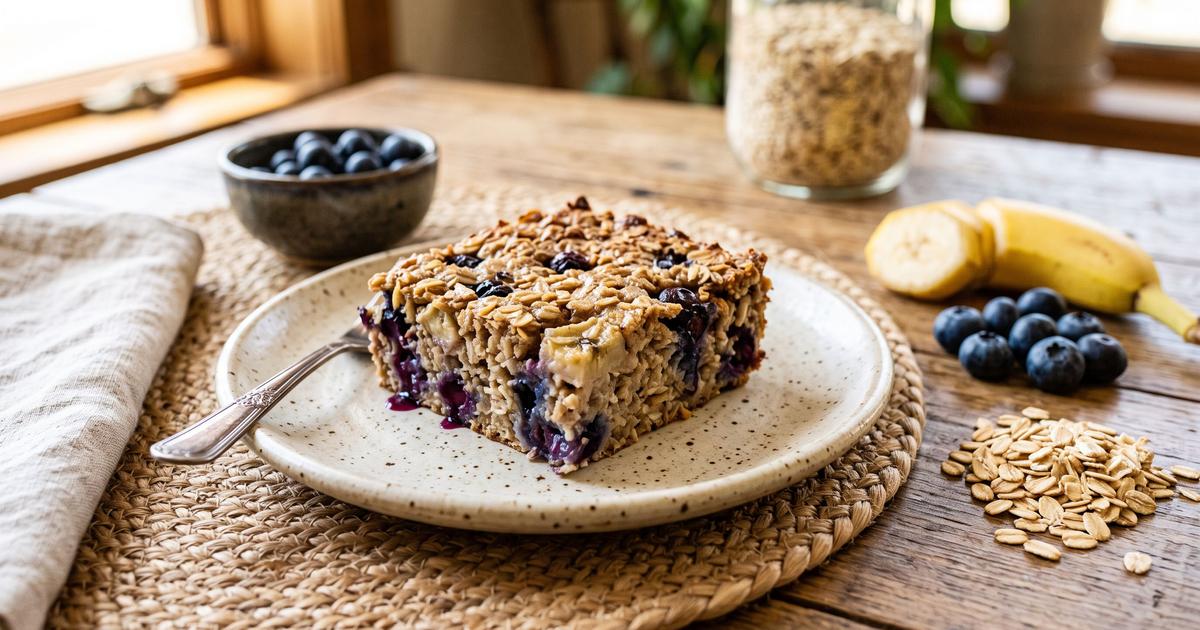
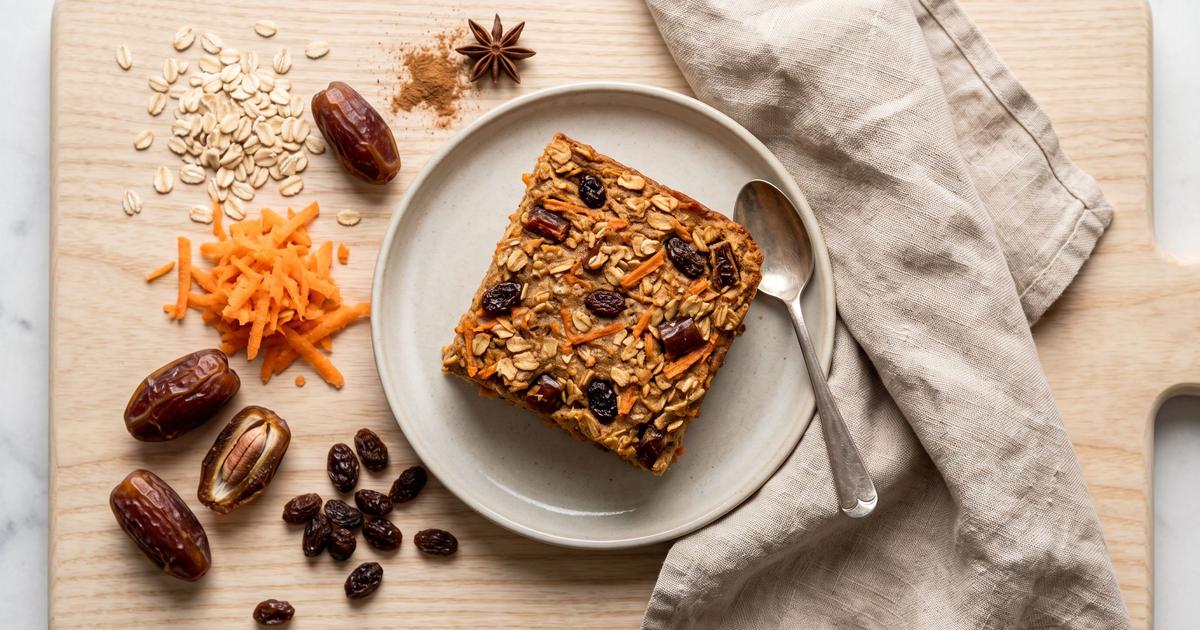
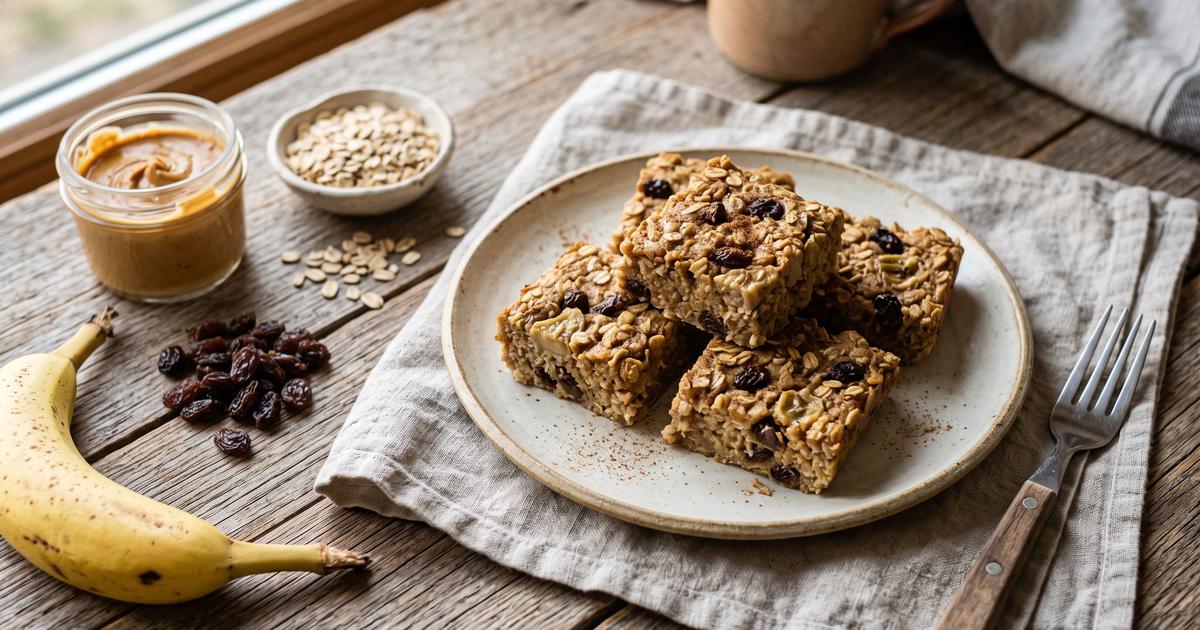
Apple and cinnamon is the oldest pairing in the American breakfast, and grating the apple straight into the batter is what makes it work here without any added sugar: a grated apple breaks down almost completely in the oven, releasing its own juice and sweetness into every bite instead of sitting in separate chunks. Dates back that sweetness up, ground flaxseed replaces the egg, and a night in the fridge lets the oats hydrate fully before the oven ever gets involved, which is what keeps the center of the bake creamy instead of dry. A scatter of walnuts and a fan of sliced apple on top give it the texture and look of a good apple pie in breakfast form. It cuts into squares that keep all week, warm or straight from the fridge.
Ingredients
- 2 cups Rolled oats
- 2 cups Unsweetened soy milk
- 3 Apples, 2 grated for the batter, 1 thinly sliced for topping
- 5 Medjool dates, pitted, chopped
- 2 tbsp Ground flaxseed
- 1/3 cup Walnuts, chopped
- 1 1/2 tsp cassia cinnamon, ground
- 1/4 tsp Nutmeg, ground
Method
- Whisk the flaxseed with 6 tbsp (90 ml) water and let it sit 10 minutes until thick and gluey, the egg substitute that holds the bake together.
- Grate 2 of the apples, skin on for the fiber and color, straight into the flax gel, then whisk in the soy milk, chopped dates, cinnamon, and nutmeg until even. Grating instead of dicing means the apple all but melts into the batter as it bakes, so every bite tastes of apple rather than finding it in the occasional chunk.
- Stir in the oats and walnuts. Cover and refrigerate overnight, or at least 6 hours, so the oats hydrate fully before baking.
- In the morning, heat the oven to 350°F (175°C). Pour the mixture into a baking dish, smooth the top, and fan the remaining sliced apple over it.
- Bake 35 to 40 minutes, until set and the apple on top has browned at the edges. Cool at least 10 minutes before cutting.
Nutrition
Estimated per serving: 270 calories, 6 g protein, 7 g fiber, 35 mg sodium. Computed from USDA FoodData Central reference values for the main ingredients. This is an approximation, not a laboratory measurement. How these are computed.
Cost per serving is estimated from US national-average retail prices for cheap staple forms, using BLS dried-bean prices and USDA produce prices. Prices vary by store and season, so treat it as a guide, not a receipt. How this is computed.