Carrot Cake Overnight Baked Oatmeal
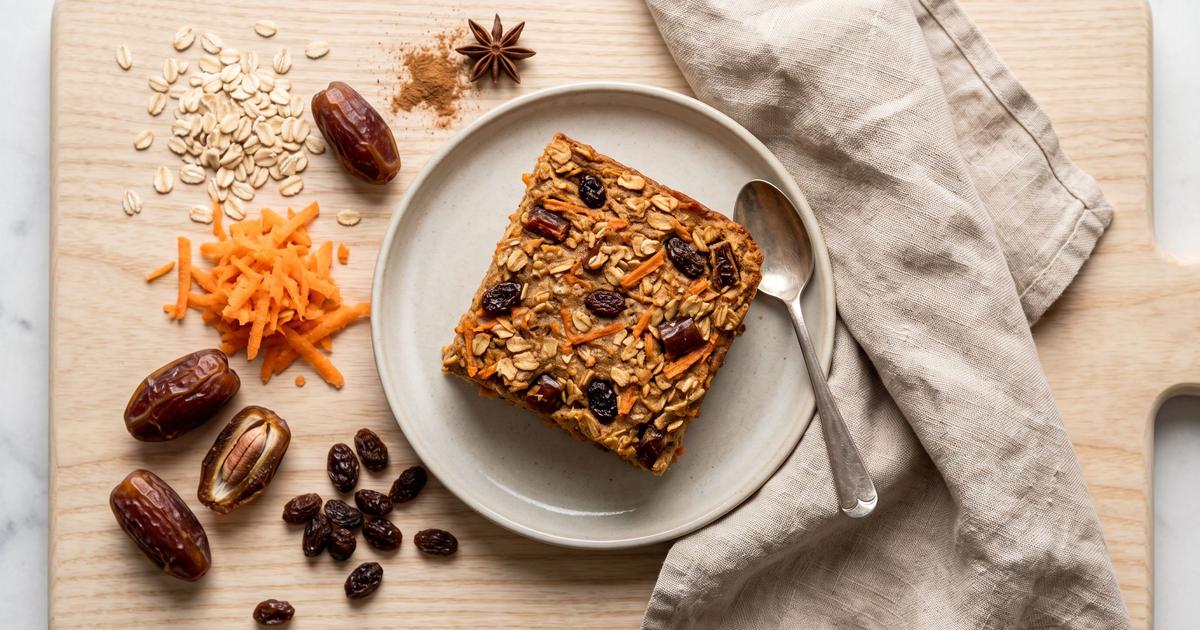
Carrot cake is spiced, moist, and only lightly sweet under all that frosting, which makes it closer to a good breakfast bake than most desserts are. Grated carrot supplies the moisture a stick of butter would otherwise carry, dates and raisins do the sweetening, and cinnamon and nutmeg bring the warmth the cake is known for. A night soaking in the fridge softens the oats and gives the carrot time to release its liquid into the mix, so what goes into the oven in the morning is already most of the way to done. A spoonful of plain plant yogurt on top, tangy and cool against the warm spice, does the job cream cheese frosting does on the cake without any added sugar. Cut it into squares and it holds through the week.
Ingredients
- 2 cups Rolled oats
- 2 cups Unsweetened soy milk
- 2 cups Carrots, grated
- 5 Medjool dates, pitted, chopped
- 2 tbsp Ground flaxseed
- 1/3 cup Raisins
- 1/3 cup Walnuts, chopped
- 1 1/2 tsp cassia cinnamon, ground
- 1/4 tsp Nutmeg, ground
- 1/2 cup Plain plant yogurt, unsweetened, for serving
Method
- Whisk the flaxseed with 6 tbsp (90 ml) water and let it sit 10 minutes until thick and gluey.
- Whisk the soy milk, chopped dates, cinnamon, and nutmeg into the flax gel until even, then stir in the grated carrot. Carrot cake gets its moisture from carrot rather than fat, and grating it fine here means it disappears into the batter the same way it does in the cake.
- Fold in the oats, raisins, and walnuts. Cover and refrigerate overnight, or at least 6 hours, so the oats hydrate fully and the carrot's liquid works its way through the mix.
- In the morning, heat the oven to 350°F (175°C). Pour into a baking dish, smooth the top, and bake 35 to 40 minutes, until set and firm at the center.
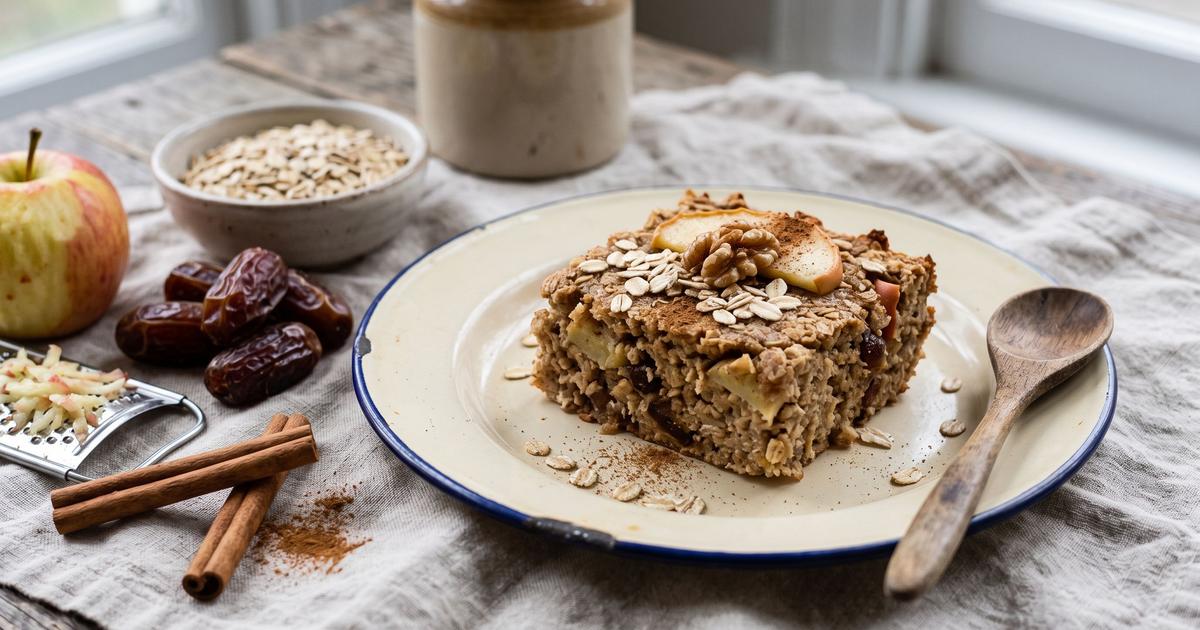
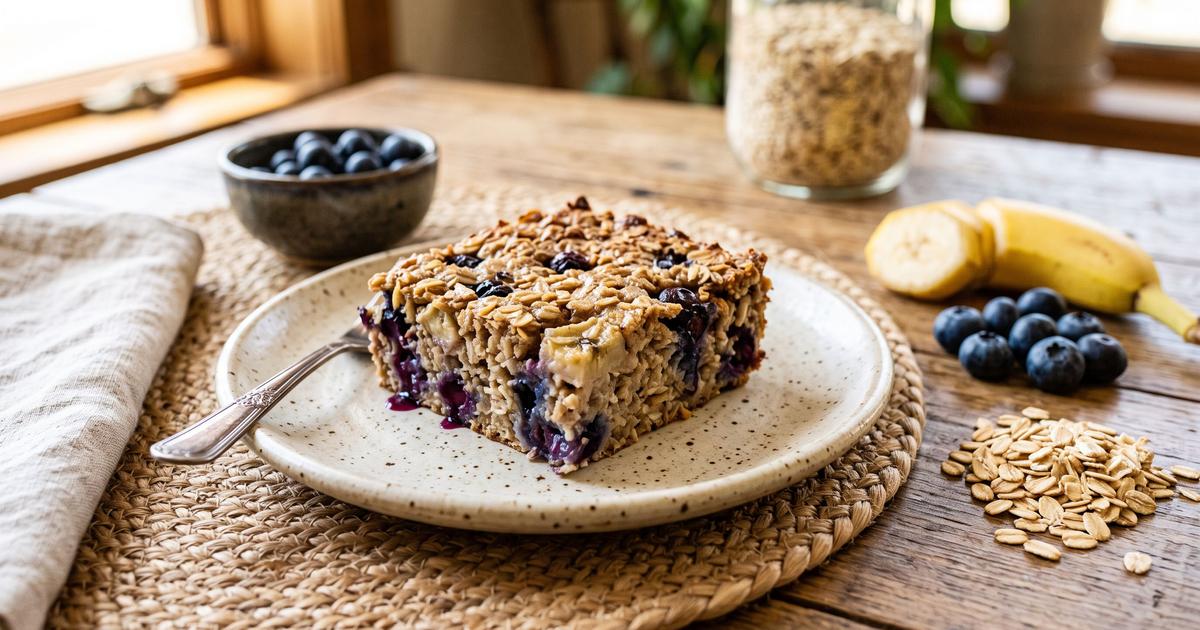
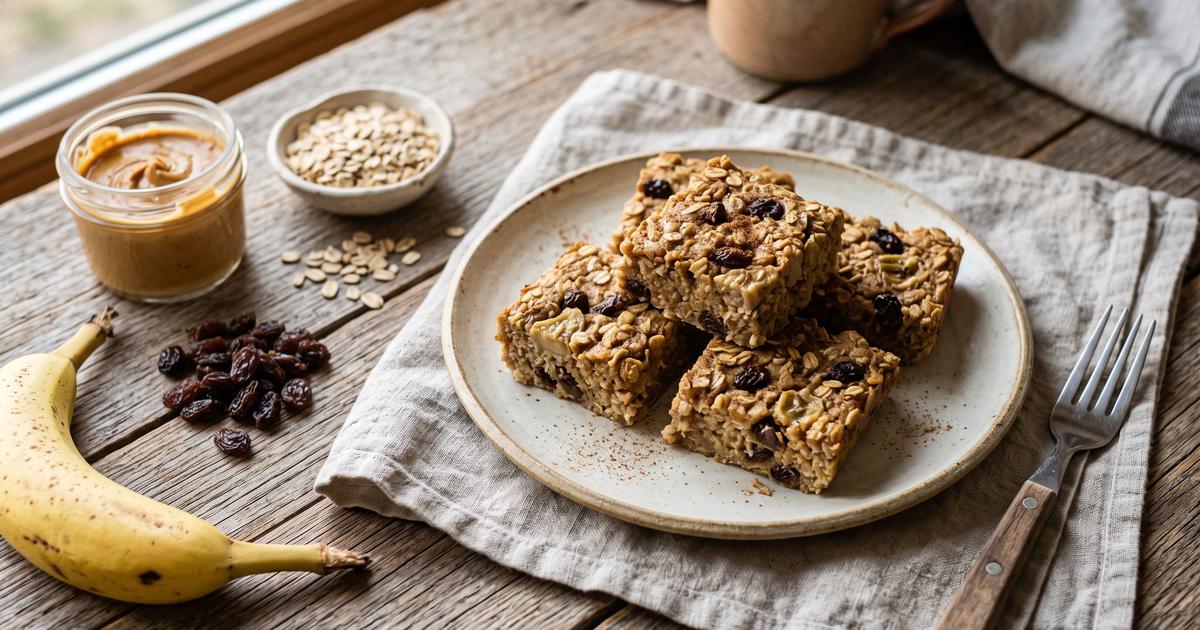
- Let cool at least 10 minutes, then cut into squares. A spoonful of plain plant yogurt on top stands in for cream cheese frosting, tangy against the warm spice.
Nutrition
Estimated per serving: 275 calories, 7 g protein, 6 g fiber, 50 mg sodium. Computed from USDA FoodData Central reference values for the main ingredients. This is an approximation, not a laboratory measurement. How these are computed.
Cost per serving is estimated from US national-average retail prices for cheap staple forms, using BLS dried-bean prices and USDA produce prices. Prices vary by store and season, so treat it as a guide, not a receipt. How this is computed.