Blueberry Baked Oatmeal
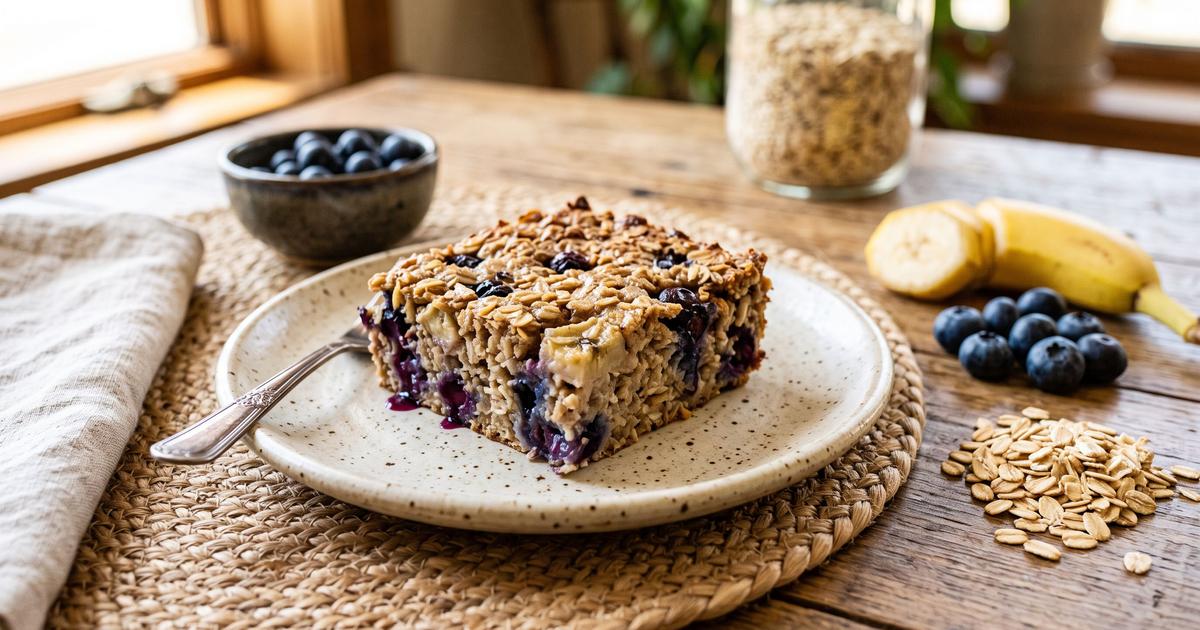
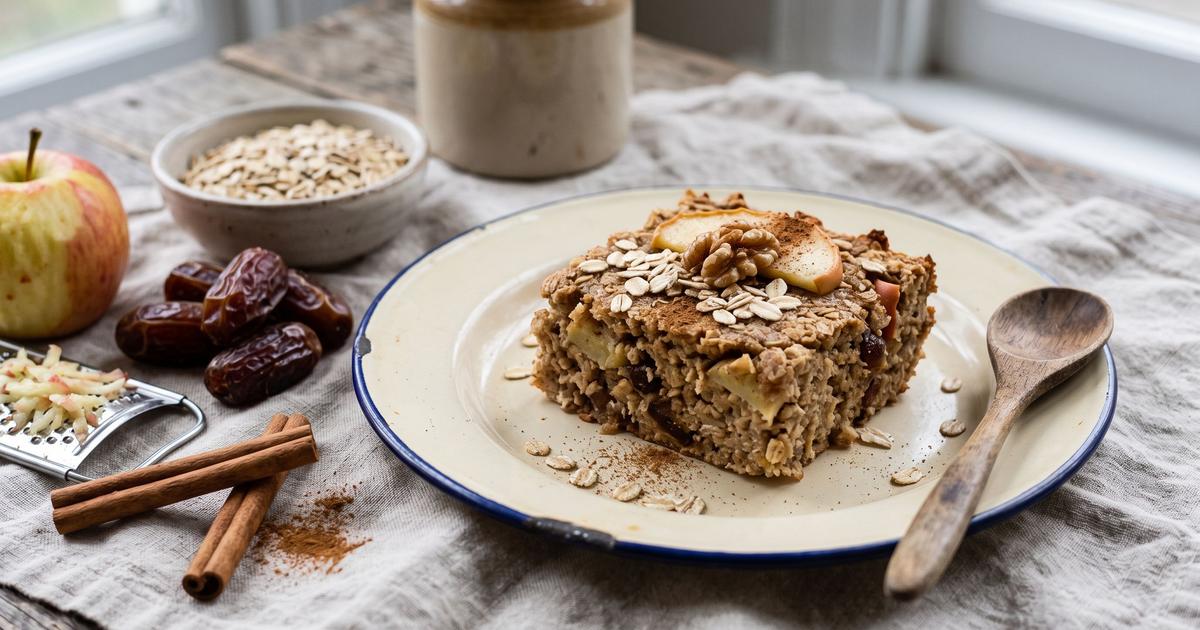
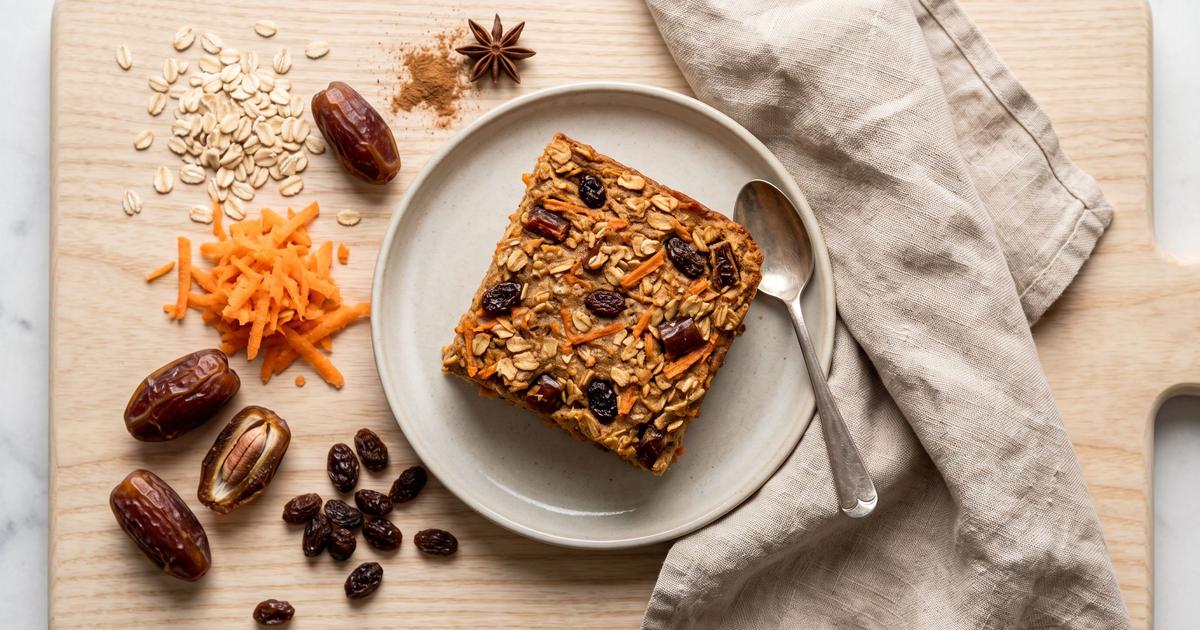
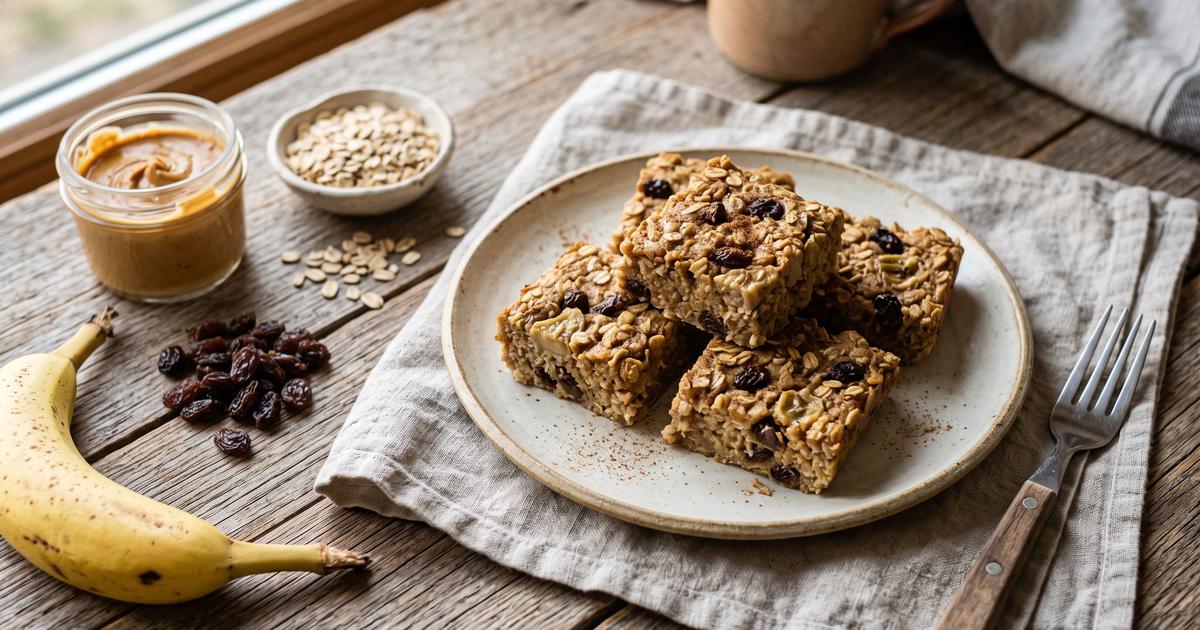
Baked oatmeal is the make-ahead breakfast of the American Midwest, a tray of oats and fruit that sets firm enough to cut into squares and keeps for days. It is built to be reheated on a weekday morning, and it needs no eggs, dairy, or sugar to work. Ground flaxseed stirred with water makes a gel that binds it like an egg, mashed ripe banana and a handful of dates do the sweetening, and soy milk brings enough protein that a square actually carries you to lunch. Fold the berries in last so they do not stain the whole pan, and let it cool before you cut it, because the set happens as it cools. Bake it Sunday night and breakfast is handled through Thursday. Eat it warm with a splash more soy milk or cold from the fridge.
Ingredients
- 2 cups Rolled oats
- 2 cups Unsweetened soy milk
- 2 wholes Bananas, mashed
- 2 tbsp Ground flaxseed
- 4 wholes Medjool dates, chopped
- 1 1/2 cups Frozen mixed berries
- 1/3 cup Walnuts, chopped
- 1 tsp cassia cinnamon, ground
Method
- Stir the ground flaxseed with 6 tbsp water (90 ml) and let it sit 10 minutes until it turns thick and gluey. This is the egg of the dish: flax and water set into a gel that binds the oats so the bake holds together and slices cleanly instead of crumbling.
- Mash the bananas well and mix them with the soy milk, flax gel, dates, and cinnamon. The banana and dates are the only sweeteners, and the riper the banana the sweeter the bake, so use ones gone spotty. Soy milk is the one plant milk with enough protein to make this a breakfast that holds you.
- Fold in the oats, then the berries and walnuts, and pour into a baking dish. Adding the frozen berries last and folding gently keeps them from bleeding purple through the whole bake before it even reaches the oven.
- Bake at 350°F (175°C) for 35 minutes until set and firm at the center. Let it cool at least 10 minutes before cutting: warm from the oven it is loose, but as it cools the oats and flax firm up into squares you can lift out whole and reheat all week.
Nutrition
Estimated per serving: 260 calories, 8 g protein, 7 g fiber, 45 mg sodium. Computed from USDA FoodData Central reference values for the main ingredients. This is an approximation, not a laboratory measurement. How these are computed.
Cost per serving is estimated from US national-average retail prices for cheap staple forms, using BLS dried-bean prices and USDA produce prices. Prices vary by store and season, so treat it as a guide, not a receipt. How this is computed.