Cambuulo, Somali Adzuki Beans
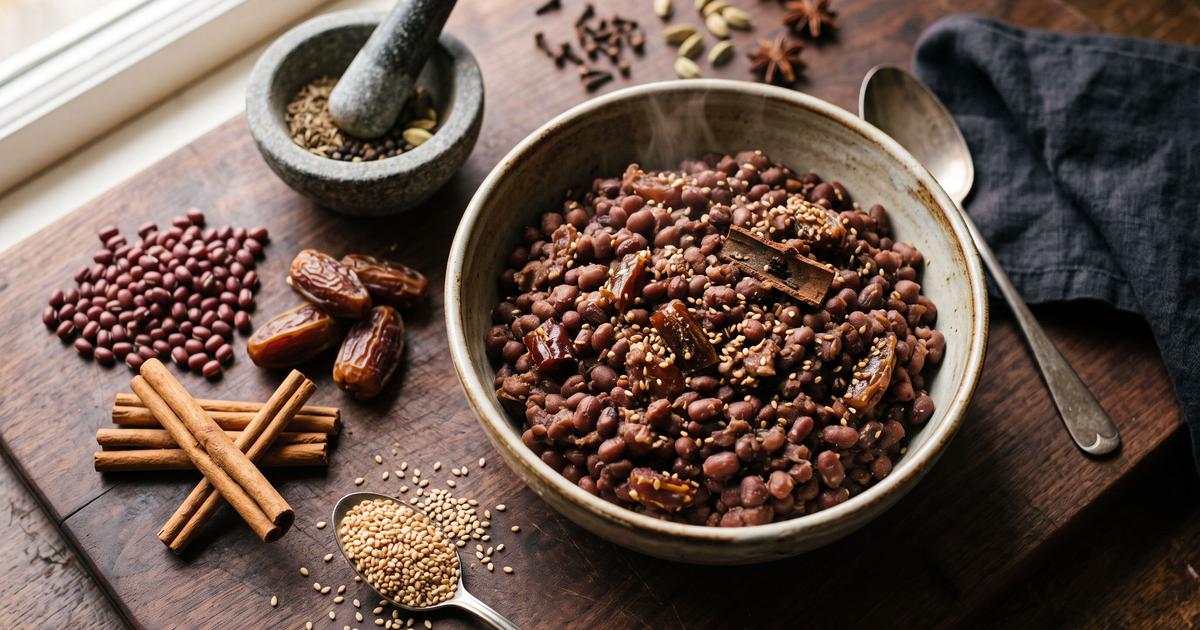
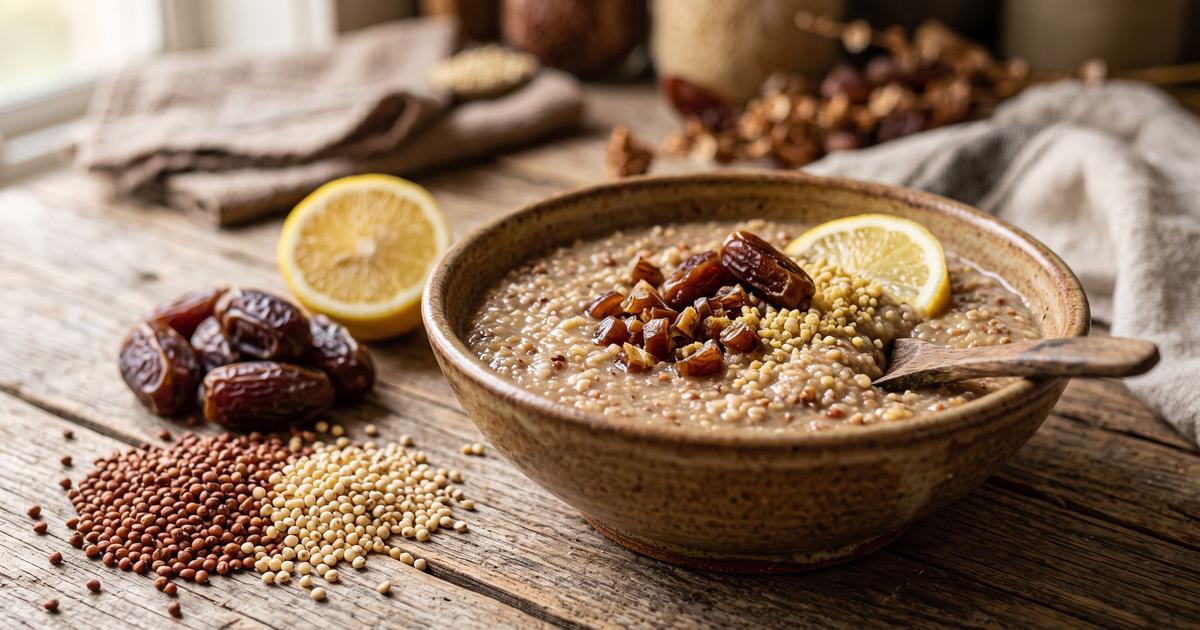
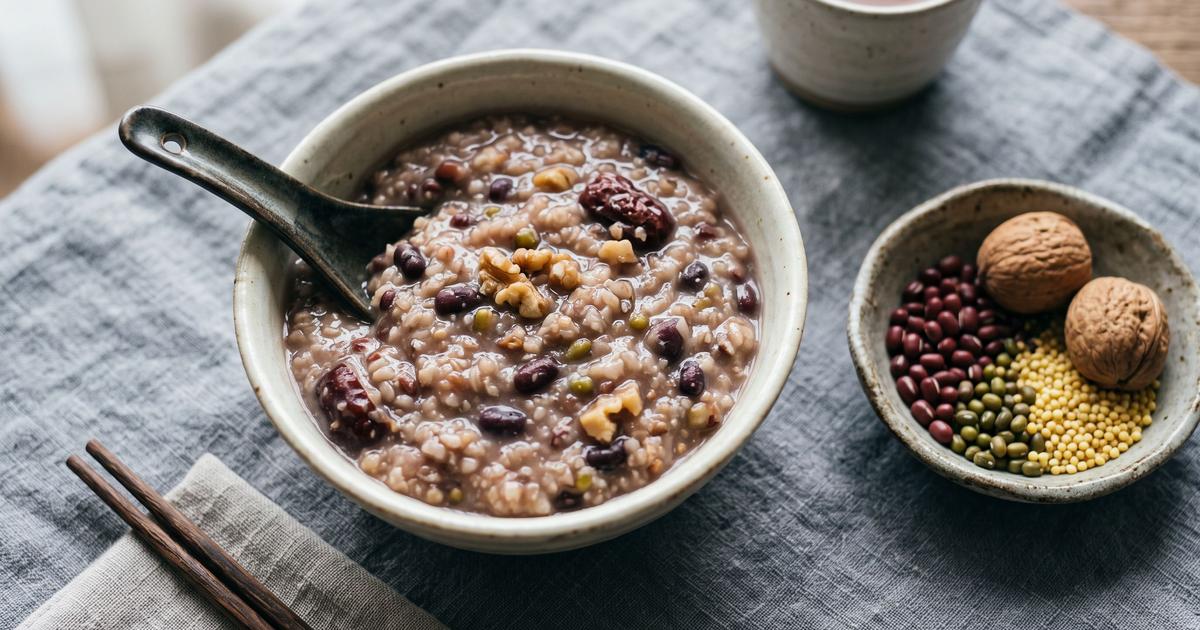
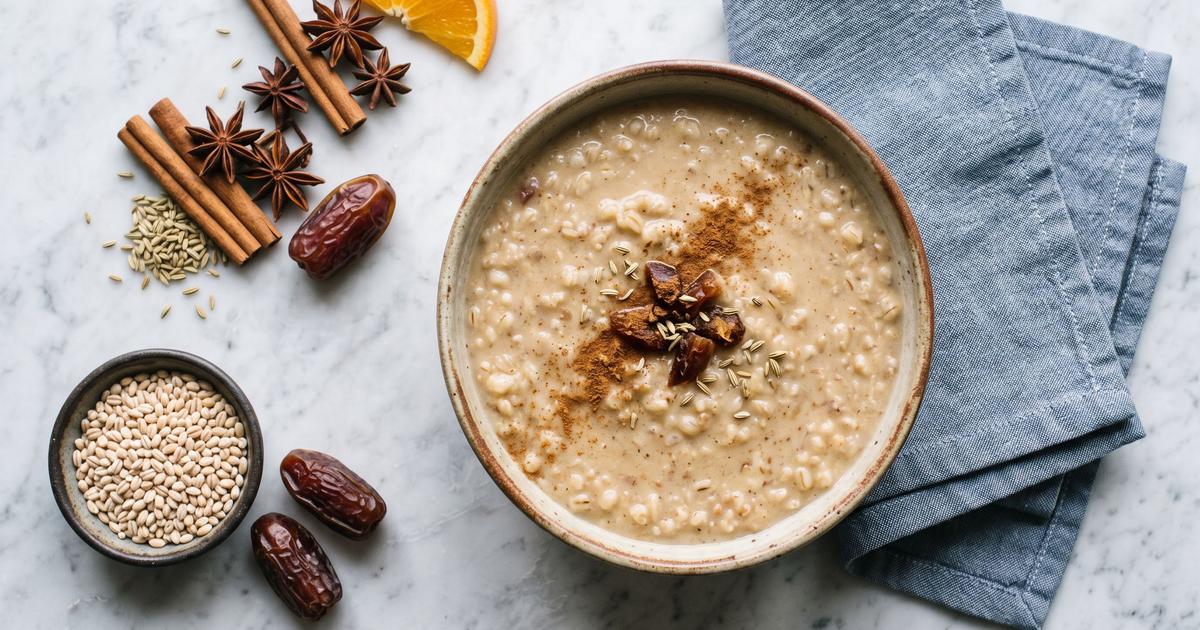
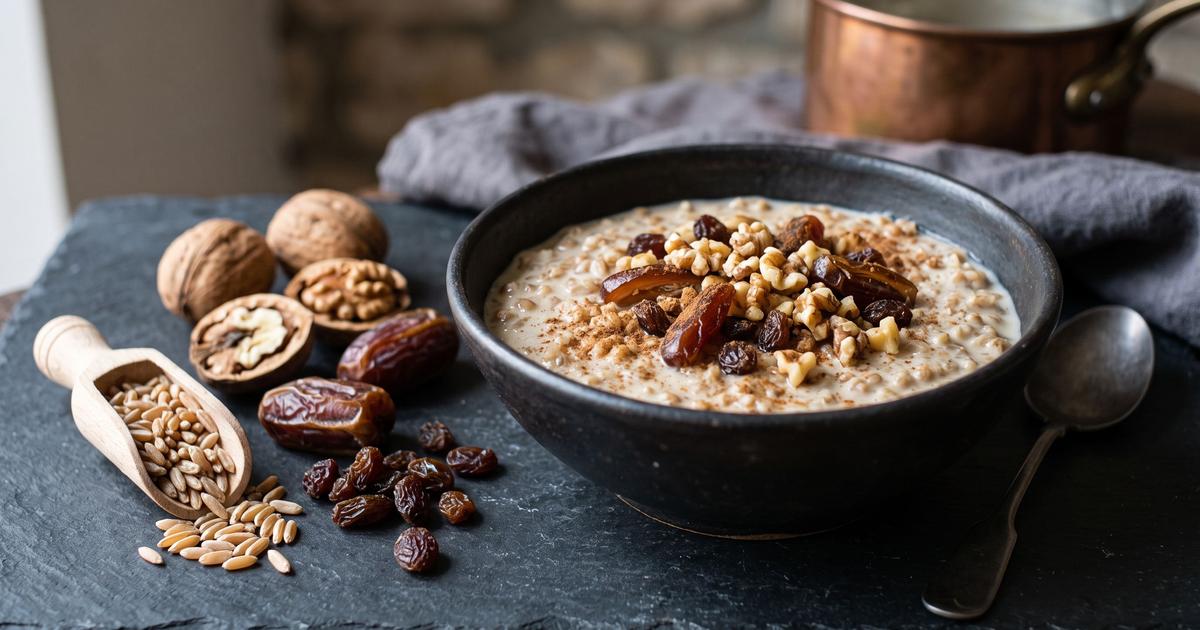
Cambuulo is a Somali bowl of small red beans, usually the adzuki-type digir, simmered long and then dressed simply, eaten at breakfast or as a light evening meal. The traditional bowl is finished with butter or ghee and a spoon of sugar and sesame. Here toasted sesame supplies the richness, dates supply the sweetness, and mashing a few of the beans gives the creaminess without any fat added to the pot. It is slow food in the cooking but nearly hands-off, which is why a big batch on the weekend feeds several mornings. Soak the beans the night before to cut the simmer down.
Ingredients
- 1 cup Adzuki beans, soaked overnight
- 3 tbsp Sesame seeds
- 2 Medjool dates, pitted and chopped
- 1/2 tsp cassia cinnamon, ground
Method
- Drain the soaked beans, cover with fresh water by 2 inches (5 cm), and simmer until very soft, 45 to 55 minutes. Cook them past the point of just tender, because cambuulo wants some of the beans breaking down to bind the bowl.
- While the beans cook, toast the sesame seeds in a dry pan over medium heat, shaking often, until golden and fragrant, about 3 minutes. Toasting turns the raw seeds nutty and brings out the oil richness that stands in for the ghee a traditional cambuulo is finished with.
- Drain the beans, keeping a little of their liquid. Mash about a quarter of them against the side of the pot, then fold everything back together with a splash of the cooking liquid for creaminess.
- Stir in the chopped dates, cinnamon, and most of the toasted sesame. The dates give the gentle sweetness cambuulo usually gets from a spoon of sugar. Scatter the last of the sesame on top and serve warm.
Nutrition
Estimated per serving: 240 calories, 12 g protein, 10 g fiber, 12 mg sodium. Computed from USDA FoodData Central reference values for the main ingredients. This is an approximation, not a laboratory measurement. How these are computed.
Cost per serving is estimated from US national-average retail prices for cheap staple forms, using BLS dried-bean prices and USDA produce prices. Prices vary by store and season, so treat it as a guide, not a receipt. How this is computed.