Toyomansi, Filipino Soy and Citrus Dipping Sauce
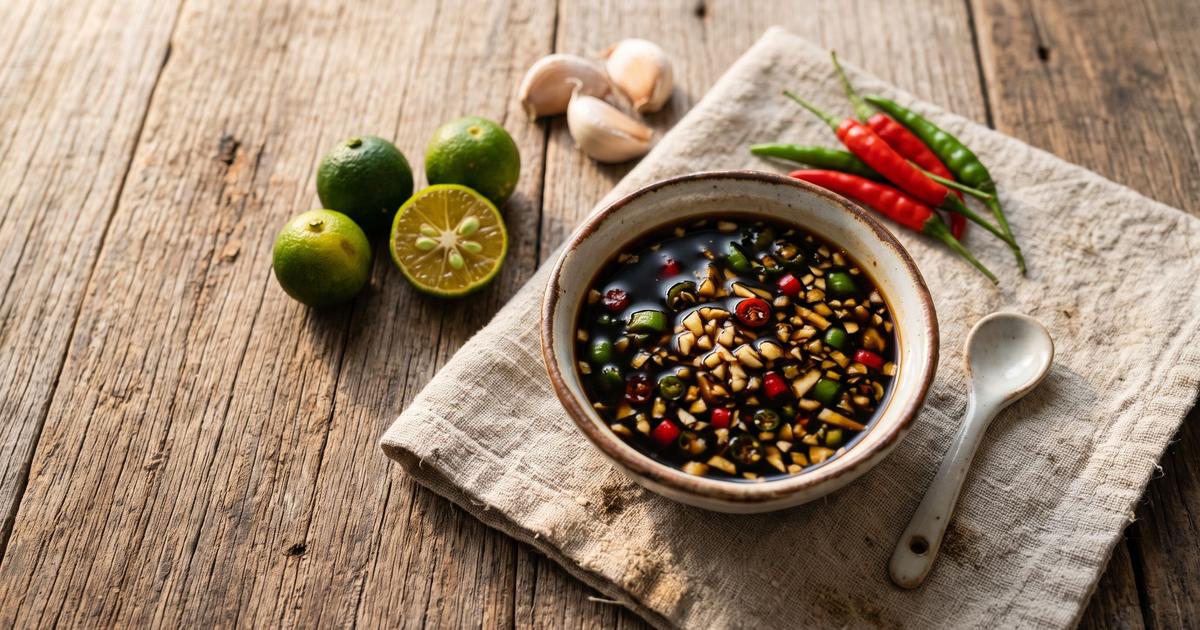
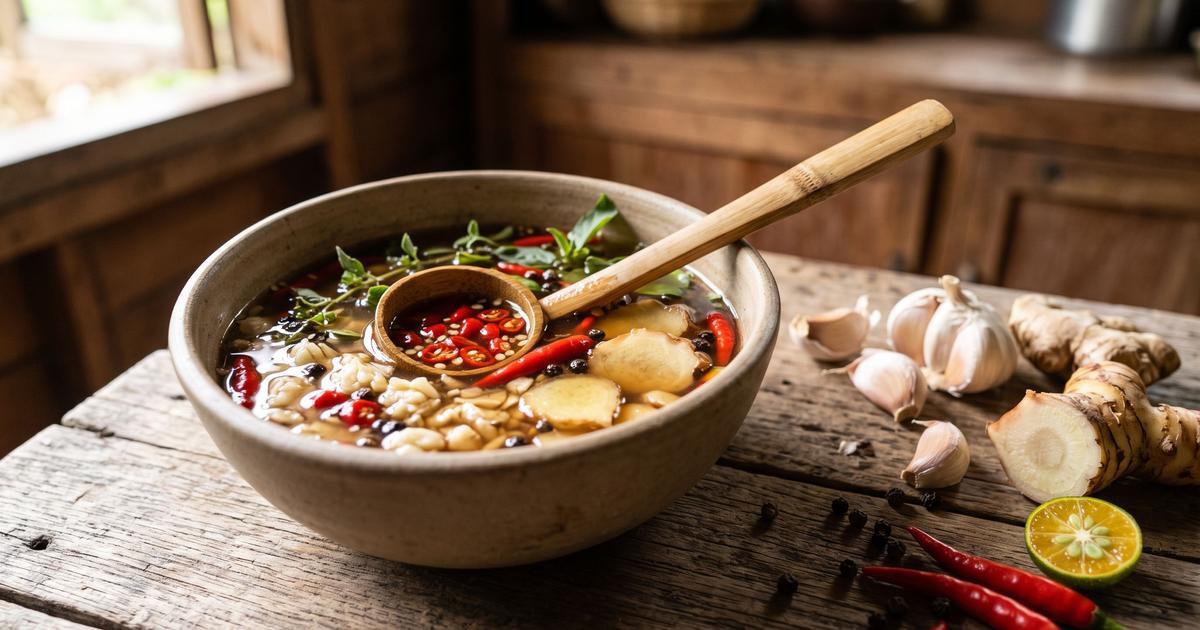
Toyomansi is the reflex condiment of a Filipino table, toyo (soy sauce) plus kalamansi (the local citrus), whisked together in whatever dish is nearest and set out for dipping. It is intensely savory and sour, and because a little goes on each bite, a small spoonful seasons a whole plate. Low-sodium tamari carries the sodium, which is why the sauce is marked salt light and portioned into eight; the point is a dab, not a drench. Garlic, chile, and scallion give it life, and a mashed date rounds the edges where sugar usually would. There is no oil and no coconut. Mix it fresh alongside anything grilled, steamed, or crisped, and adjust the chile to your heat.
Ingredients
- 3 tbsp Low-sodium tamari
- 3 tbsp Lime juice
- 2 cloves Garlic, minced
- 2 wholes Thai bird chile, thinly sliced
- 1 whole Scallions, finely sliced
- 1 whole Medjool dates, pitted and mashed to a paste
Method
- Mash the date to a smooth paste with a teaspoon of the lime juice, working out any lumps. Toyomansi is normally balanced with a little sugar against the salt and acid, and a date dissolved this way slips that roundness in without a grain of it.
- Whisk the tamari, the rest of the lime juice, garlic, chile, scallion, and the date paste together in a small bowl. Calamansi, the small Filipino citrus, is what gives the real thing its floral sourness; lime is the closest widely available stand-in and does the same job.
- Let it sit 10 minutes before serving so the garlic and chile bloom into the liquid. It is the sauce, not a marinade, so keep the pours small: a shallow dish to dip grilled tofu, vegetables, or spring rolls into, one bite at a time.
Nutrition
Estimated per serving: 15 calories, 1 g protein, 1 g fiber, 340 mg sodium. Computed from USDA FoodData Central reference values for the main ingredients. This is an approximation, not a laboratory measurement. How these are computed.
Cost per serving is estimated from US national-average retail prices for cheap staple forms, using BLS dried-bean prices and USDA produce prices. Prices vary by store and season, so treat it as a guide, not a receipt. How this is computed.