Nuoc Leo, Vietnamese Peanut Sauce
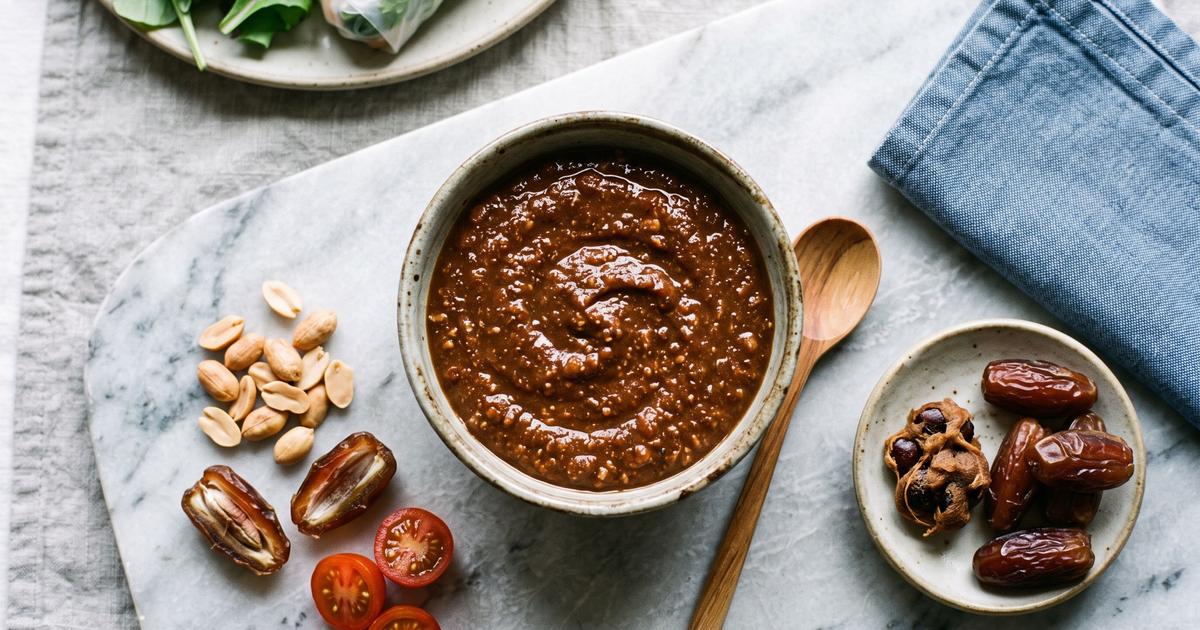
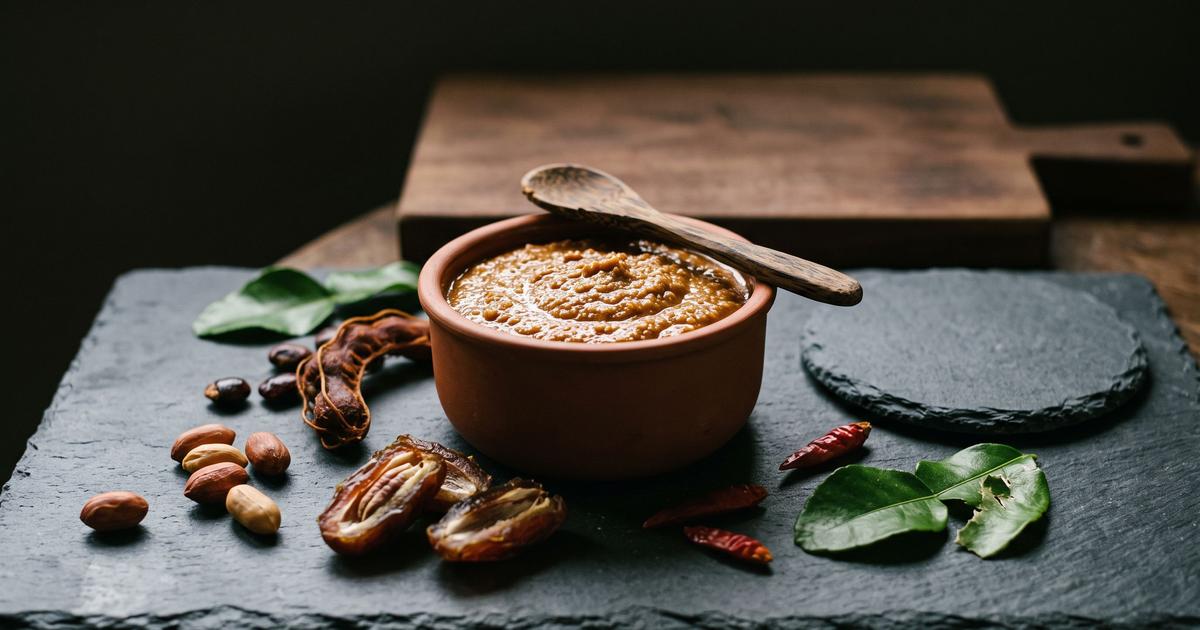
Nuoc leo is the peanut sauce set out with Vietnamese fresh rolls and grilled skewers, thick enough to cling to whatever you drag through it. Restaurant versions build it from hoisin and sometimes fish sauce or pork liver, and this one rebuilds that salty-sweet-savory chord from toasted tomato paste, tamarind, and dates, with a small measure of tamari as the single source of salt. Tamari is a fermented soy seasoning, and it is the one thing here that cannot be swapped out without the sauce falling flat, so it stays and the salt is kept honest at a light level. It thickens in the fridge, so loosen it with warm water before serving.
Ingredients
- 1 tbsp Tomato paste
- 2 cloves Garlic, minced
- 1/2 cup unsweetened peanut butter
- 1 1/2 tbsp Low-sodium tamari
- 2 tsp Tamarind paste
- 3 Medjool dates, pitted and blended with water into a paste
- 1 tbsp Lime juice
- 1 Thai bird chile, minced
- 2 tbsp Peanuts, toasted and crushed
Method
- Toast the tomato paste with the garlic in a dry pan over medium heat, adding a spoonful of water when it sticks, until it darkens to brick red, about 2 minutes. This is where the sauce gets its savory backbone: cooked-down tomato paste supplies the fermented depth that hoisin and fish sauce give the original.
- Whisk in the peanut butter, tamari, tamarind, date paste, and about 0.5 cup (120 ml) water. Simmer 2 to 3 minutes to a pourable cream, loosening with more water if it tightens. The peanut butter carries the body with no added oil.
- Off the heat, stir in the lime juice and chile. Adding the acid last keeps it bright rather than cooked-flat.
- Scrape into a bowl and top with the crushed peanuts. Serve as a dip for fresh vegetable rolls, lettuce wraps, or grilled tofu. The tamari is the one salted ingredient here and it does the whole job, so taste before adding a drop more.
Nutrition
Estimated per serving: 180 calories, 7 g protein, 3 g fiber, 185 mg sodium. Computed from USDA FoodData Central reference values for the main ingredients. This is an approximation, not a laboratory measurement. How these are computed.
Cost per serving is estimated from US national-average retail prices for cheap staple forms, using BLS dried-bean prices and USDA produce prices. Prices vary by store and season, so treat it as a guide, not a receipt. How this is computed.