Bumbu Pecel, Javanese Peanut Sauce
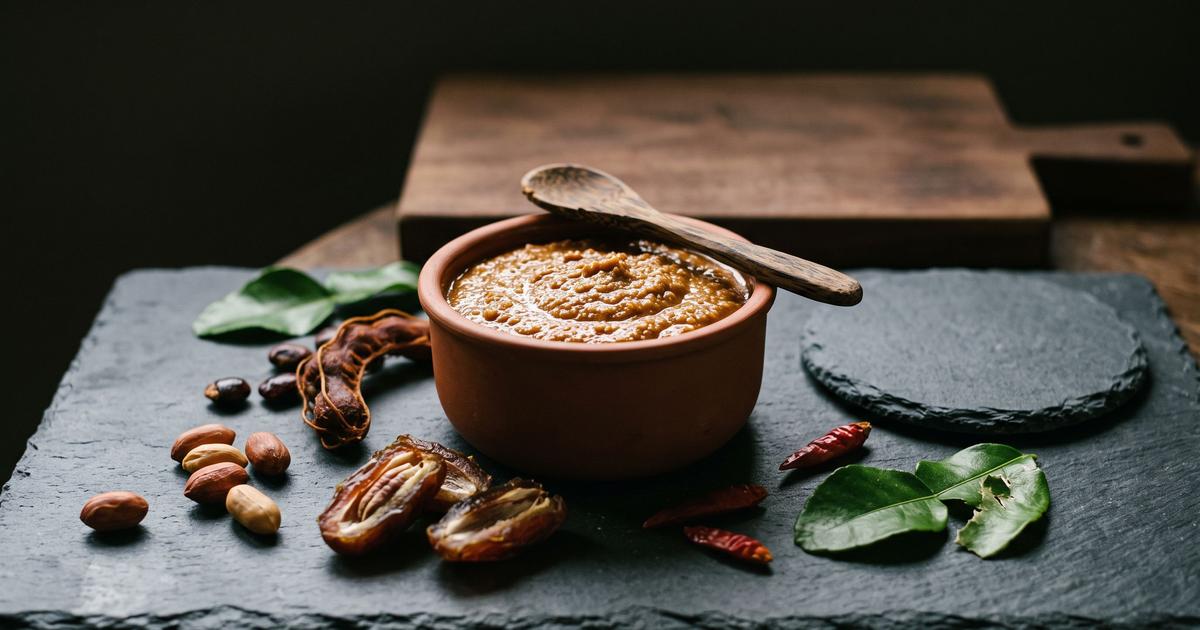
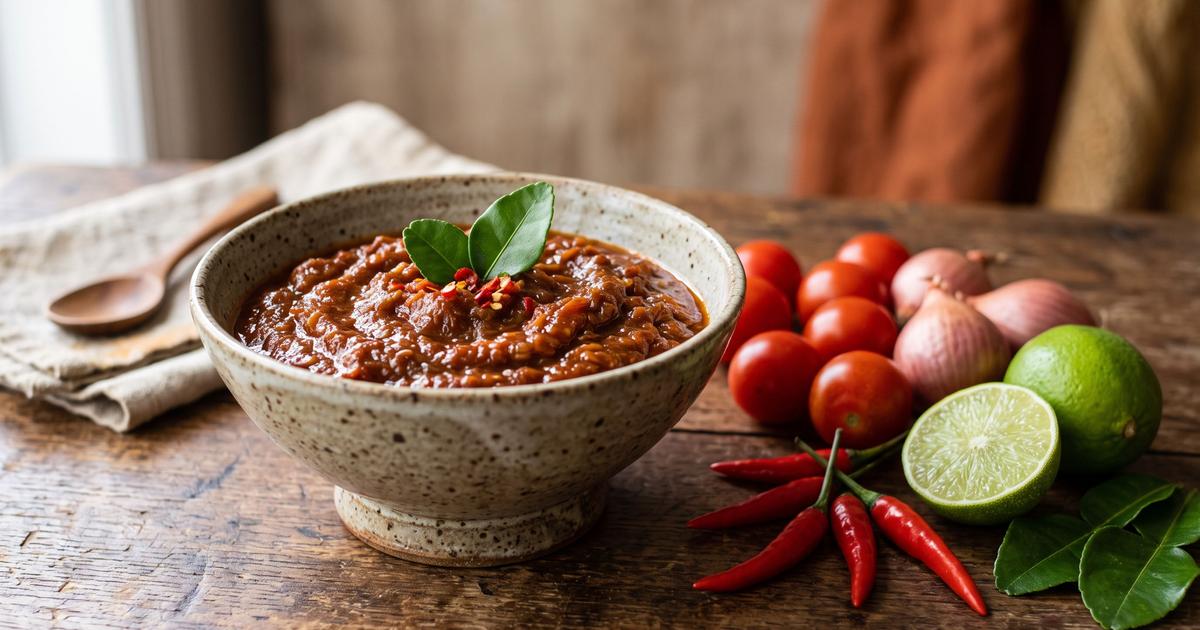
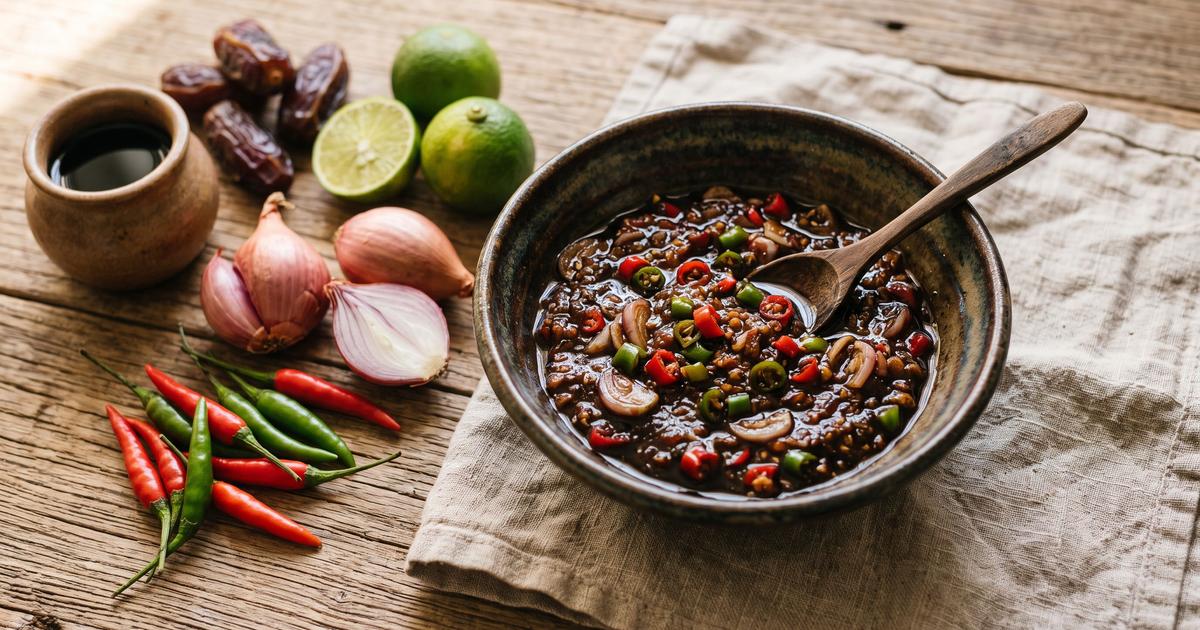
In the markets of East Java, bumbu pecel is sold as a dense brick of ground peanuts and spice that a cook breaks off and lets down with hot water into a sauce, ladled over a pile of blanched vegetables to make pecel. It is the workhorse peanut sauce of Javanese cooking, sharper and more aromatic than the sweet satay dip most people know, and the difference is kencur and lime leaf. Built from whole roasted peanuts, with dates for the palm sugar and a little miso for the salt, it becomes a spread you can keep on hand and turn any plate of steamed greens into a meal.
Ingredients
- 1 cup Peanuts, raw
- 3 cloves Garlic
- 2 Thai bird chiles
- 3 Makrut lime leaves, center rib removed, torn
- 1 tsp Galangal, grated
- 1 1/2 tbsp Tamarind paste
- 4 Medjool dates, pitted
- 2 tsp White miso
- 1 tbsp Lime juice
Method
- Toast the peanuts in a dry pan over medium heat until they are deep golden and smell roasted, shaking often so they color evenly. The depth of a good bumbu pecel lives entirely in how far you take this roast, so do not stop at pale.
- Pound or grind the warm peanuts to a coarse paste. A little texture is right here, this is not meant to be as smooth as commercial peanut butter.
- Pound the garlic, chile, galangal, and torn lime leaves to a paste. Galangal stands in for kencur, the sharp aromatic root that is the true signature of a Javanese pecel and the thing that separates it from an ordinary satay sauce.
- Work the aromatics into the peanut paste along with the dates, tamarind, miso, and lime. The dates replace the palm sugar and the miso replaces the salt and shrimp paste, so the sauce should land sweet, sour, savory, and hot in the same bite.
- Loosen with warm water, a spoonful at a time, to a thick sauce that just falls from a spoon. Spoon over blanched long beans, cabbage, and spinach for pecel, or use as a dip for raw vegetables. It keeps a week in the fridge and thickens cold, so thin it with hot water before serving.
Nutrition
Estimated per serving: 150 calories, 6 g protein, 3 g fiber, 200 mg sodium. Computed from USDA FoodData Central reference values for the main ingredients. This is an approximation, not a laboratory measurement. How these are computed.
Cost per serving is estimated from US national-average retail prices for cheap staple forms, using BLS dried-bean prices and USDA produce prices. Prices vary by store and season, so treat it as a guide, not a receipt. How this is computed.