Sambal Ijo, Padang Green Chile Sambal
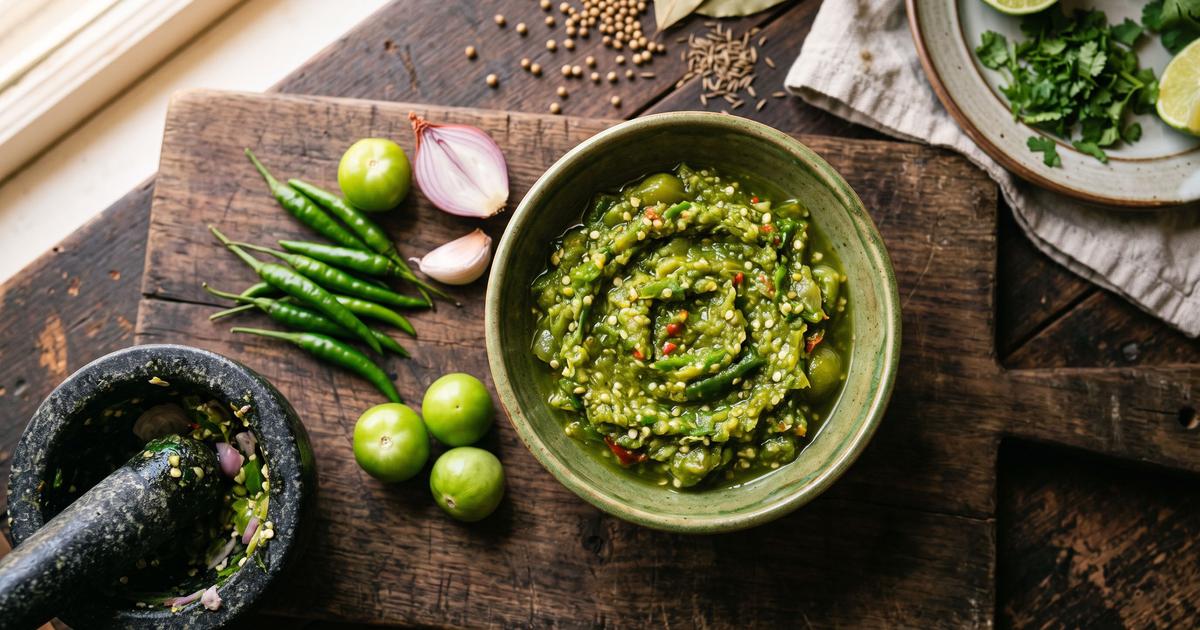
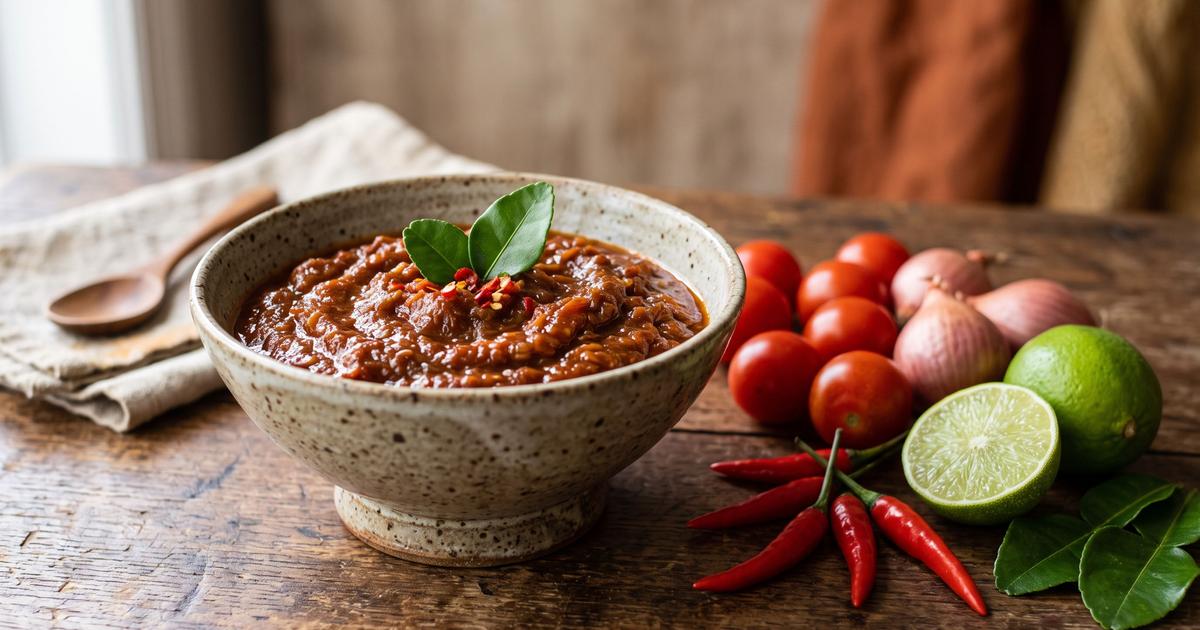
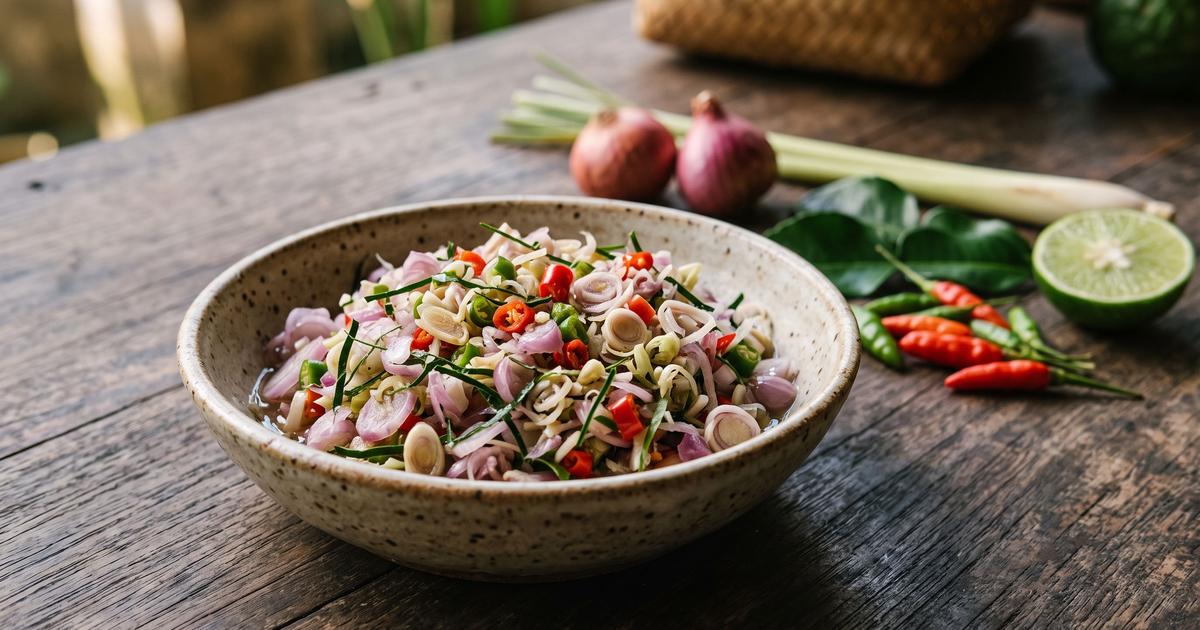
Sambal ijo, the green sambal of Padang and the wider Minangkabau kitchen, is the coarse chile relish spooned over rice and vegetables at every nasi Padang counter. Its color and its tartness come from green chiles and green tomatoes; here tomatillo stands in for the hard green tomato, bringing the same lemony sourness. The traditional method steams everything soft and then mashes it, which is a gift for oil-free cooking, since no frying is required to build the flavor. Most versions add salt and sometimes sugar; this one leans on lime instead, which keeps it sharp and clean. Use green-chile-indian or serrano and adjust the ratio to your heat tolerance. Make it a day ahead if you can, since sambal ijo, like most relishes, tastes better once it has had a night to settle.
Ingredients
- 8 Indian green chiles, stemmed
- 2 Serranos, stemmed
- 4 Tomatillos, husked and halved
- 3 Shallots, peeled
- 3 cloves Garlic
- 1 tbsp Lime juice
Method
- Steam the chiles, tomatillos, shallots, and garlic together until soft and dulled in color, 8 to 10 minutes. Steaming rather than frying tames the raw bite and collapses the vegetables so they mash easily, and it keeps the sambal oil-free without losing the cooked, mellow depth that a raw sambal lacks.
- Let everything cool for a few minutes, then pound in a mortar or pulse briefly in a food processor to a coarse, chunky paste. Keep it rough: sambal ijo is meant to have texture, and grinding it smooth turns it into a sauce and loses the point.
- Stir in the lime juice. The acid brightens the whole thing and, in the absence of salt, does most of the seasoning work, so taste and add a little more if it reads flat.
- Spread it out to cool completely before storing. It keeps in the fridge for a week and its flavor settles and deepens after a day, so it is better made ahead than served the minute it is done.
Nutrition
Estimated per serving: 30 calories, 1 g protein, 2 g fiber, 10 mg sodium. Computed from USDA FoodData Central reference values for the main ingredients. This is an approximation, not a laboratory measurement. How these are computed.
Cost per serving is estimated from US national-average retail prices for cheap staple forms, using BLS dried-bean prices and USDA produce prices. Prices vary by store and season, so treat it as a guide, not a receipt. How this is computed.