Sambal Matah, Balinese Raw Shallot Sambal
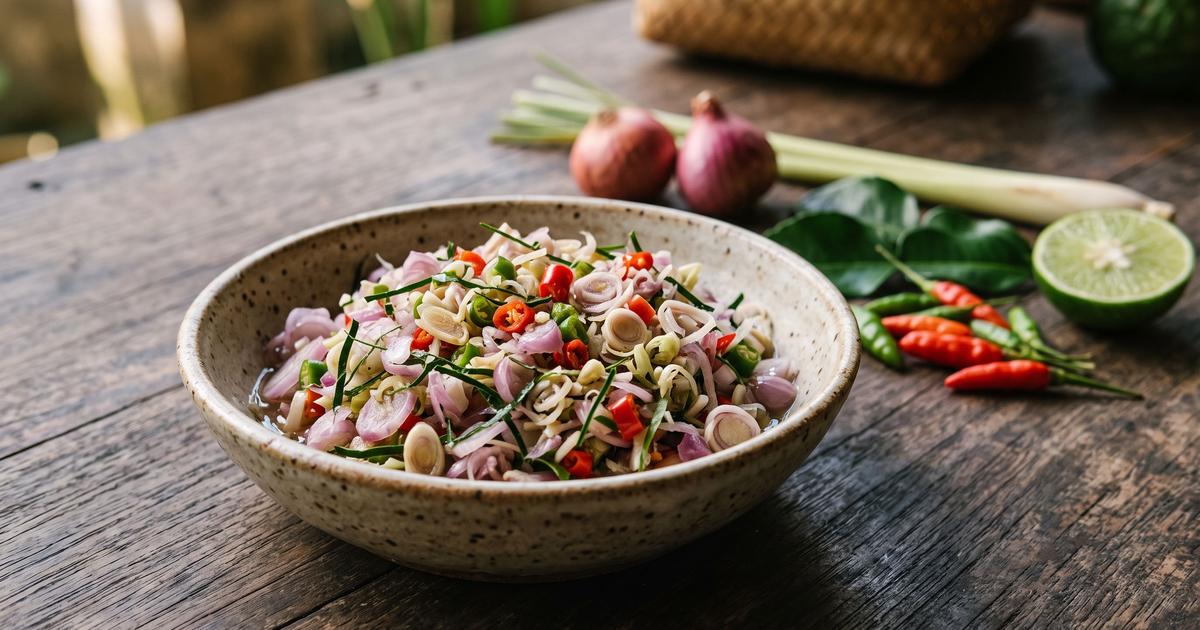
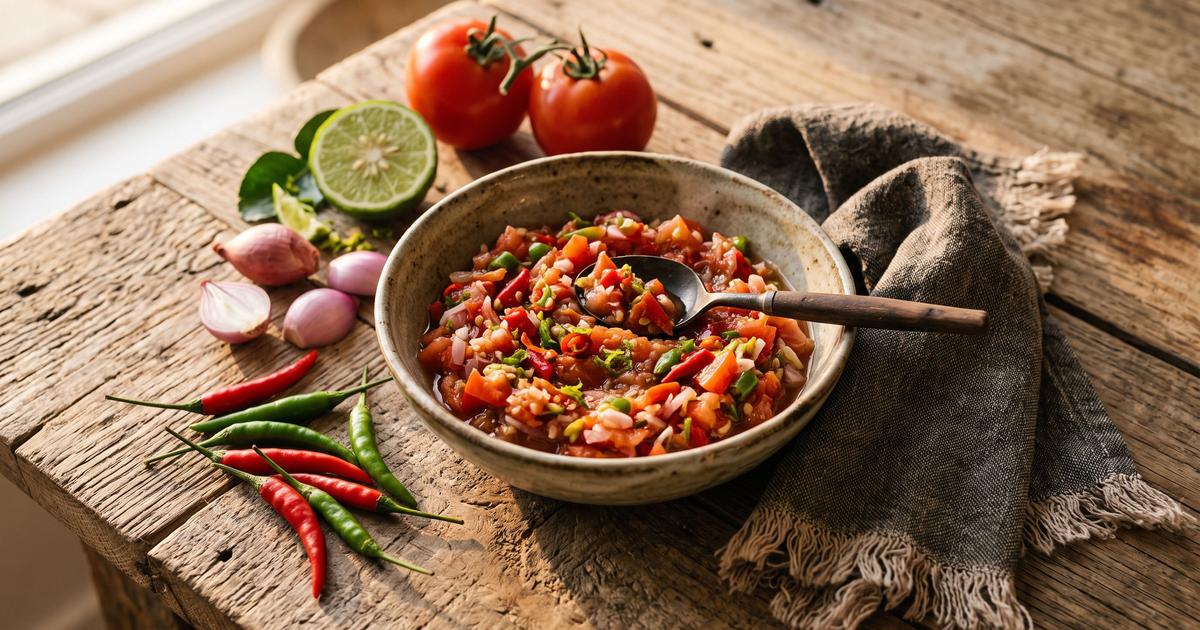
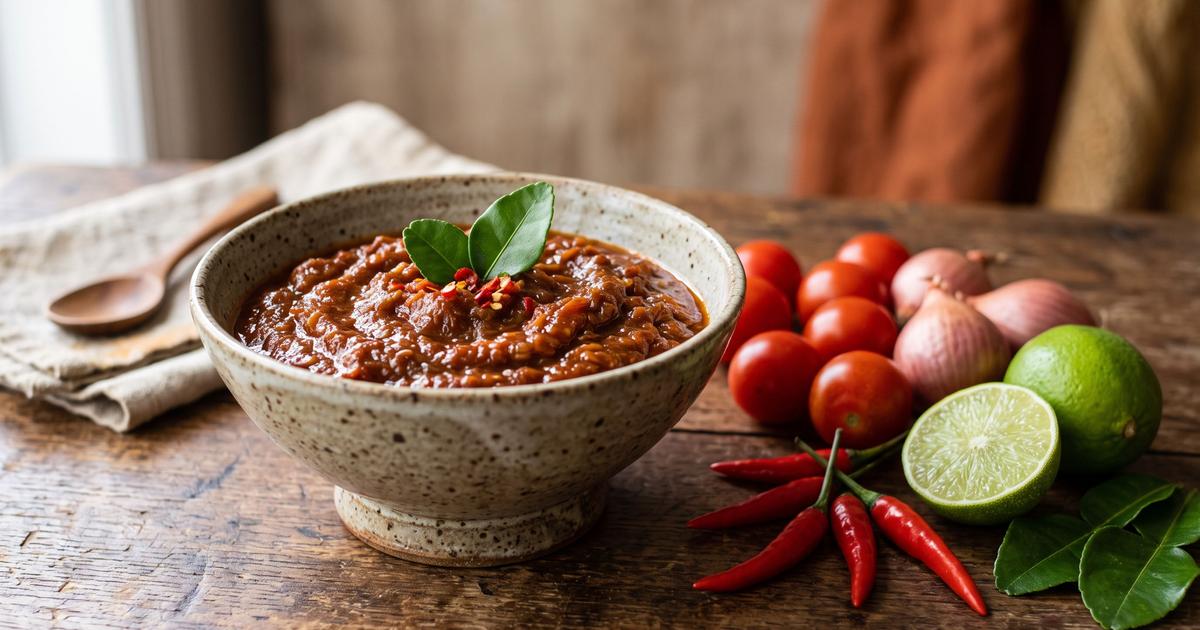
Sambal matah is the raw sambal of Bali, a bright tangle of sliced shallot, lemongrass, and lime leaf that is spooned over almost anything as a fresh, hot condiment. Most versions are finished with hot coconut oil and a knob of shrimp paste, and this one skips both: scrunching the raw aromatics with lime juice bruises them enough to release their oils, and the lime and chile carry the seasoning without added salt. Slice everything as thin as your knife allows, use only the tender heart of the lemongrass, and give it a few minutes to sit so the raw shallot softens.
Ingredients
- 6 wholes Shallots, very thinly sliced
- 2 stalks Lemongrass, tender core only, very thinly sliced
- 4 wholes Makrut lime leaves, center rib removed, sliced into threads
- 4 wholes Thai bird chile, thinly sliced
- 2 cloves Garlic, minced
- 2 wholes Scallions, thinly sliced
- 2 tbsp Lime juice
Method
- Slice the shallots, lemongrass, lime leaves, chiles, and scallions as thinly as you can, close to translucent. Sambal matah is served completely raw, so thickness is the whole texture of the dish: thin slices soften and mingle, thick ones stay harsh and stringy.
- Use only the pale tender core of the lemongrass, the bottom third once the dry outer layers are peeled away. The upper stalk is too woody to eat raw and never breaks down without cooking.
- Combine everything in a bowl with the garlic and lime juice and scrunch it together hard with your fingertips for a full minute. Bruising the shallot and lemongrass this way is what a cooked sambal gets from hot oil: it breaks the cell walls and releases the aromatic oils so the raw pieces taste married rather than separate.
- Let it rest at least 10 minutes before serving. The lime juice keeps working on the raw shallot, mellowing its bite, and the flavors settle into something brighter and rounder. A traditional matah adds shrimp paste and salt, and here the raw aromatics and lime do that job instead.
Nutrition
Estimated per serving: 45 calories, 1 g protein, 1 g fiber, 10 mg sodium. Computed from USDA FoodData Central reference values for the main ingredients. This is an approximation, not a laboratory measurement. How these are computed.
Cost per serving is estimated from US national-average retail prices for cheap staple forms, using BLS dried-bean prices and USDA produce prices. Prices vary by store and season, so treat it as a guide, not a receipt. How this is computed.