Nuoc Cham Chay, Vegan Dipping Sauce
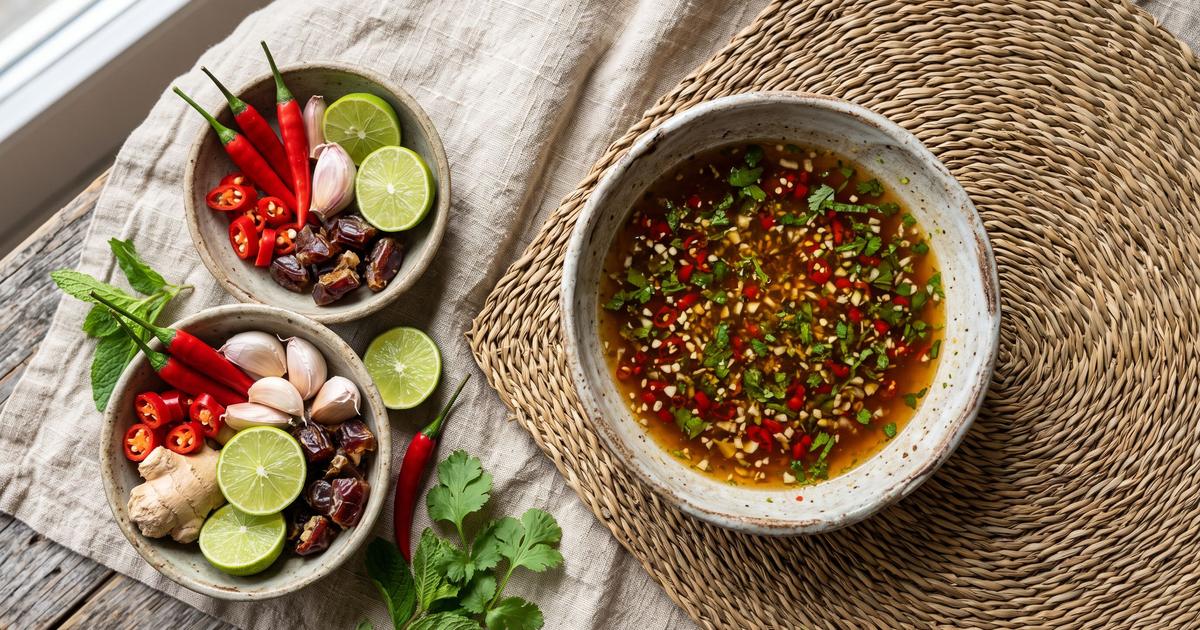
Nuoc cham is the table sauce of Vietnam, the sweet-sour-salty-hot dip that shows up beside almost everything. Its usual backbone is fish sauce and sugar, neither of which fits here, so this vegan version rebuilds the balance from other parts: low-sodium tamari for the savory floor, blended dates for the sweetness, and a heavy hand of lime to keep it sharp. The tamari is the one unavoidable source of salt, so it is measured carefully and kept small, with the acid doing most of the lifting. Garlic and bird chile go in at the end to stay bright. Grate a little carrot over the top the way the street stalls do.
Ingredients
- 1 1/2 tbsp Low-sodium tamari
- 3 tbsp Lime juice
- 2 Deglet noor dates, pitted
- 2 cloves Garlic, minced
- 1 Thai bird chile, minced, seeds in
- 1 tsp unseasoned rice vinegar
- 2 tbsp Carrots, grated, for garnish
Method
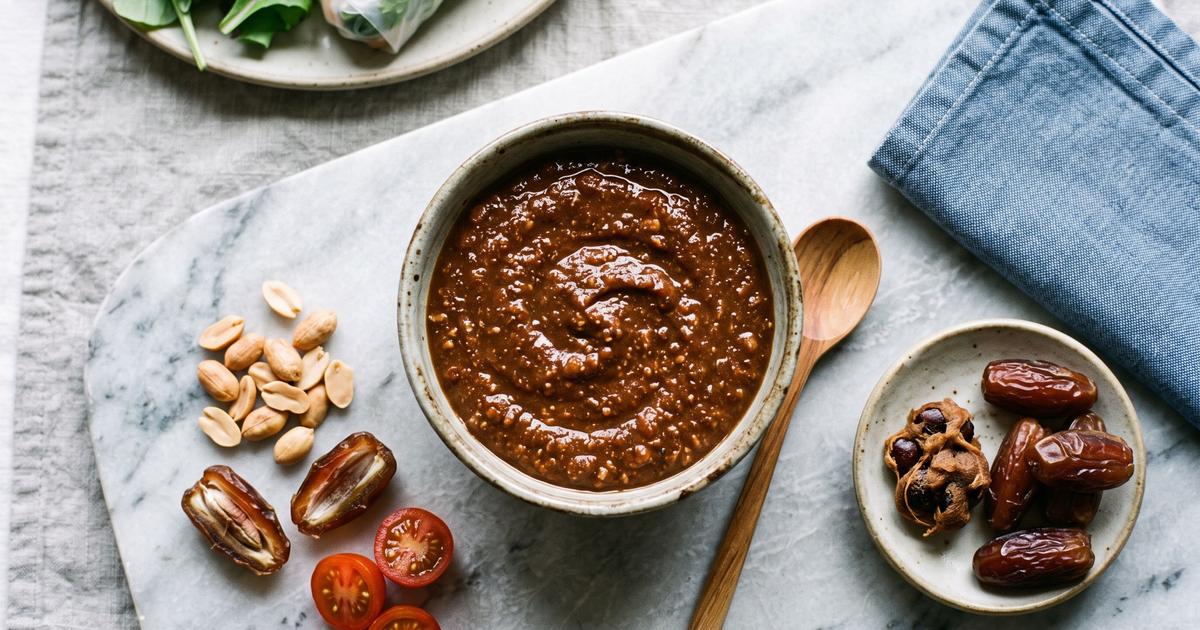
- Blend the dates with 6 tablespoons (90 ml) warm water until completely smooth. This date syrup replaces the palm sugar that gives nuoc cham its round sweetness, and blending it means no undissolved grit at the bottom of the bowl.
- Stir the date syrup together with the lime juice, tamari, and rice vinegar. Taste at this point: you are chasing a balance of sour, sweet, and savory, and it should lean bright rather than salty.
- Nuoc cham is normally built on fish sauce, which is pure salt and funk. Here a small amount of low-sodium tamari carries the savory depth, and because it is the one thing salt cannot be removed from, keep it to the measured amount and let the lime lead.
- Add the minced garlic and chile last so they stay suspended and fresh rather than stewing in the acid. For real heat, leave the chile seeds in; for a milder sauce, scrape them out.
- Float the grated carrot on top, the customary garnish, and let the sauce sit 10 minutes so the flavors settle. Serve as a dip for fresh rolls and vegetables, or spoon it over rice and herbs. It keeps three days in the fridge.
Nutrition
Estimated per serving: 18 calories, 1 g protein, 1 g fiber, 150 mg sodium. Computed from USDA FoodData Central reference values for the main ingredients. This is an approximation, not a laboratory measurement. How these are computed.
Cost per serving is estimated from US national-average retail prices for cheap staple forms, using BLS dried-bean prices and USDA produce prices. Prices vary by store and season, so treat it as a guide, not a receipt. How this is computed.