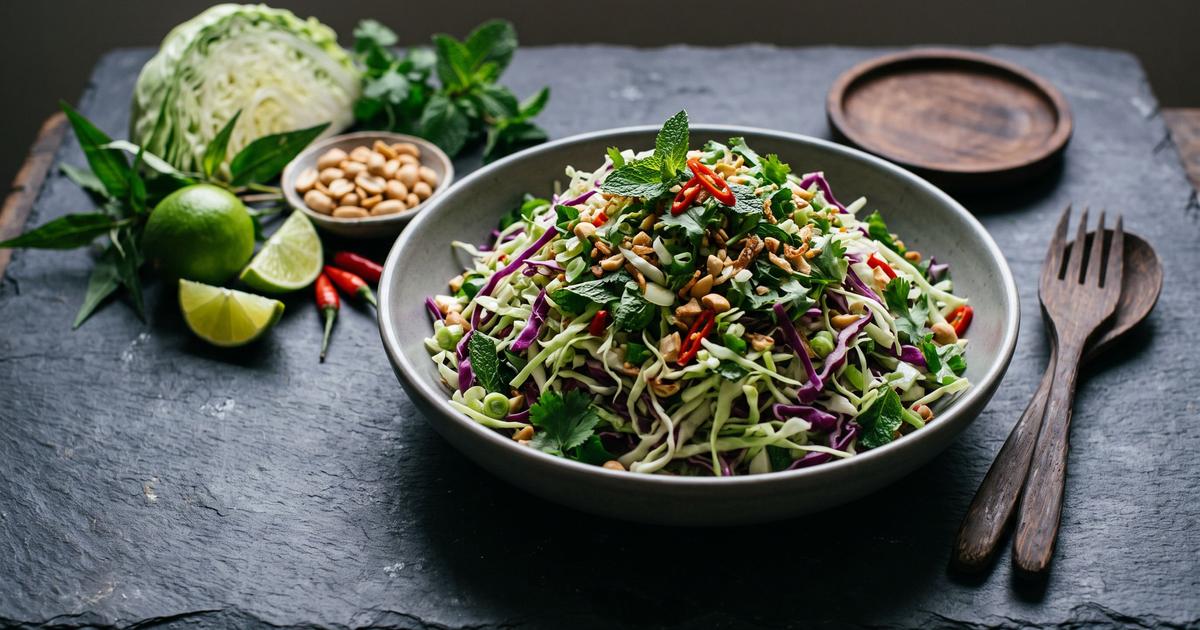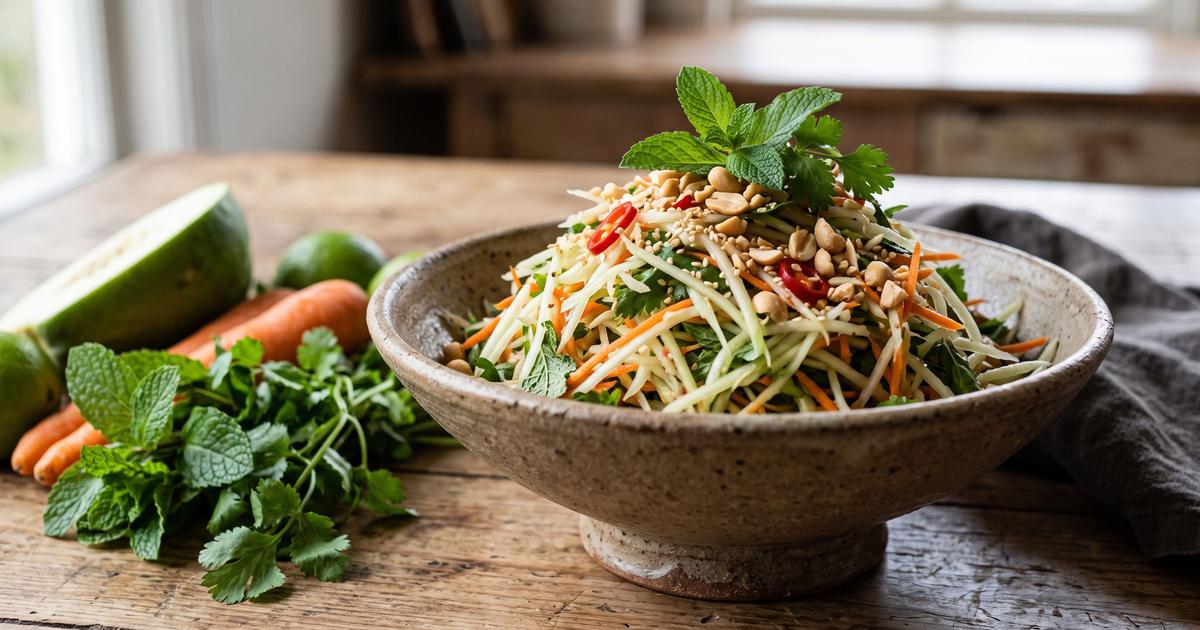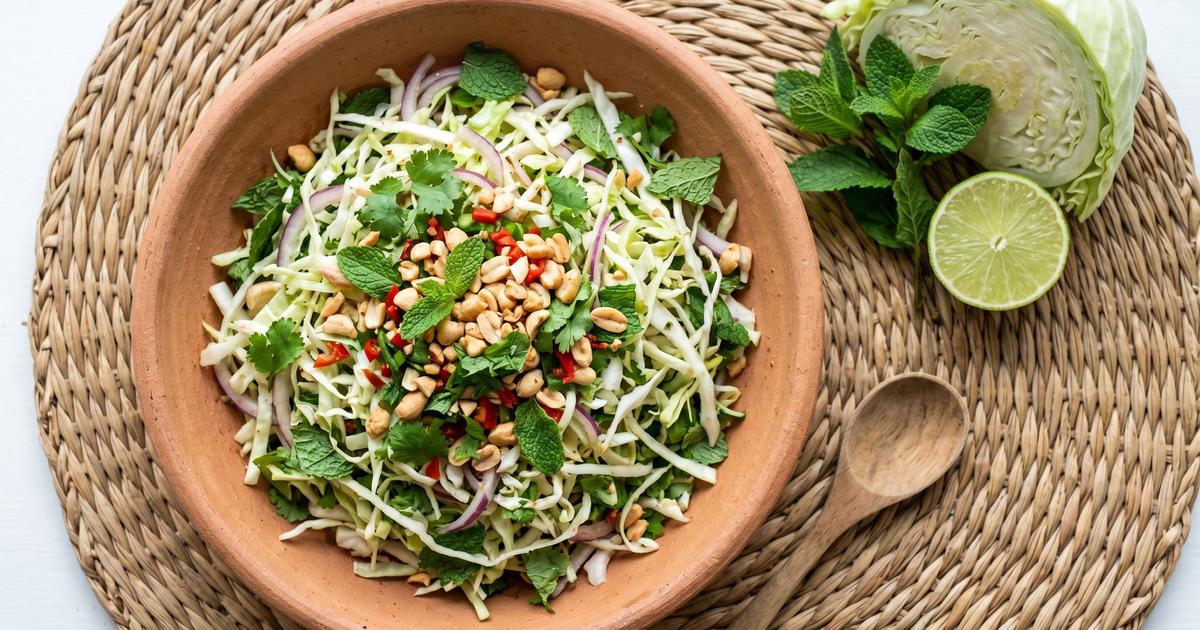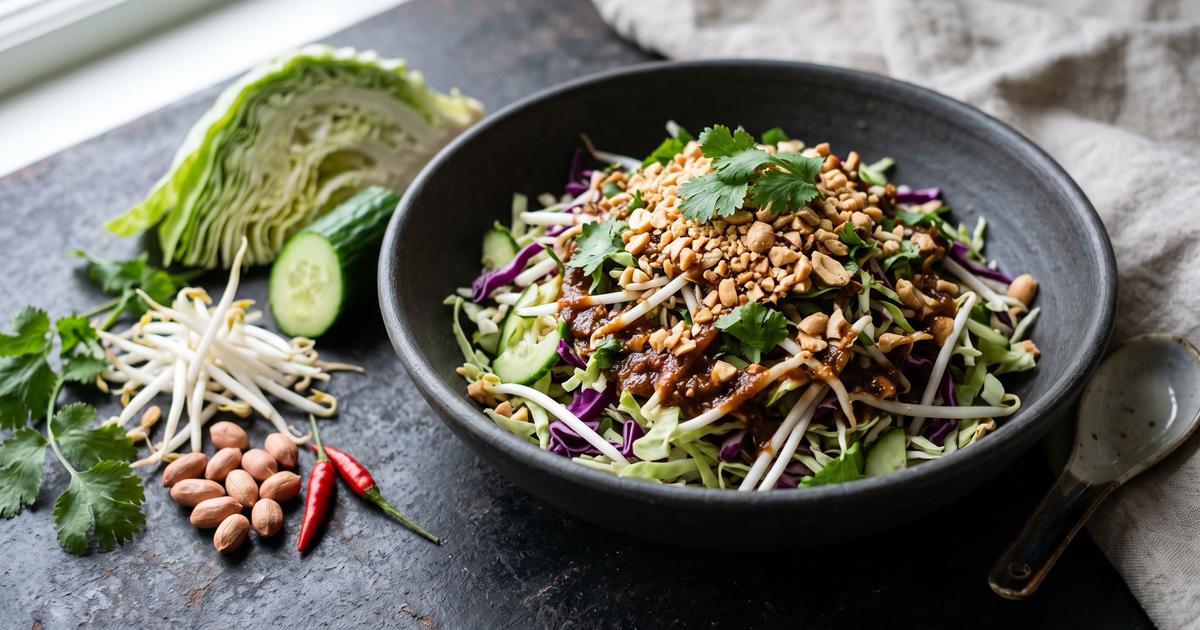
Goi Dua Leo, Vietnamese Cucumber and Peanut Salad
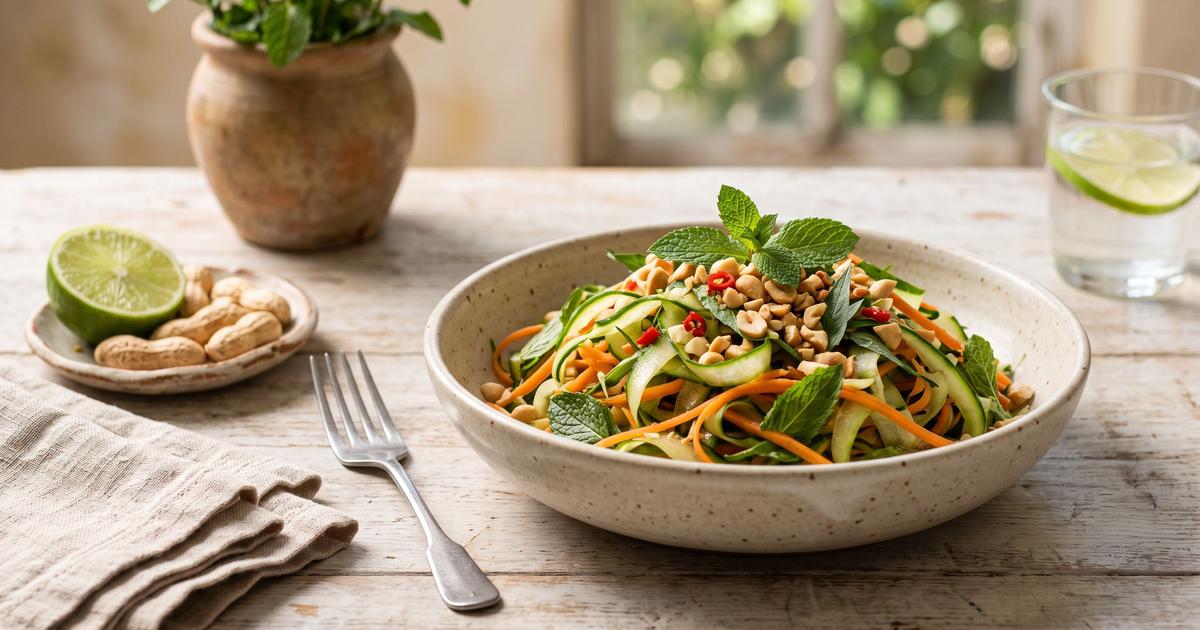
Goi is the Vietnamese tossed salad, always sharp with lime and loud with herbs, and this cucumber version is the one for a hot day. The dressing is a vegan nuoc cham: lime, a little tamari where fish sauce would go, minced date for the sweetness, garlic, and a single bird chile. What sets it apart from any cucumber salad is rau ram, Vietnamese coriander, whose peppery, soapy-in-a-good-way punch is hard to replace, though extra mint and cilantro will stand in. Seeding and draining the cucumber matters because there is no salt here to pull the water out, and a wet cucumber dilutes everything. Dress it at the table so it stays crisp, and keep the peanuts for the very end so they land crunchy against the cold vegetables.
Ingredients
- 2 Cucumbers, halved lengthwise, seeded, sliced on the bias
- 1 Carrot, julienned
- 2 tbsp Lime juice
- 2 tsp Low-sodium tamari
- 1 Deglet noor date, pitted and minced
- 1 clove Garlic, minced
- 1 Thai bird chile, minced
- 3 tbsp Vietnamese coriander, torn
- 3 tbsp Mint, torn
- 2 tbsp Peanuts, toasted and crushed
Method
- Toss the sliced cucumber and carrot in a colander and let them drain 10 minutes while you build the dressing. Seeding the cucumber and giving it time to shed water keeps the finished salad from turning into a watery puddle, since there is no salt drawing the moisture out.
- Mash the minced date into the lime juice, tamari, garlic, and chile until it dissolves. This is nuoc cham without the fish sauce: the date carries the sweetness, the tamari the salt and savor, and the lime and chile the sour and heat.
- Just before serving, toss the drained vegetables with the dressing and most of the herbs. Dressing it at the last minute is what keeps the cucumber crisp and the rau ram and mint bright rather than wilted.
- Pile it onto a plate and scatter the remaining herbs and the crushed peanuts over the top. The peanuts are the one crunchy, rich element against all that cool crunch, so add them last so they stay dry.
Nutrition
Estimated per serving: 95 calories, 4 g protein, 3 g fiber, 160 mg sodium. Computed from USDA FoodData Central reference values for the main ingredients. This is an approximation, not a laboratory measurement. How these are computed.
Cost per serving is estimated from US national-average retail prices for cheap staple forms, using BLS dried-bean prices and USDA produce prices. Prices vary by store and season, so treat it as a guide, not a receipt. How this is computed.