Asinan Sayur, Indonesian Tangy Vegetable Salad
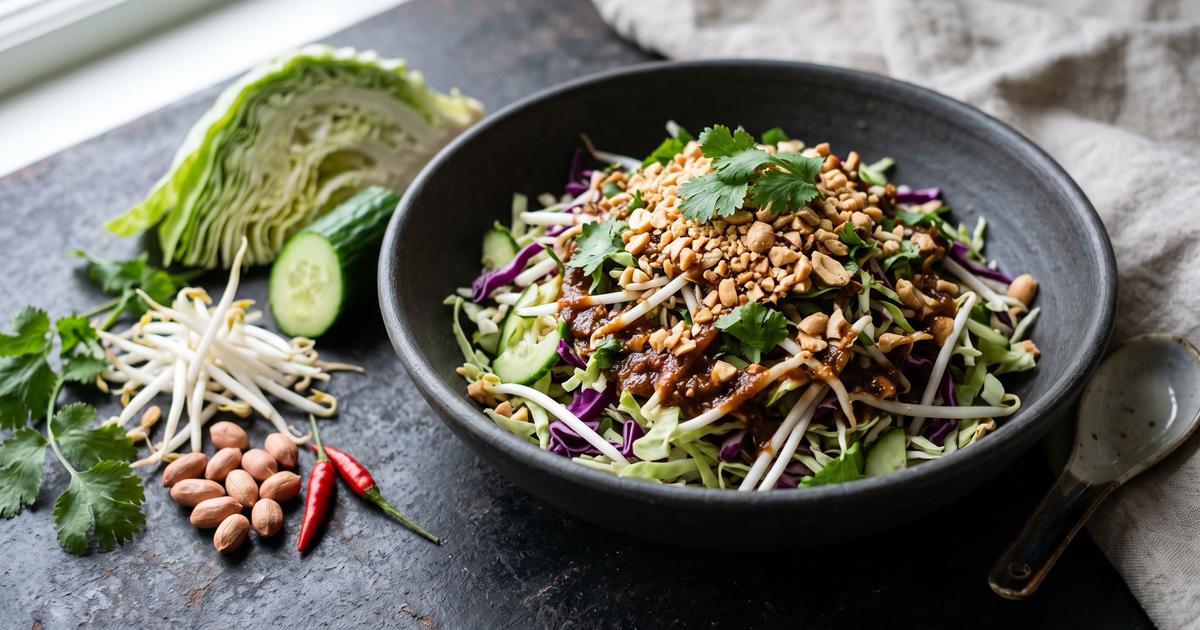
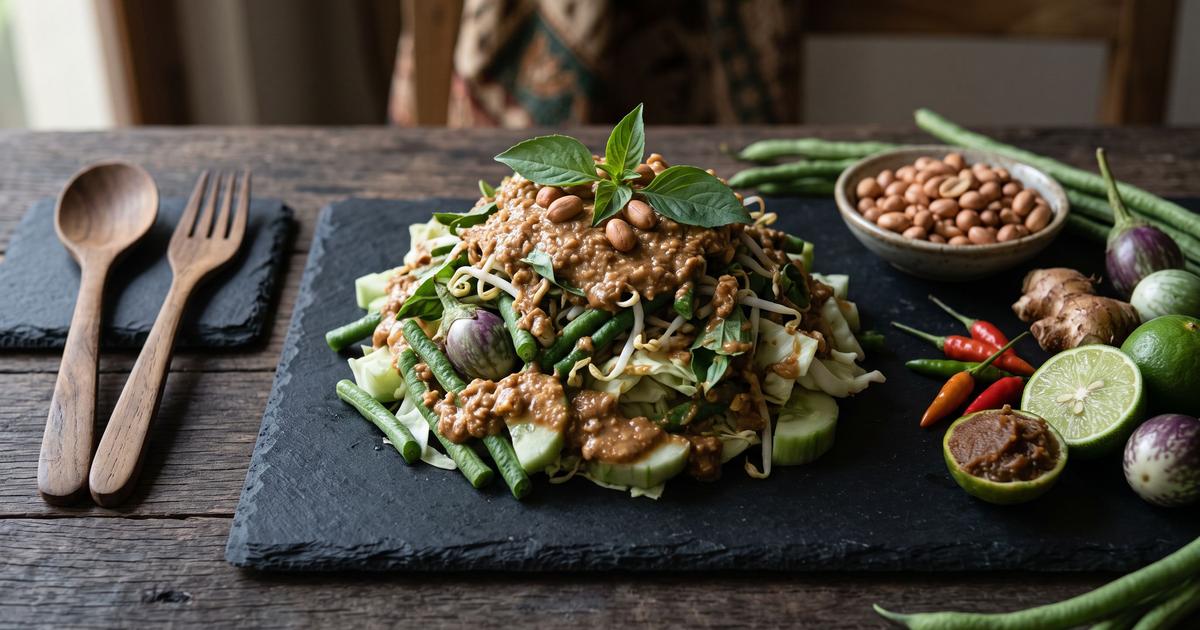
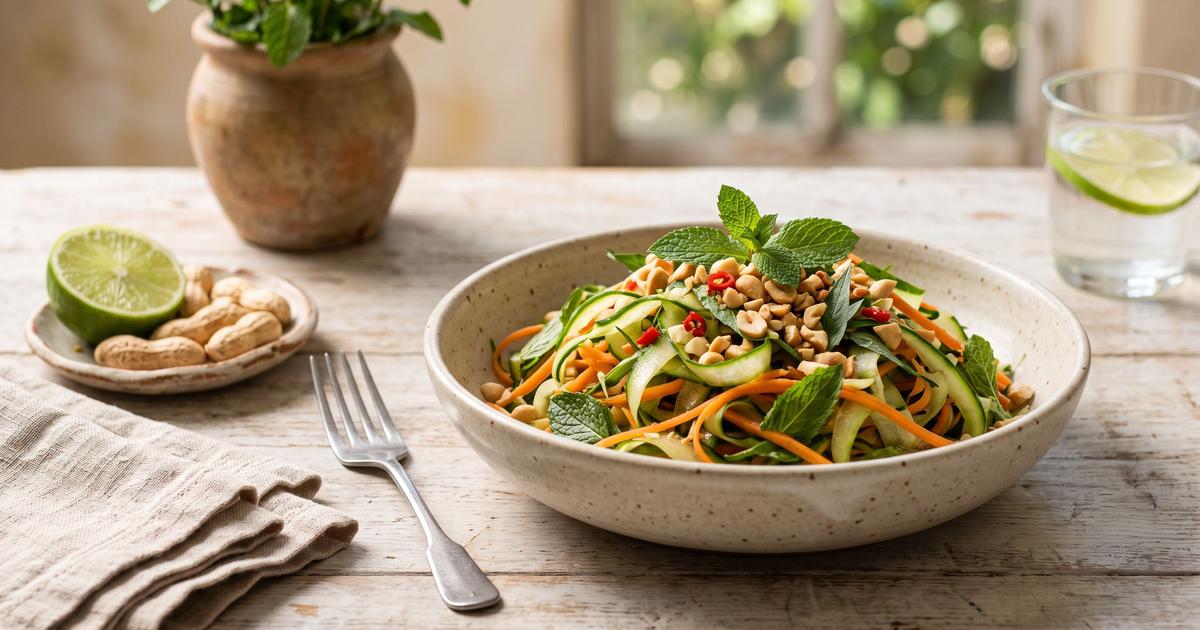
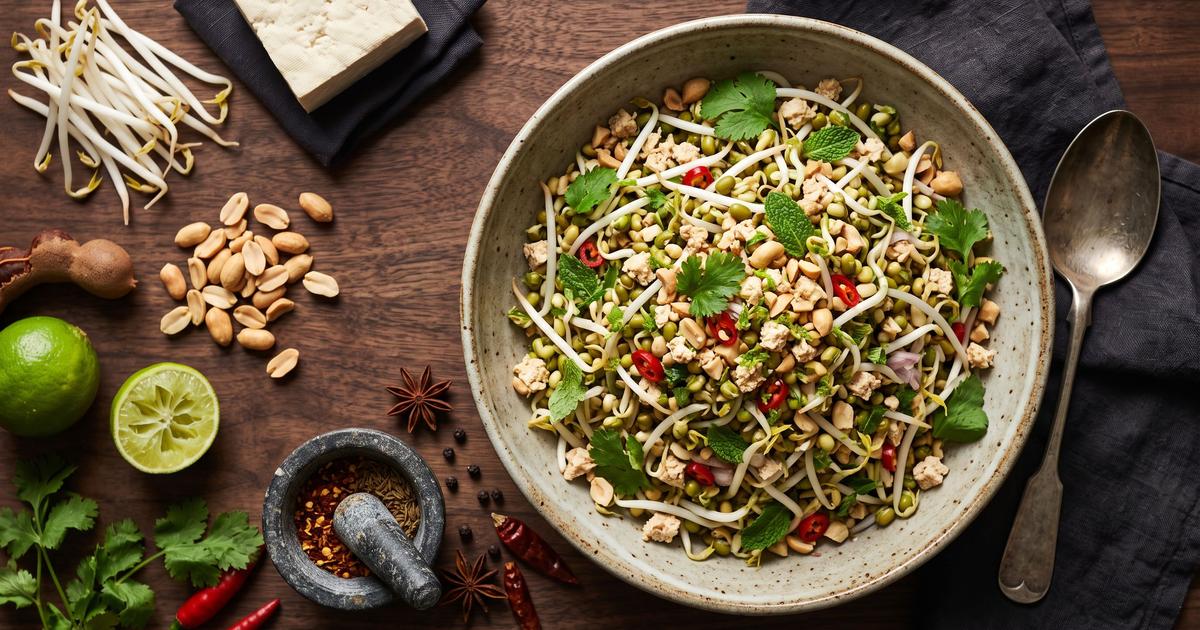
Asinan means something pickled or soured, and asinan sayur is the vegetable version, a Betawi and Bogor street salad of crisp raw vegetables dressed in a bracing tamarind sauce. It is the tangy cousin of the fruit-based rujak, built on cabbage, cucumber, and bean sprouts instead of unripe fruit. The dressing usually leans on palm sugar and sometimes dried shrimp; here dates do the sweetening and tamari the savory work, so it stays plant-based and coconut-free. Give it ten minutes to sit so the sour dressing works into the cabbage.
Ingredients
- 3 cups green cabbage, finely shredded
- 1 Cucumber, cut into thin matchsticks
- 2 cups Soybean sprouts, blanched 30 seconds and drained
- 1 Carrot, cut into thin matchsticks
- 2 tbsp Tamarind paste
- 2 Medjool dates, pitted, blended with the tamarind and 0.25 cup (60 ml) water
- 2 Thai bird chiles, minced
- 2 tsp Low-sodium tamari
- 1 tbsp Lime juice
- 3 tbsp Peanuts, toasted and crushed
Method
- Blend the tamarind, dates, and 0.25 cup (60 ml) water into a smooth dressing, then stir in the chile, tamari, and lime juice. Asinan lives on a sweet, sour, and hot dressing; the tamarind is the sour spine and the dates take the place of the palm sugar that would usually round it out.
- Put the cabbage, cucumber, bean sprouts, and carrot in a large bowl and pour the dressing over. Toss well so every strand is coated but the vegetables stay crisp.
- Let the salad sit 10 minutes before serving. The rest softens the raw cabbage just enough and lets it drink in the sour dressing, which is what makes asinan taste pickled rather than plain.
- Scatter the crushed peanuts over the top just before it goes to the table. Adding them last keeps them crunchy against the soft, tangy vegetables.
Nutrition
Estimated per serving: 140 calories, 6 g protein, 5 g fiber, 120 mg sodium. Computed from USDA FoodData Central reference values for the main ingredients. This is an approximation, not a laboratory measurement. How these are computed.
Cost per serving is estimated from US national-average retail prices for cheap staple forms, using BLS dried-bean prices and USDA produce prices. Prices vary by store and season, so treat it as a guide, not a receipt. How this is computed.