Karedok, Sundanese Raw Vegetable Salad
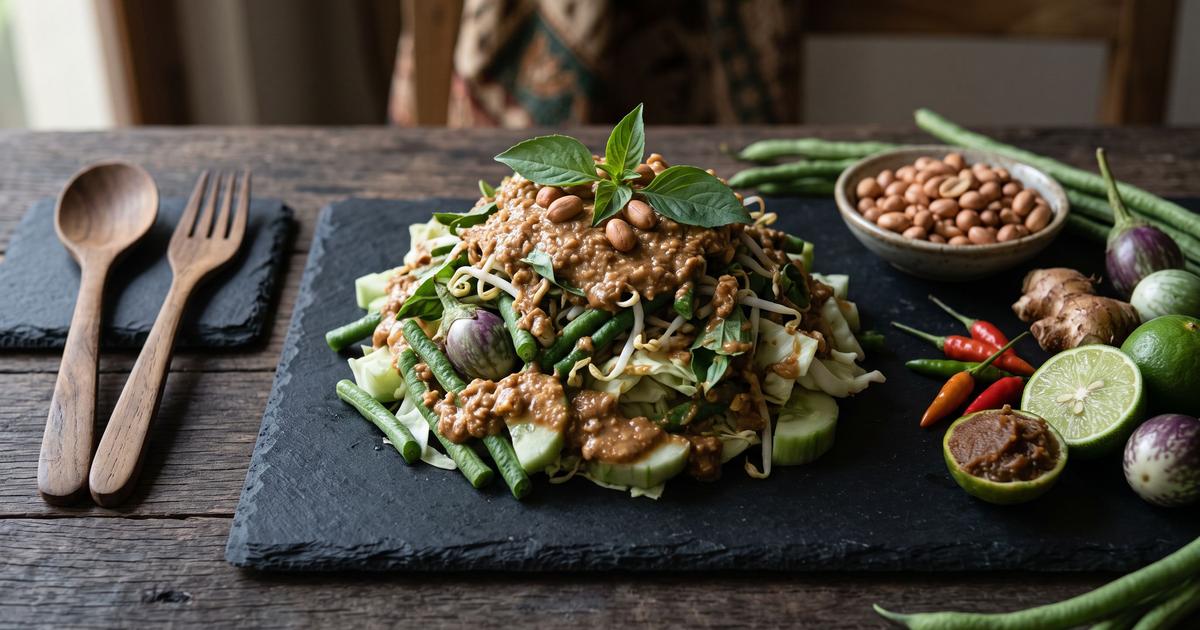
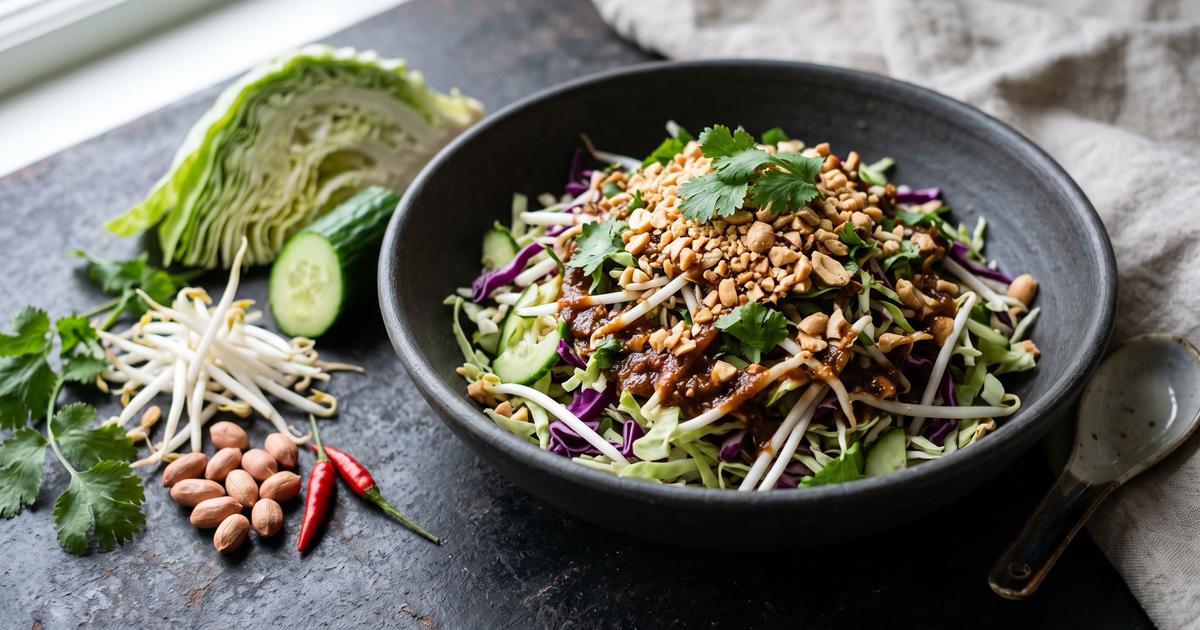
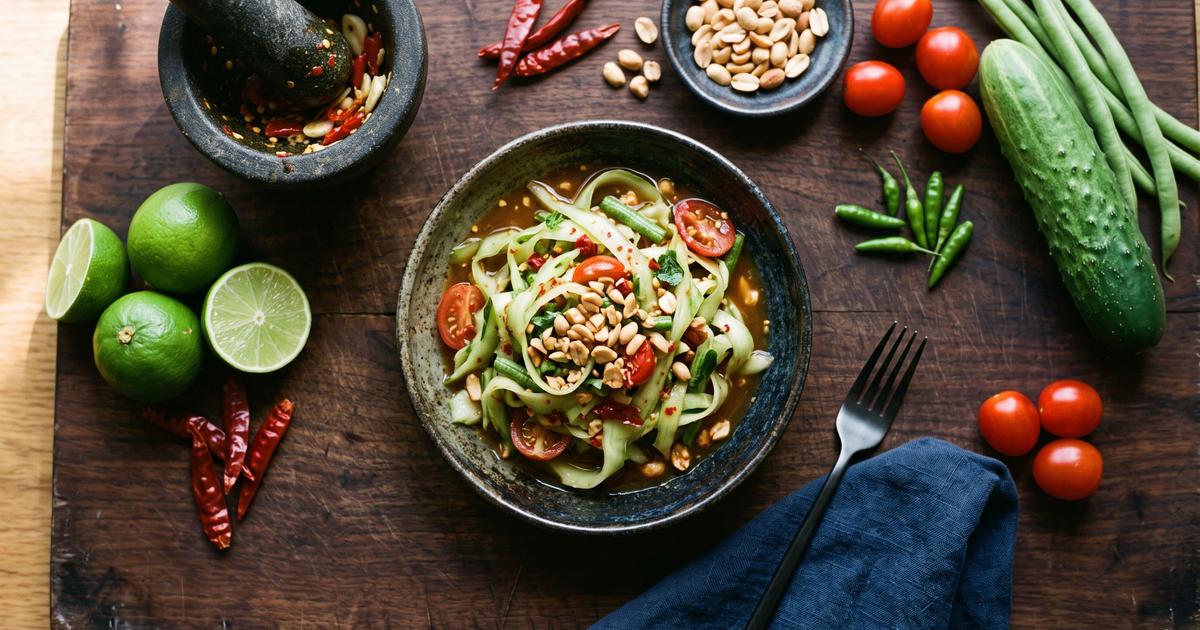
Gado-gado gets all the attention, but karedok is its raw, punchier relative from West Java, where the vegetables go into the bowl uncooked and the dressing has to be bold enough to season them. Traditionally it carries kencur, a sharp aromatic root, and a nub of shrimp paste. This version leans on garlic, chile, and white miso for that savory depth, with dates for the palm-sugar sweetness, so a plate of raw vegetables tastes like a full dish and needs no salt.
Ingredients
- 4 oz Long beans, raw, sliced thin on an angle
- 1 Cucumber, halved and sliced
- 2 cups green cabbage, shredded
- 1 cup Soybean sprouts
- 1/2 cup Thai basil, leaves picked
- 1/3 cup unsweetened peanut butter
- 1 tbsp Tamarind paste
- 2 tbsp Lime juice, fresh
- 2 cloves Garlic
- 2 Thai bird chiles
- 2 Medjool dates, pitted
- 1 tsp White miso
Method
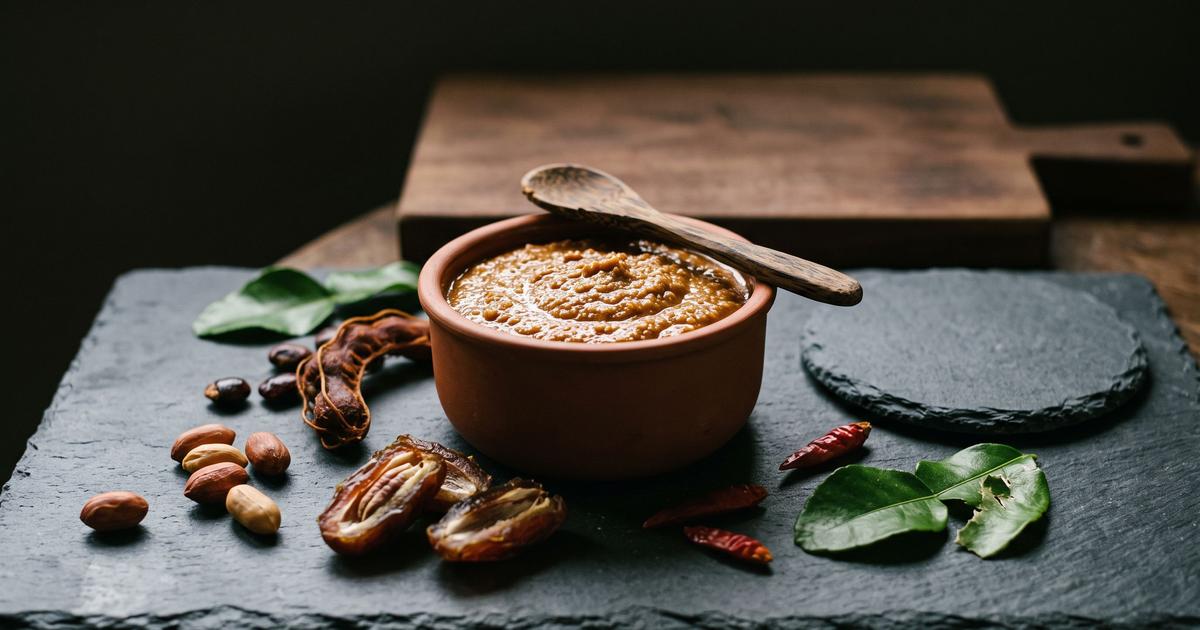
- Make the dressing first so its flavors marry while you cut the vegetables. In a mortar or a small food processor, pound the garlic, chile, and dates to a paste. The dates replace the block of palm sugar Sundanese cooks use, carrying the sweetness with fiber attached.
- Add the peanut butter, tamarind, lime juice, and miso. The miso stands in for the pinch of fermented shrimp paste that gives karedok its savory floor. Work in 0.25 to 0.33 cup (60 to 80 ml) water a little at a time until the dressing is thick but pourable, like a loose peanut sauce. Taste it: it should hit sour, hot, savory, and faintly sweet all at once.
- Slice all the vegetables just before serving, since karedok is defined by everything being raw and crisp. Keep the long beans thin so they are tender enough to eat uncooked.
- Pile the long beans, cucumber, cabbage, sprouts, and basil in a wide bowl. Spoon the dressing over and toss with your hands until every piece is coated. Serve immediately, before the salt in the miso draws water out of the vegetables and softens them.
Nutrition
Estimated per serving: 180 calories, 9 g protein, 6 g fiber, 120 mg sodium. Computed from USDA FoodData Central reference values for the main ingredients. This is an approximation, not a laboratory measurement. How these are computed.
Cost per serving is estimated from US national-average retail prices for cheap staple forms, using BLS dried-bean prices and USDA produce prices. Prices vary by store and season, so treat it as a guide, not a receipt. How this is computed.