Rujak, Indonesian Spicy Fruit Salad
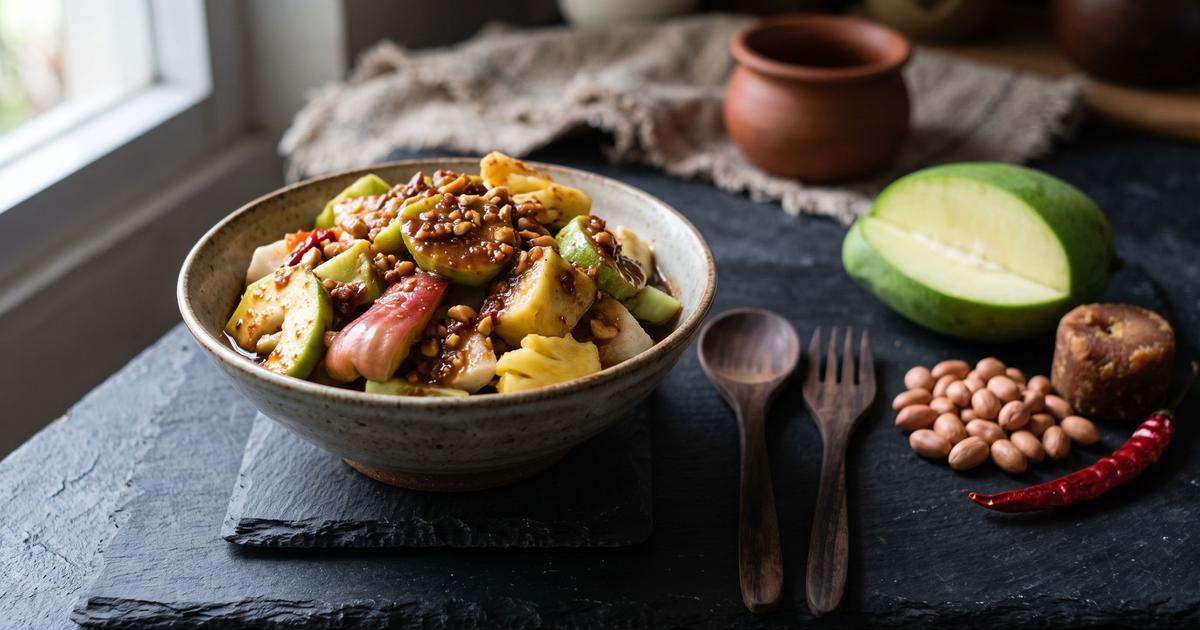
Rujak is Indonesia's answer to a fruit cup, if a fruit cup were sour, fiery, and savory. Vendors pound the dressing to order in a stone mortar, balancing tamarind against palm sugar, chili, and a knob of shrimp paste, then toss it through hard unripe fruit. Dates carry the sweetness here and a little miso the savory funk, so the sauce keeps its dark, mouth-puckering character with no sugar and no salt. Use the tartest fruit you can find; ripeness is not the goal.
Ingredients
- 2 cups Green papaya, peeled and coarsely shredded
- 1 Apple, tart, cut into matchsticks
- 1 Cucumber, halved and sliced thick
- 1 Orange, peeled and segmented
- 1 tbsp Tamarind paste
- 3 Medjool dates, pitted
- 2 Thai bird chiles
- 3 tbsp Peanuts, toasted
- 1 tsp White miso
- 1 tbsp Lime juice, fresh
Method
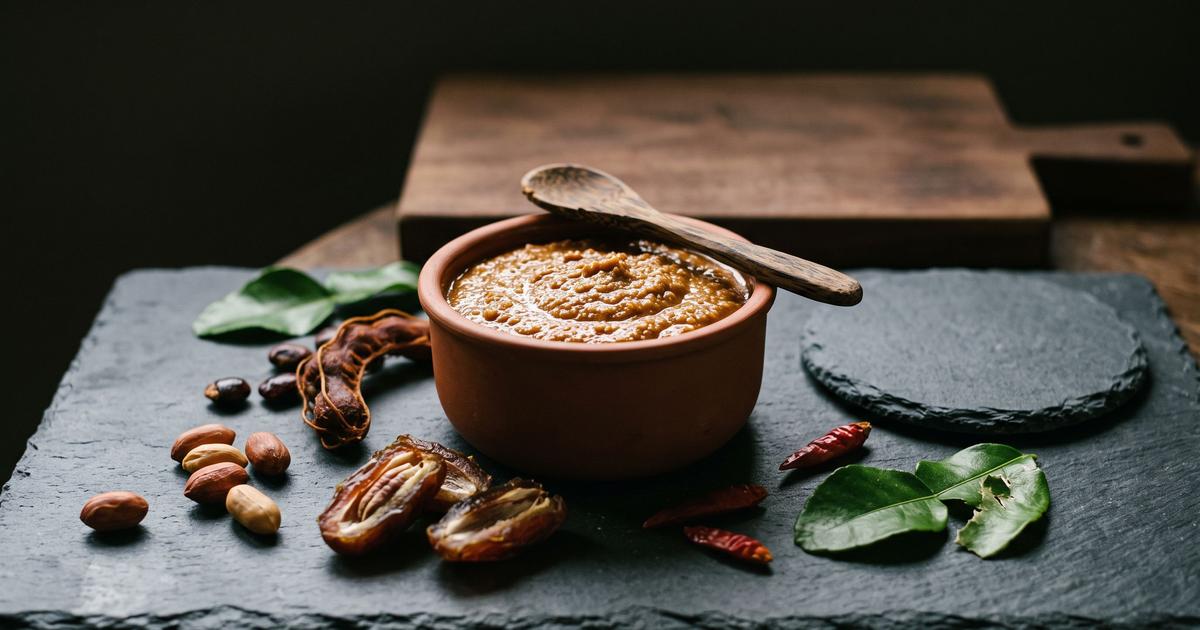
- Make the dressing, called bumbu rujak. In a mortar, pound the chile and half the toasted peanuts into a coarse, gritty paste. Add the pitted dates and pound them in until the mixture turns sticky. The dates replace the dark palm sugar that gives rujak dressing its molasses note, and the ground peanuts give it body.
- Work in the tamarind, miso, and lime juice with 2 to 3 tablespoons (30 to 45 ml) water until you have a thick, spoonable sauce the color of wet sand. The miso is a small stand-in for the fermented shrimp paste of the original; a little goes a long way. Taste and balance until it is aggressively sour and hot with only a low sweetness underneath.
- Cut all the fruit and vegetables just before serving so nothing weeps or browns. Rujak wants firm, tart, crunchy pieces: unripe papaya, a hard tart apple, cool cucumber, and a little orange for juice. Ripe soft fruit turns to mush under the dressing.
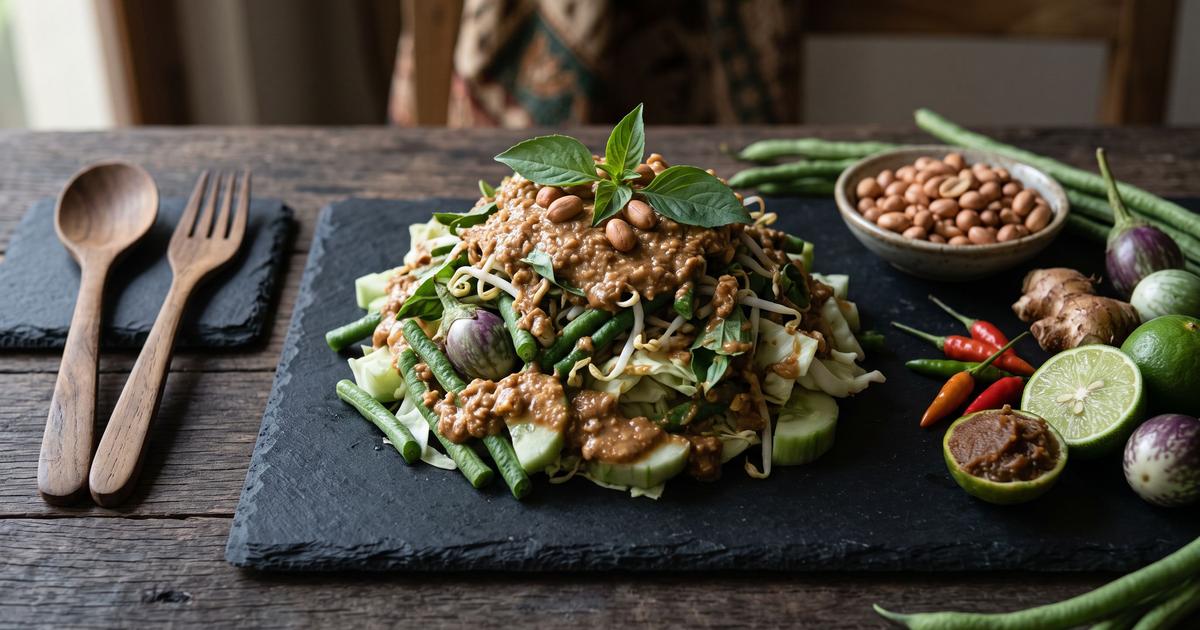
- Pile everything in a bowl, spoon the dressing over, and toss until coated. Scatter the remaining peanuts on top and eat right away, cold. The clash of sour dressing against sweet-tart fruit is the whole point, so serve it as a sharp snack rather than a side.
Nutrition
Estimated per serving: 150 calories, 4 g protein, 6 g fiber, 85 mg sodium. Computed from USDA FoodData Central reference values for the main ingredients. This is an approximation, not a laboratory measurement. How these are computed.
Cost per serving is estimated from US national-average retail prices for cheap staple forms, using BLS dried-bean prices and USDA produce prices. Prices vary by store and season, so treat it as a guide, not a receipt. How this is computed.