Yam Tua Ngok, Thai Bean Sprout and Tofu Salad
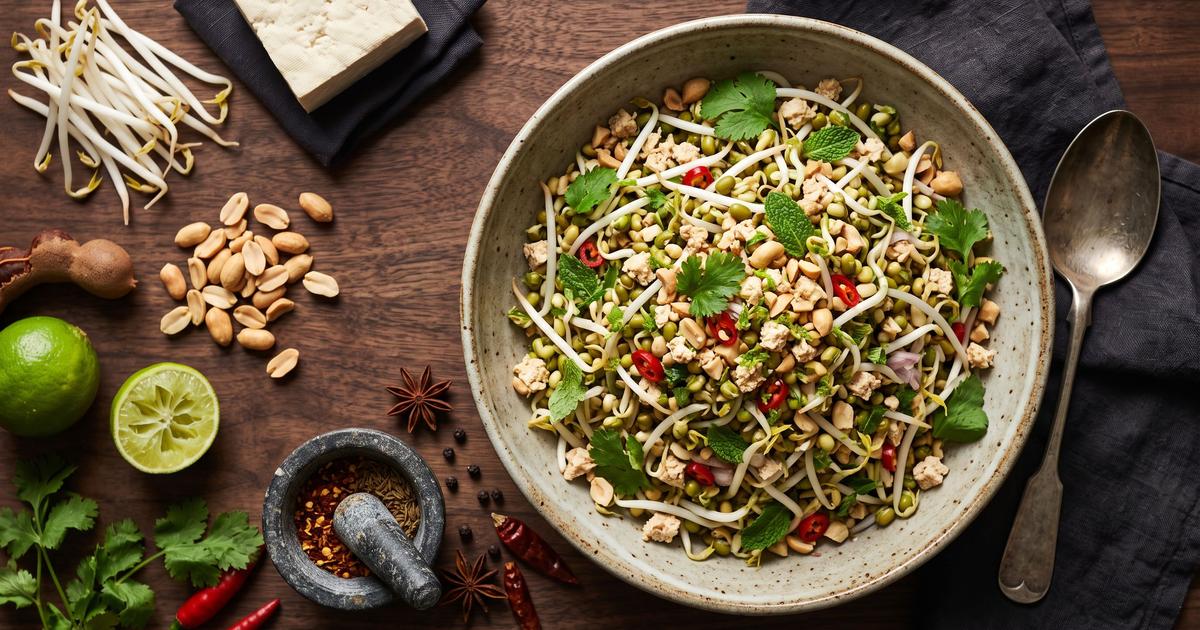
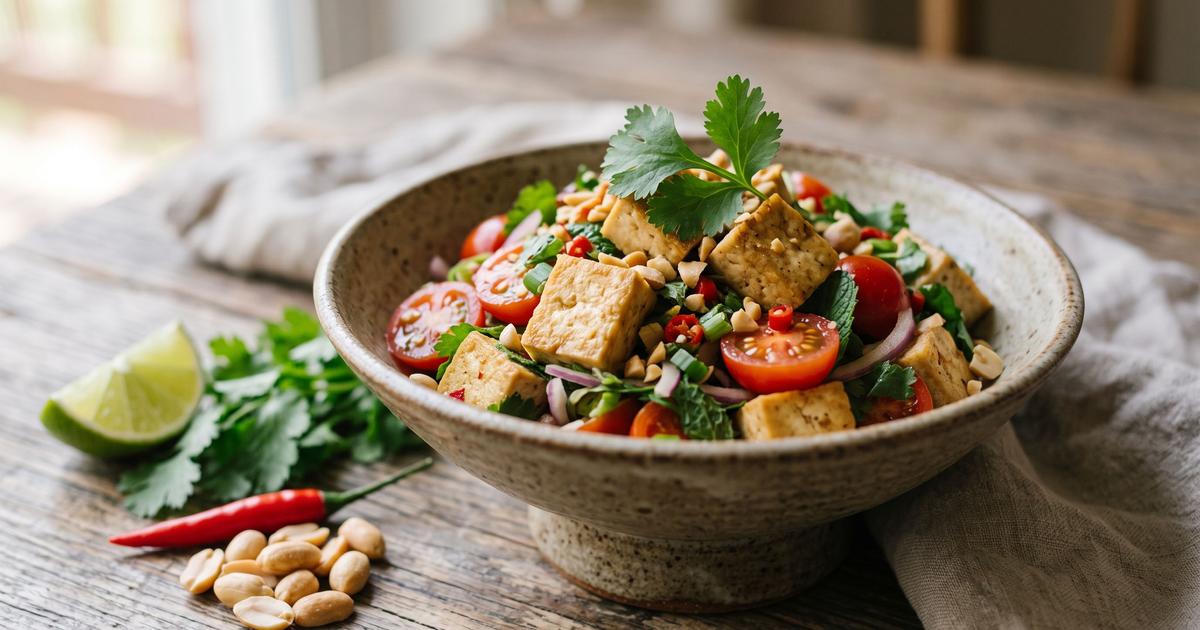
Yam tua ngok is the Thai bean sprout salad, a fast, sharp yam that turns a cheap bag of sprouts into a full plate. The traditional dressing runs on fish sauce, lime, and palm sugar; this one hits the same sour, savory, sweet, and hot balance with tamari, tamarind, lime, and date. Crumbled seared tofu and crushed peanuts give it enough protein and body to eat as a light meal, not just a side, and the herbs go in off the heat so they stay fresh.
Ingredients
- 4 cups Soybean sprouts
- 7 oz Firm tofu, pressed, cut into small cubes
- 1 Carrot, julienned
- 3 Scallions, sliced
- 1/2 cup Cilantro, roughly chopped
- 1/4 cup Mint, leaves torn
- 3 tbsp Peanuts, toasted and crushed
- 2 tbsp Lime juice
- 1 tsp Tamarind paste
- 2 tsp Low-sodium tamari
- 1 Medjool date, mashed to a paste
- 2 Thai bird chiles, minced
Method
- Bring a pot of water to a boil, drop in the bean sprouts for 30 seconds, then drain and shock them under cold water. This quick blanch takes off the raw beany edge while keeping the sprouts crisp, which is the whole texture of the dish.
- Set a dry nonstick pan over medium-high heat and sear the tofu cubes undisturbed until a golden crust forms on two sides, about 6 minutes total. A dry crust gives the soft tofu something to hold the dressing against, no oil needed.
- Whisk the lime juice, tamarind, tamari, date paste, and chile in the serving bowl. This is a yam dressing in miniature: sour from lime and tamarind, savory from tamari, sweet from date, hot from chile, the same four-way balance that fish sauce and palm sugar usually carry.
- Add the drained sprouts, tofu, carrot, and scallions and toss to coat. Fold in the cilantro and mint last so they stay bright, then scatter the crushed peanuts over the top for crunch. Serve at once, while the sprouts still snap.
Nutrition
Estimated per serving: 155 calories, 11 g protein, 4 g fiber, 130 mg sodium. Computed from USDA FoodData Central reference values for the main ingredients. This is an approximation, not a laboratory measurement. How these are computed.
Cost per serving is estimated from US national-average retail prices for cheap staple forms, using BLS dried-bean prices and USDA produce prices. Prices vary by store and season, so treat it as a guide, not a receipt. How this is computed.