Dua Gia, Vietnamese Pickled Bean Sprouts
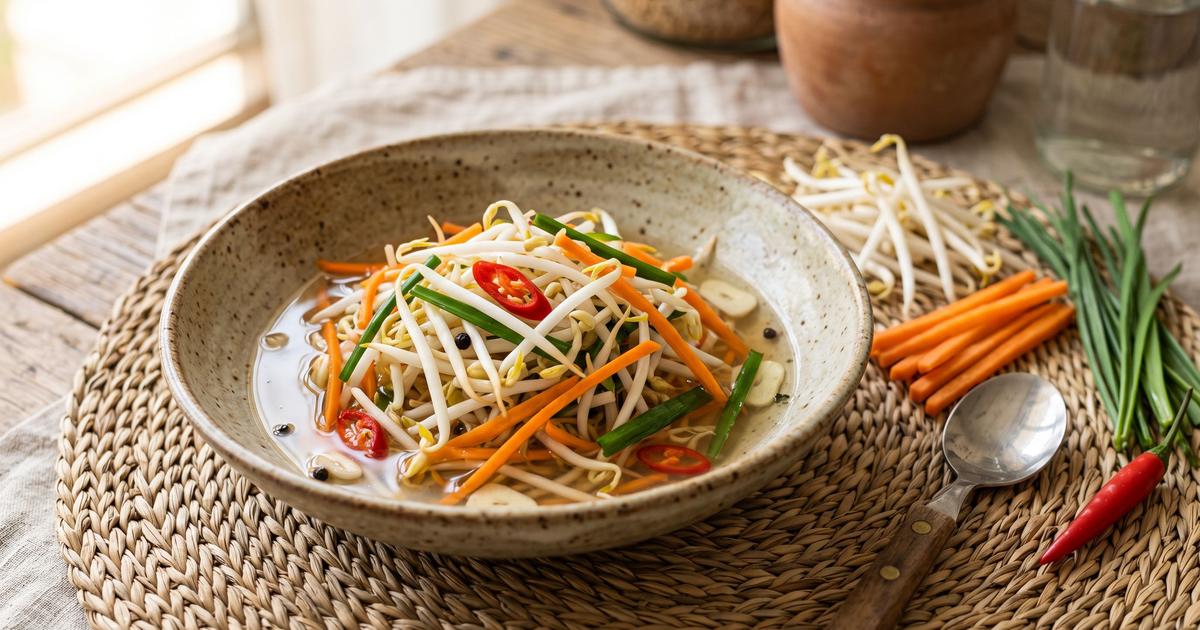
Dua gia is the everyday Vietnamese pickle of bean sprouts and garlic chives, the tart little pile that sits next to braised and grilled dishes and cuts their richness. The usual brine leans on sugar and salt; this one uses only rice vinegar sweetened and rounded with blended dates, which makes it a fresh refrigerator pickle rather than a keeping one. Weigh the vegetables down under the brine so they cure evenly, and eat it within a few days while the sprouts still have their crunch.
Ingredients
- 5 cups Soybean sprouts
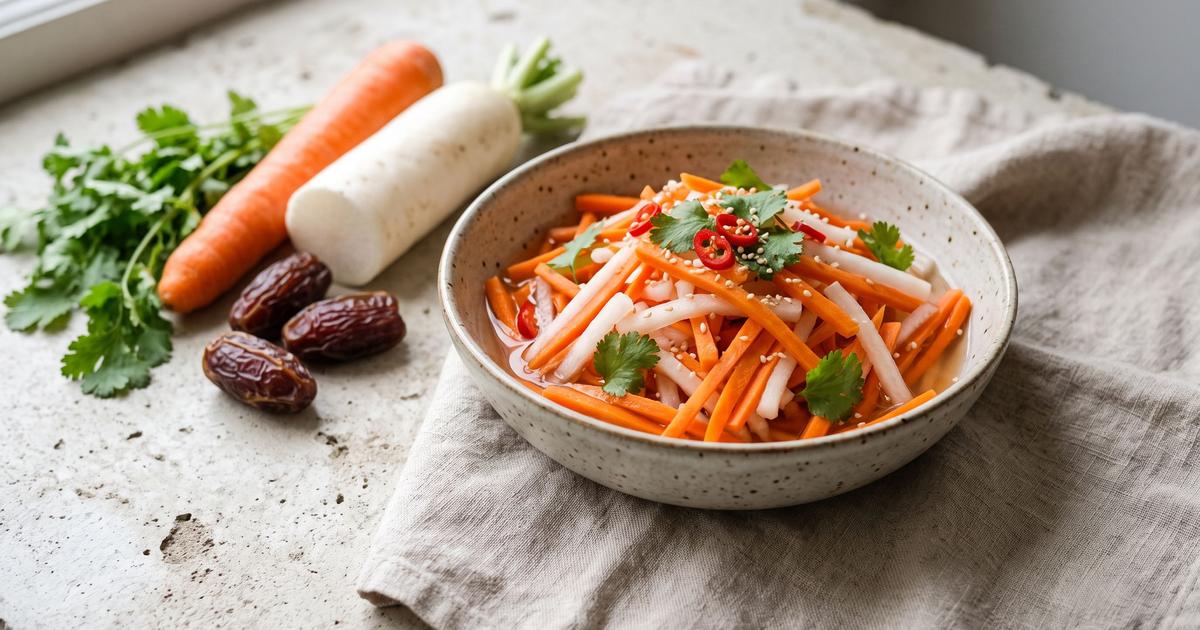
- 1 Carrot, cut into thin matchsticks
- 1/2 cup Chives, cut into 2-inch (5 cm) lengths
- 2 Scallions, cut into 2-inch (5 cm) lengths
- 1 clove Garlic, thinly sliced
- 1/2 cup unseasoned rice vinegar
- 2 Deglet noor dates, pitted, blended smooth with the vinegar and 0.5 cup (120 ml) water
Method
- Blend the dates with the vinegar and 0.5 cup (120 ml) water until smooth to make the brine. A classic dua gia brine is balanced with sugar and salt; here the dates supply the round sweetness that keeps the vinegar from tasting harsh, and the acid alone does the seasoning.
- Pack the bean sprouts, carrot, chives, scallions, and garlic into a clean jar or bowl. Pour the brine over so the vegetables are submerged, pressing them down with a small plate or a water-filled bag to keep them under the liquid.
- Leave at room temperature for 1 hour, then refrigerate. The sprouts soften slightly and turn translucent as they take on the brine, but keep their snap. It is good after an hour and better the next day.
- Because there is no salt to preserve it, treat this as a fresh quick pickle and eat it within 3 days. Serve it cold and drained, as the sour, crunchy counterweight to anything braised or starchy on the plate.
Nutrition
Estimated per serving: 35 calories, 2 g protein, 2 g fiber, 15 mg sodium. Computed from USDA FoodData Central reference values for the main ingredients. This is an approximation, not a laboratory measurement. How these are computed.
Cost per serving is estimated from US national-average retail prices for cheap staple forms, using BLS dried-bean prices and USDA produce prices. Prices vary by store and season, so treat it as a guide, not a receipt. How this is computed.