Dua Cai Chua, Vietnamese Pickled Mustard Greens
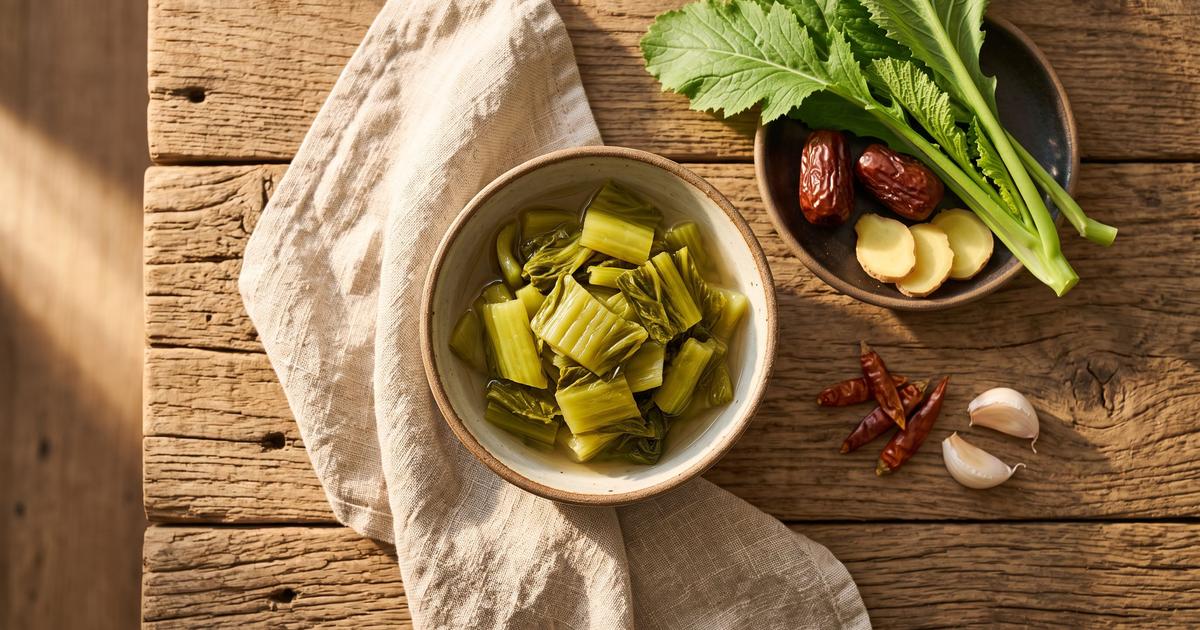
Dua cai chua is the Vietnamese jar of soured mustard greens that lives in the fridge and comes out beside anything rich or starchy, cutting through braises and fried rice with its tang. The full version is lacto-fermented over days in a salt brine; this is the quick vinegar method, muoi xoi, which trades the long ferment for a sharp overnight sour and skips the salt entirely. Wilting the greens first is the step people skip and regret, since limp leaves stay submerged and sour cleanly while stiff ones float and go slippery. A couple of blended dates feed the brine the way a spoon of sugar would. Give it a day in the cold before you open the jar.
Ingredients
- 6 cups Mustard greens, cut into 2-inch (5 cm) pieces
- 5 Scallions, cut into 2-inch (5 cm) lengths
- 3/4 cup unseasoned rice vinegar
- 2 Deglet noor dates, pitted and blended into the brine
Method
- Spread the cut greens on a tray and wilt them in the sun for an hour, or blanch them for 20 seconds and cool. Softening the leaves first keeps them from turning slimy and helps them stay under the brine and sour evenly.
- Warm the vinegar with 1.5 cups (350 ml) water and the blended dates until the dates dissolve, then cool to room temperature. The dates replace the pinch of sugar that feeds the sour and rounds the brine; warm brine sours the greens faster, but hot brine would cook them limp.
- Pack the greens and scallions into a clean jar and pour the brine over to submerge them completely, weighting them down with a small dish if needed. Anything left above the liquid spoils, so keeping everything under the brine is the whole trick.
- Cover and refrigerate 1 to 2 days until the greens taste sharply sour and turn from bright to olive green. That color shift is the sign they are ready. They keep about two weeks.
Nutrition
Estimated per serving: 20 calories, 1 g protein, 2 g fiber, 30 mg sodium. Computed from USDA FoodData Central reference values for the main ingredients. This is an approximation, not a laboratory measurement. How these are computed.
Cost per serving is estimated from US national-average retail prices for cheap staple forms, using BLS dried-bean prices and USDA produce prices. Prices vary by store and season, so treat it as a guide, not a receipt. How this is computed.