Ca Tim Kho, Vietnamese Braised Eggplant
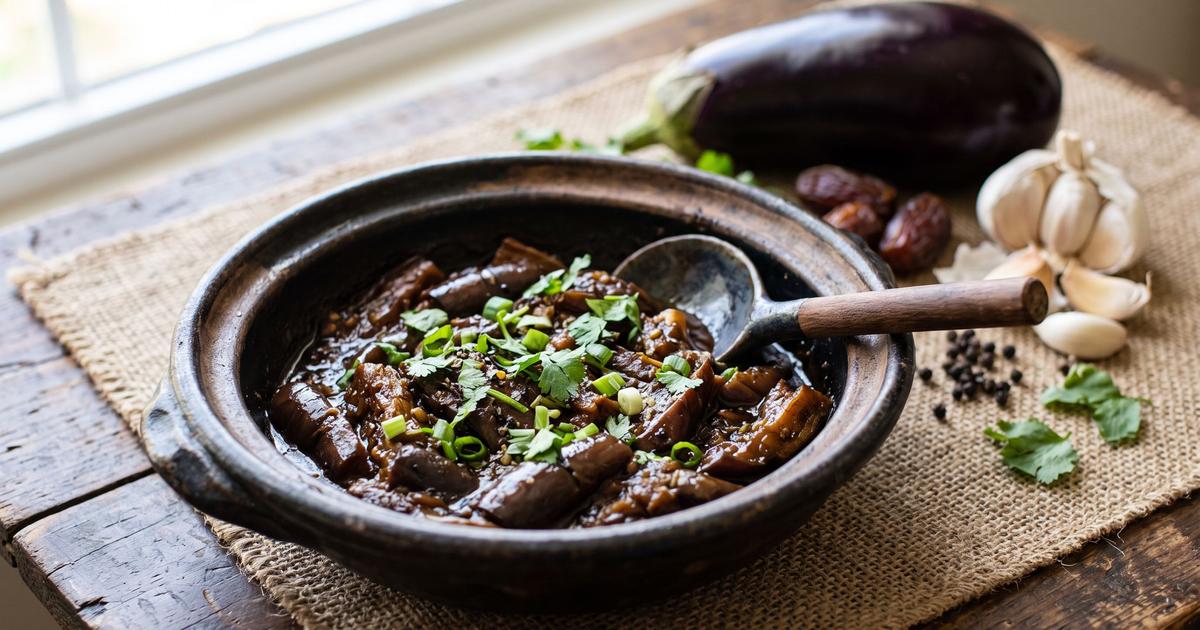
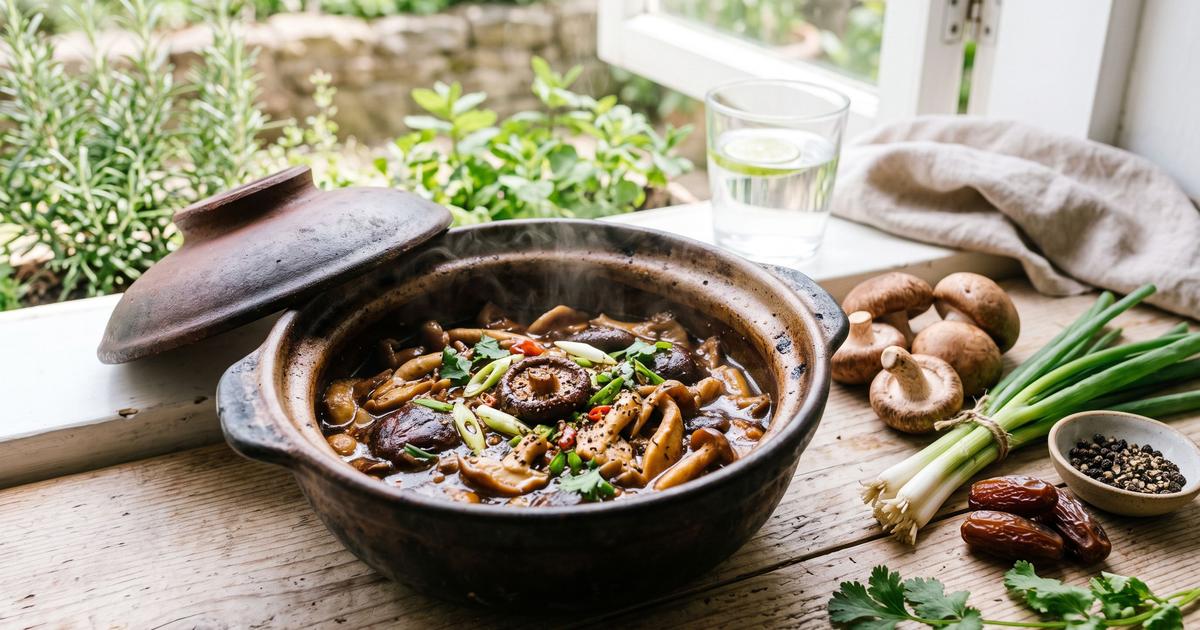
A kho is the anchor of a Vietnamese home meal, a small clay pot of something braised until dark and glazed, meant to be eaten in restrained bites over plenty of plain rice. Ca tim kho, the eggplant version, is one of the simplest and among the best suited to cooking without meat, since eggplant soaks up the sauce the way pork belly would. The braise leans on a caramel for its color and its faint bitterness. Made with dates instead of sugar, that caramel still darkens and deepens, and the tamari finishes the trade with the fish sauce.
Ingredients
- 1 1/2 lb Eggplant, cut into 1-inch (2.5 cm) chunks
- 3 Medjool dates, pitted, blended smooth with 3 tbsp water
- 2 tbsp Low-sodium tamari
- 2 Shallots, sliced
- 4 cloves Garlic, sliced
- 3 Scallions, cut into 1-inch (2.5 cm) lengths, white and green parts kept separate
- 1/2 tsp Black peppercorns, coarsely cracked
- 1 Thai bird chile, sliced, optional
Method
- Kho means to braise in a dark, caramel-based sauce, and that caramel is usually burnt sugar. Here, cook the blended date paste in a dry pot over medium heat, stirring, until it darkens a shade and smells toasted, about 3 minutes. That is your no-sugar nuoc mau, the color and bitterness that keep the dish from tasting flat.
- Add the shallots, garlic, and scallion whites and sweat them in 2 tablespoons water until soft, scraping up the darkened date at the bottom.
- Add the eggplant, tamari, cracked pepper, chile if using, and 0.5 cup (120 ml) water. Stir to coat. The tamari does the job fish sauce normally does, carrying the salt and the savory backbone.
- Cover and simmer 15 minutes, stirring gently once or twice, until the eggplant is silky and completely soft. Stir with a light hand so the pieces stay whole rather than turning to mush.
- Uncover and let the liquid reduce to a glaze that clings to the eggplant. Scatter the scallion greens over the top and serve hot with brown rice, which is the point of a kho: a small, intense, salty-sweet dish to eat across a large bowl of rice.
Nutrition
Estimated per serving: 110 calories, 4 g protein, 6 g fiber, 320 mg sodium. Computed from USDA FoodData Central reference values for the main ingredients. This is an approximation, not a laboratory measurement. How these are computed.
Cost per serving is estimated from US national-average retail prices for cheap staple forms, using BLS dried-bean prices and USDA produce prices. Prices vary by store and season, so treat it as a guide, not a receipt. How this is computed.