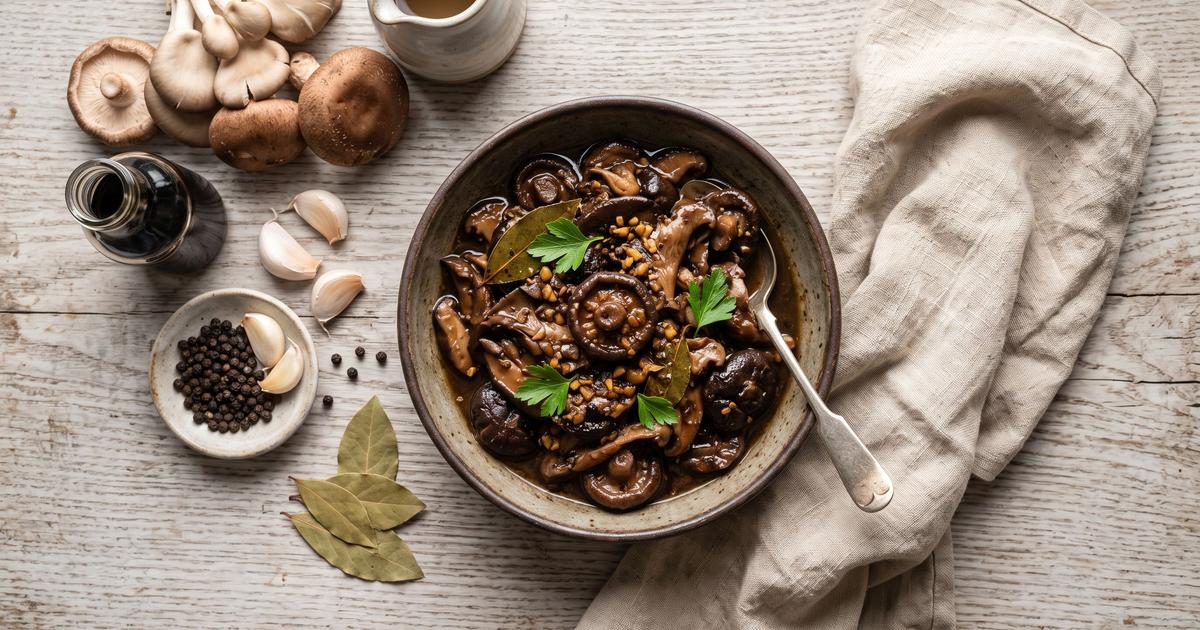
Nam Kho Tieu, Vietnamese Pepper-Braised Mushrooms
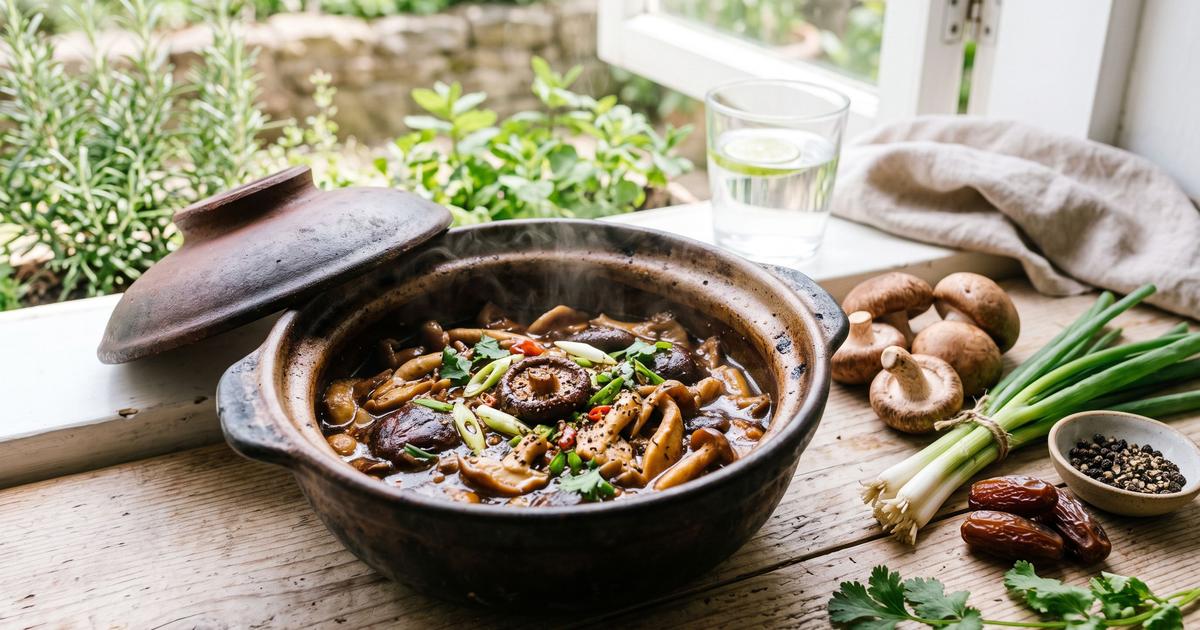
Kho is the Vietnamese art of the slow, salty-sweet braise, usually done in a clay pot until the sauce reduces to a dark glaze that clings to whatever is inside. Kho tieu, the peppercorn version, is aggressively peppery, and mushrooms make an ideal stand-in for the fish or pork it is normally built around, since they turn meaty and drink up the sauce. The two hallmarks of a kho are the burnt-sugar caramel and the fish sauce; here a reduced date syrup supplies the caramel color and sweetness, and tamari carries the savory salt, which is why the dish is marked salt light. No oil, no sugar, no coconut. Serve it with a lot of plain brown rice and something green.
Ingredients
- 12 oz Cremini mushrooms, halved
- 4 oz Shiitake mushrooms, stemmed and halved
- 3 wholes Shallots, minced
- 3 cloves Garlic, minced
- 3 wholes Medjool dates, pitted
- 2 tbsp Low-sodium tamari
- 1 1/2 tsp Black peppercorns, coarsely cracked
- 2 wholes Scallions, sliced
Method
- Blend the dates with 0.5 cup (120 ml) hot water into a smooth syrup. In a kho, the caramel is made by burning sugar to a bitter-dark syrup called nuoc mau; this date syrup, cooked down in the next step, gives the same mahogany color and deep sweetness with no refined sugar and no risk of scorching.
- Pour the date syrup into a heavy pot or clay pot and simmer over medium heat until it darkens and turns sticky, about 5 minutes. Reducing it now concentrates the sweetness so it can stand up to the pepper and tamari, the balance that defines a kho tieu.
- Add the shallots, garlic, mushrooms, tamari, and 0.5 cup (120 ml) water. Simmer uncovered, stirring now and then, until the mushrooms are tender and the liquid has cooked down to a thick, clinging glaze, about 15 minutes. As the sauce reduces it laminates onto the mushrooms, which is where the intensity comes from.
- Stir in the cracked black pepper in the last two minutes and finish with scallions. Tieu means pepper, and this dish is meant to taste boldly of it, so add it late and keep it coarse; cooking it too long would flatten the sharp, fragrant heat that is the point of the dish.
Nutrition
Estimated per serving: 110 calories, 6 g protein, 3 g fiber, 320 mg sodium. Computed from USDA FoodData Central reference values for the main ingredients. This is an approximation, not a laboratory measurement. How these are computed.
Cost per serving is estimated from US national-average retail prices for cheap staple forms, using BLS dried-bean prices and USDA produce prices. Prices vary by store and season, so treat it as a guide, not a receipt. How this is computed.