Canh Bi Do, Vietnamese Pumpkin and Peanut Soup
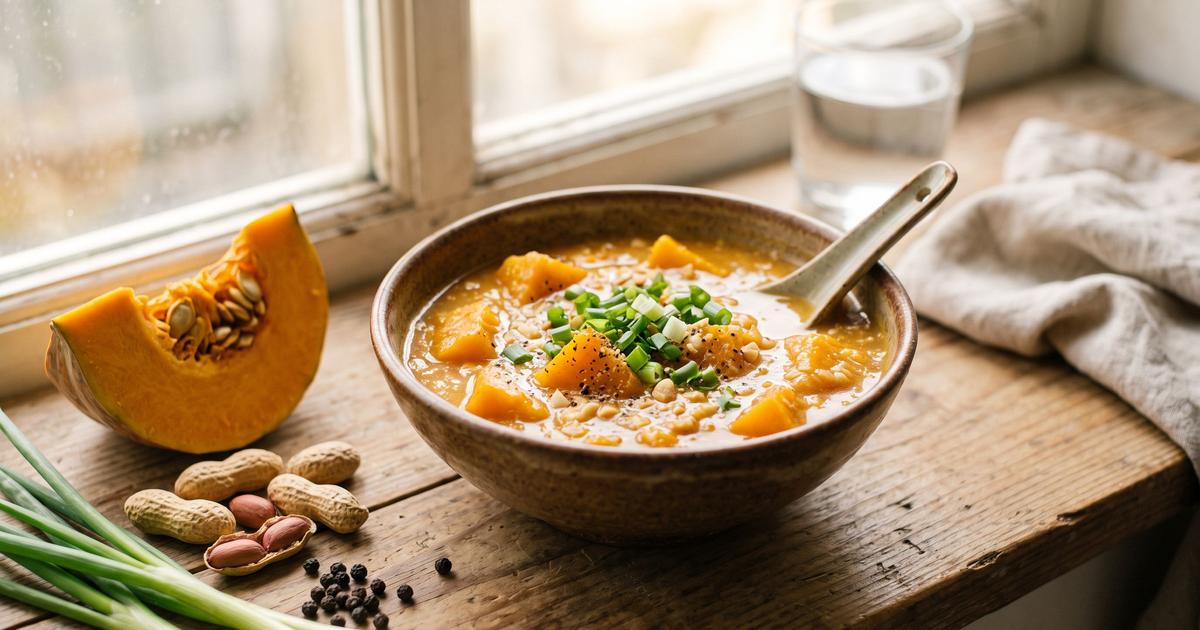
Canh is the light simmered soup that sits alongside rice at a Vietnamese meal, meant to be spooned over the bowl rather than eaten on its own. This one, canh bi do, is built on kabocha, the dense sweet pumpkin sold across Southeast Asia, simmered until it half-dissolves into the broth. Ground roasted peanuts are the trick that turns a plain vegetable soup into something rounder and richer, standing in for the pork or dried shrimp that would usually add depth. A little tamari does the seasoning, white pepper the warmth, and raw scallion the fresh top note. It comes together in one pot on a weeknight and reheats well the next day.
Ingredients
- 4 cups Kabocha squash, peeled and cut into chunks
- 2 Shallots, thinly sliced
- 2 cloves Garlic, minced
- 3 tbsp Peanuts, toasted and finely ground
- 2 tsp Low-sodium tamari
- 3 tbsp Scallions, sliced
- 1/4 tsp White pepper
Method
- Sweat the shallot and garlic in 3 tablespoons (45 ml) water over medium heat until soft and translucent, about 4 minutes. This builds the aromatic base with no oil, the water keeping them from browning.
- Add the pumpkin and 4 cups (950 ml) water and simmer until the pumpkin is fork-tender, about 18 minutes. Kabocha turns sweet as it cooks, and its softening edges begin to cloud and thicken the broth on their own.
- Stir in the ground peanuts and simmer 5 minutes more. They melt into the soup, giving it body and a nutty richness that stands in for the pork or dried shrimp this country soup often carries.
- Season with the tamari and white pepper, then scatter the scallions on top off the heat so they stay green and fresh. Some of the pumpkin should collapse into the broth while some stays in soft chunks.
Nutrition
Estimated per serving: 140 calories, 5 g protein, 4 g fiber, 170 mg sodium. Computed from USDA FoodData Central reference values for the main ingredients. This is an approximation, not a laboratory measurement. How these are computed.
Cost per serving is estimated from US national-average retail prices for cheap staple forms, using BLS dried-bean prices and USDA produce prices. Prices vary by store and season, so treat it as a guide, not a receipt. How this is computed.