Canh Cai, Vietnamese Mustard Green and Tofu Soup
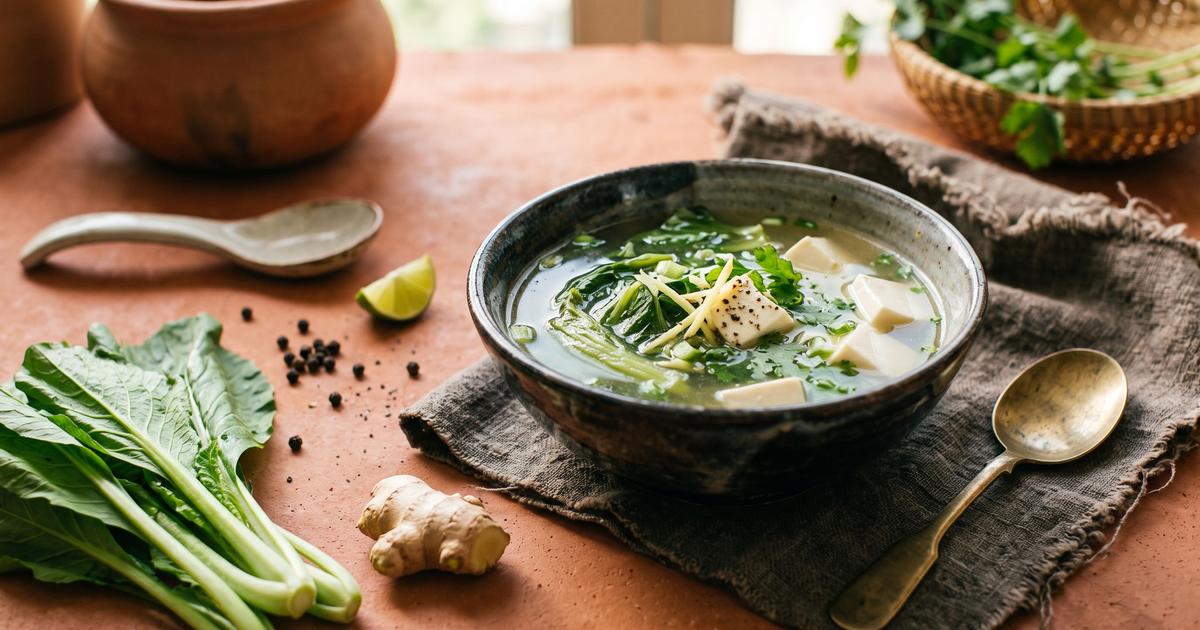
Canh cai is the mustard green soup that shows up at everyday Vietnamese meals, a light clear broth meant to be sipped alongside rice rather than eaten as a course on its own. This version builds its savor from ginger, garlic, and a spoon of tamari instead of fish sauce or pork, and keeps the greens barely cooked so they stay peppery and green. Silken tofu adds enough protein to round it out. It comes together in twenty minutes and is best made just before you sit down.
Ingredients
- 6 cups Mustard greens, chopped into 2-inch (5 cm) ribbons
- 8 oz Silken tofu, cut into 1-inch (2.5 cm) cubes
- 1 tbsp Ginger, cut into thin matchsticks
- 2 cloves Garlic, smashed
- 3 Scallions, sliced
- 1 tsp no-salt vegetable bouillon
- 1 tbsp Low-sodium tamari
- 1/4 tsp White pepper
Method
- Bring 5 cups (1.2 L) water to a simmer with the ginger, garlic, and no-salt bouillon. Simmer 5 minutes so the ginger and garlic perfume the broth. A clear canh is only as good as this base, so give it a few minutes before anything else goes in.
- Stir in the tamari. It stands in for the fish sauce or pork bones that usually give canh its savory depth, so add it now to let the flavor settle into the broth.
- Slip in the tofu cubes and let them warm through for 2 minutes without stirring hard. Silken tofu breaks at a touch, so nudge the pot gently rather than stirring it.
- Add the mustard greens and cook just 2 to 3 minutes, until they wilt and turn deep green but still have bite. Mustard greens grow bitter and dull if boiled long, so pull the pot off the heat the moment they collapse.
- Finish with the scallions and white pepper. White pepper is the Vietnamese note here, warmer and rounder than black, and it is the last thing in before you ladle the soup out hot.
Nutrition
Estimated per serving: 95 calories, 8 g protein, 3 g fiber, 170 mg sodium. Computed from USDA FoodData Central reference values for the main ingredients. This is an approximation, not a laboratory measurement. How these are computed.
Cost per serving is estimated from US national-average retail prices for cheap staple forms, using BLS dried-bean prices and USDA produce prices. Prices vary by store and season, so treat it as a guide, not a receipt. How this is computed.